I want to be upfront about something: I have spent a genuinely embarrassing amount of time thinking about Disney princesses. Not in a weird way. More in a I-grew-up-loving-these-movies-and-now-I-can’t-turn-my-brain-off kind of way. If you’ve spent any time around this blog, that probably doesn’t surprise you.
Here’s the thing about Disney princesses that I find endlessly fascinating: they are, collectively, a time capsule. Each one reflects the cultural assumptions of the era in which she was created — what “a good woman” was supposed to look like, want, and do. And when you line them all up chronologically, something remarkable happens. You stop seeing a bunch of individual fairy tale heroines and start seeing something more like a decades-long argument Disney has been having with itself about what women are for.
So let’s go through all of them. Every princess. In order. With full permission to occasionally pause and raise an eyebrow.
Snow White (1937)
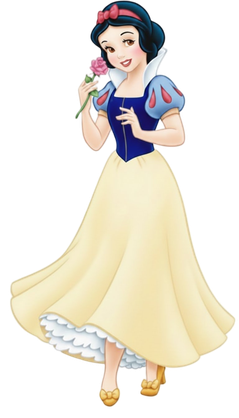
Snow White is the one who started everything, and she is both delightful and deeply strange when you look at her with fresh eyes. She’s kind, she’s cheerful, she sings to birds, she keeps a tidy cottage — she is, in every sense, the ideal woman of 1937. She is also, depending on the source material, somewhere around fourteen years old. Disney never specifies her age in the film, but the Brothers Grimm weren’t exactly subtle, and the romantic subplot involving a fully grown prince kissing an unconscious teenager is one of those things you just sort of absorb as a child and then slowly unpack as an adult.
(Fun sidebar: Snow White’s original voice actress, Adriana Caselotti, was legally forbidden by her contract from singing anywhere else — on film, on radio, nowhere — because Walt Disney didn’t want her voice associated with any other character. She was paid $970 for her work. In today’s money, that’s roughly $21,000. For a role that launched an entire franchise. Walt was a complicated figure.)
Snow White herself is sweet but, as Roger Ebert once observed, essentially passive — “not a character who acts but one whose mere existence inspires others to act.” She gets sent into the woods, finds a cottage, cleans it, befriends seven dwarfs, eats a poison apple, and waits to be kissed. The story happens to her more than she happens to the story. But she was the first, and without her there’s no franchise, no castle at the Magic Kingdom, and arguably no Disney as we know it. She deserves some credit for that, even if her defining characteristic is being too trusting of old women offering fruit.
Cinderella (1950)
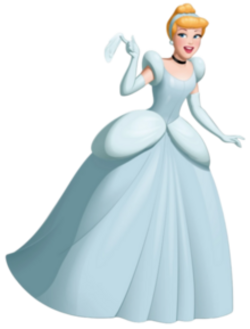
Thirteen years after Snow White, Cinderella arrived, and Disney essentially made the same movie again with different songs and a better wardrobe. Girl is mistreated. Girl is rescued by magic. Girl gets the prince. The end.
To be fair to Cinderella, she has a little more going on beneath the surface than Snow White. She’s described as having a sarcastic side and a sharp wit, and there are genuine moments where you can see her restraining herself from saying something biting to her stepfamily. She also has real warmth — her relationships with the mice and birds feel genuine rather than performative. But the film is so committed to the transformation sequence and the glass slipper that her personality mostly gets buried under sparkle and circumstance.
The 2015 live-action remake with Lily James actually did something interesting here — it let Cinderella stand up to her stepmother in the final act, making an active choice to refuse Lady Tremaine’s blackmail even knowing the cost. That version of the character feels like what the 1950 film was always reaching for but never quite got. Sometimes it takes sixty-five years and a second draft.
Aurora (1959)
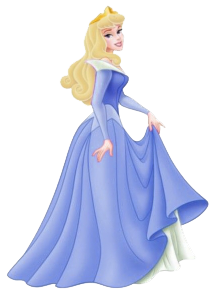
Aurora from Sleeping Beauty has the distinction of speaking fewer lines than any other main character in a Disney animated feature — exactly eighteen — and being unconscious for the most plot-significant portion of her own movie. She is, by almost any metric, the least active protagonist in the lineup. Critics at the time compared her unfavorably to Snow White. That’s quite a bar to fall below.
(Fun sidebar: Aurora nearly didn’t exist at all. Walt Disney was so frustrated with the project that he considered canceling it entirely until he heard Mary Costa’s voice and decided she was exactly right for the role. Costa, for her part, was attending a Hollywood dinner party and performed a song on the spot, not knowing she was auditioning. She later went on to have a distinguished career as an opera singer. First Lady Jacqueline Kennedy personally requested she perform at President Kennedy’s memorial service. None of this has anything to do with Aurora’s character development, but I find it genuinely fascinating.)
What Aurora does have going for her is an extraordinary visual design — her supervising animator Marc Davis drew inspiration from Art Nouveau, and the film’s backgrounds remain some of the most stunning in Disney’s history. She’s beautiful in a way that feels genuinely timeless rather than of-its-era. The problem is that beauty and eighteen lines of dialogue do not a protagonist make. When Sleeping Beauty flopped at the box office, Disney took the lesson to heart and didn’t make another princess film for thirty years. Aurora, through no fault of her own, nearly killed the franchise she helped create.
Ariel (1989)
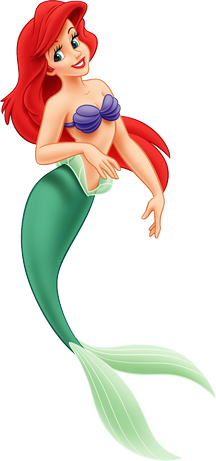
Thirty years later, The Little Mermaid arrived and changed everything. Ariel was the first Disney princess who felt genuinely alive — curious, impulsive, passionate, occasionally reckless, and willing to make catastrophically bad decisions in pursuit of something she actually wanted. That last quality was, for Disney heroines, genuinely new.
She’s also, and I say this with some affection, a hoarder. Ariel maintains an entire secret grotto full of human artifacts that she has collected, catalogued, and hidden from her father. She spends her days acquiring more objects she doesn’t fully understand and rhapsodizing about them to an indulgent fish. In 2026 this would probably get her referred to a professional. In 1989 it was charming and relatable, and honestly it still kind of is.
(Fun sidebar: Ariel’s red hair was actually a point of serious contention during production. Studio executives wanted her to be blonde. The animators argued that red hair contrasted better with her green tail, was easier to work with than yellow, and that Disney’s live-action branch had just released Splash with a blonde mermaid. Red won. Imagine an alternate timeline where Ariel is blonde. I don’t like it there.)
The complicated part of Ariel is what happens after she meets Prince Eric. She gives up her voice — literally her most distinctive quality — for a chance to be with a man she’s seen once from a distance. The film’s defenders argue this is less about Eric and more about her lifelong desire to be human, and that reading is textually valid. But the execution puts the romance front and center in a way that undercuts the “she was always going to choose this” argument. Still, Ariel represented such a massive leap from Aurora that these criticisms feel more like notes than verdicts.
Belle (1991)
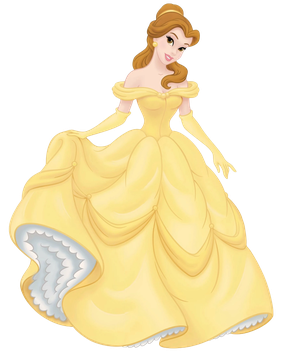
Belle arrived two years after Ariel, explicitly designed to be a correction to some of Ariel’s perceived shortcomings. She reads books. She rejects the village’s expectations of her. She’s brave and principled and refuses to marry Gaston even when the entire town thinks she should. Screenwriter Linda Woolverton based her on Katharine Hepburn’s Jo March (Little Women), fought relentlessly against a male-dominated story team to keep Belle proactive and intelligent, and created what many critics consider the gold standard of Disney heroines.
And then there’s the Beast situation, which I can’t in good conscience skip over.
(Fun sidebar — or maybe not so fun: Belle is imprisoned by the Beast, who is introduced screaming at her and physically intimidating her. She is not free to leave. Over the course of her captivity, she gradually develops romantic feelings for her captor. The film asks us to read this as a love story, and it largely succeeds because of how it’s crafted — the Beast genuinely changes, Belle is never presented as broken by her circumstances, and the dynamic feels more complex than a simple “captivity = love” equation. A psychiatrist who helped coin the term “Stockholm syndrome” argued in 2017 that the relationship doesn’t technically qualify. Woolverton herself has pushed back firmly on the reading. But it’s worth sitting with, even if you ultimately come down on the side of “it’s fine, it’s a fairy tale.”)
What Belle gets undeniably right is the intellectual component. Her love of reading isn’t just a character trait — it’s the engine of her story. She’s curious about the world beyond her village, curious about the Beast, and that curiosity is what creates the bond between them. That’s a meaningful departure from her predecessors, whose primary characteristics tended to be beauty, kindness, and a willingness to wait.
Jasmine (1992)
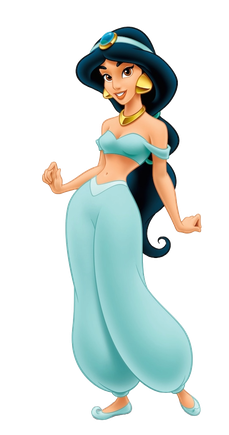
Jasmine is a character who should, by all rights, be one of the franchise’s best. She’s fierce, she’s clever, she refuses to be defined by the law requiring her to marry a prince, and she has a pet tiger. A tiger. That should be enough to elevate anyone. Unless your last name is literally Exotic.
The problem is that she’s a supporting character in her own film. Aladdin is, functionally, Aladdin’s story, and Jasmine exists primarily as the goal he’s working toward. She gets good scenes — her escape from the palace, the carpet ride, the moment she distracts Jafar with a kiss to buy Aladdin time — but the film isn’t interested in her interior life the way it is in his. Critic James Berardinelli praised her “streak of stubborn independence” while also noting that “she doesn’t fill a more pressing role than that of Aladdin’s love interest,” which is a polite way of saying the same thing.
She is also Disney’s first non-white princess, and the first to bring racial and ethnic diversity to the franchise, which is genuinely significant. The execution drew criticism from the Arab-American community almost immediately — one author quipped that Jasmine is “as Arab as baseball and apple pie” — but the intention was there, and Jasmine paved the way for every princess of color who followed her.
Pocahontas (1995)
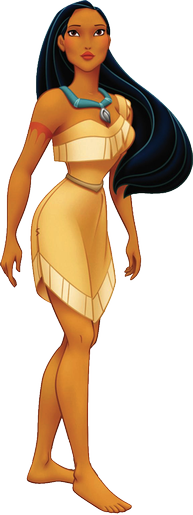
Pocahontas has the distinction of being the only Disney Princess based on a real historical figure, which creates an interesting set of complications. The real Pocahontas was approximately eleven years old when she encountered John Smith. Disney aged her up to around eighteen or nineteen, for reasons that supervising animator Glen Keane described with remarkable candor: a thirty-year-old man falling in love with an eleven-year-old would be “sleazy.” That’s the word he used. Accurate, but also a remarkable thing to say out loud about your own source material.
The Disney version of Pocahontas is a dignified, nature-attuned, spiritually perceptive young woman who teaches John Smith about environmental stewardship through the medium of a very catchy song. She’s also the first Disney Princess to not end up with her romantic interest at the film’s conclusion, which felt genuinely bold at the time. She chooses her people over her heart, and the film respects that choice without punishing her for it.
Mulan (1998)
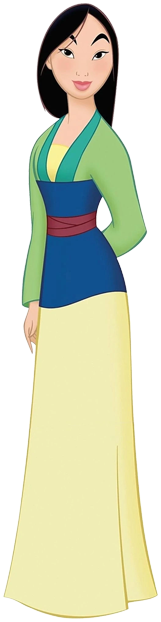
Here is a sentence I enjoy very much: Mulan is not a princess. She wasn’t born into royalty. She doesn’t marry a prince. She’s included in the Disney Princess franchise anyway, which suggests that at some point the brand guidelines became more flexible than anyone initially intended. Whether this matters depends entirely on how much you care about bureaucratic definitions of royalty, and personally I think the woman who saved China by engineering an avalanche has earned whatever title she wants.
Mulan is the last Disney Princess developed during the Renaissance era, and she might be the best one. Her story is genuinely about something — identity, duty, the gap between who you’re told to be and who you actually are. She succeeds not through magic or romance but through intelligence and determination. When she defeats Shan Yu, she does it with a fan and a rocket, which is objectively cooler than a glass slipper.
(Fun sidebar: The casting of Mulan’s singing voice was a whole thing. Lea Salonga — who had already voiced Jasmine’s singing in Aladdin — was originally cast to provide both the speaking and singing voice. The directors eventually felt her attempt at Mulan’s male alter ego “Ping” was unconvincing and replaced her speaking role with Ming-Na Wen, who got the job because her voice was “very Chinese,” per director Tony Bancroft. Salonga, upon being asked to audition for the singing role anyway, reportedly responded: “Why do I have to audition? I was already a princess before. Wasn’t that enough?” Respect.)
Tiana (2009)
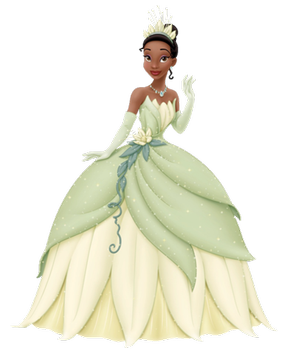
After Mulan in 1998, Disney went over a decade without a new princess, and when Tiana arrived in The Princess and the Frog, she carried a weight beyond her story. She was Disney’s first Black princess — a landmark that was, as many critics pointed out, long overdue. She was also immediately one of the franchise’s most grounded heroines: not royalty, working two jobs, laser-focused on a specific goal that has nothing to do with romance. Her ambition to open a restaurant in honor of her father is the emotional engine of the film, and it works.
The film’s decision to have Tiana and Naveen spend most of their screen time as frogs was controversial for reasons that are worth understanding. Some critics felt that Disney had finally created a Black princess and then made her not-human for the majority of her own movie. The intention was clearly to tell a specific kind of story, and the result is genuinely charming, but the optics were clunky in a way the studio probably should have anticipated.
Rapunzel (2010)
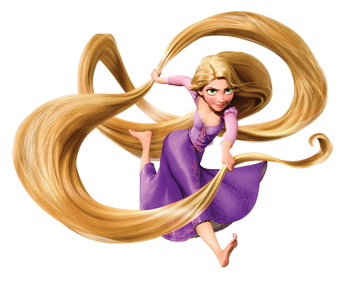
Rapunzel is, in many ways, Ariel with seventy feet of hair and a frying pan. Both are curious, imprisoned heroines who want more than their confined world offers. Both were animated by Glen Keane — and he’s said openly that Ariel inspired Rapunzel’s development. The comparison isn’t a criticism; it’s an acknowledgment that Disney found a formula that worked and refined it.
What Rapunzel does particularly well is the relationship at the center of the story. Flynn Rider is given enough texture to be interesting rather than just a romantic reward, and the film is confident enough to let the relationship develop through actual interaction rather than magic or fate. Their dynamic is fun and bickery in a way that feels earned. For a film that some feared might be Disney’s last princess movie, Tangled made a quietly compelling case for why the genre was worth continuing.
Merida (2012)
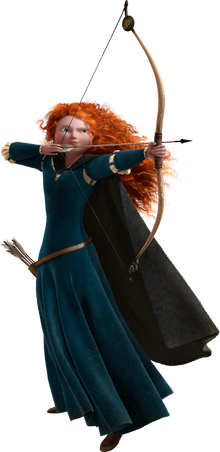
Merida is the franchise’s only Scottish member, its first Pixar creation, and — most importantly — the only Disney Princess whose story has nothing whatsoever to do with romance. She doesn’t want a prince. She doesn’t end up with one. Her primary relationship is with her mother, and the film’s central conflict is about their bond, their differences, and what they ultimately owe each other. That’s a genuinely radical departure, and the film is better for it.
(Fun sidebar: When Disney introduced Merida into the official princess lineup, they redesigned her — slimmer waist, more revealing neckline, shinier dress, larger eyes. Her creator, Brenda Chapman, called it “atrocious.” A Change.org petition against the redesign gathered over 20,000 signatures in a week. Disney reversed course. It was a remarkable piece of self-own from a studio that had just released a film specifically about resisting pressure to look a certain way. Sometimes the irony writes itself.)
Moana (2016)
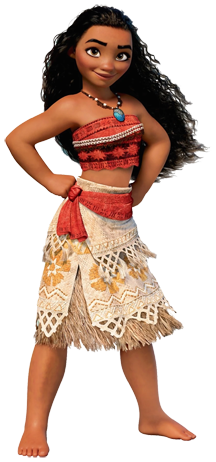
Moana doesn’t have a love interest. This is stated as a fact in almost every review of the film, and the repetition of it tells you something about how far the franchise has come — that the absence of romance is treated as notable, even revolutionary, rather than just a narrative choice. Variety called her “one of Disney’s most remarkable heroines yet” specifically because she takes control of her own destiny without waiting for a prince, which would have been an unremarkable sentence if written about a male protagonist, but here we are.
What makes Moana genuinely special is her specific relationship to her culture. Her story isn’t about escaping her world — it’s about understanding and honoring it. She doesn’t want to leave Motunui because she’s dissatisfied; she leaves because her people need her to. That’s a maturity of motivation that most of her predecessors never got close to.
Raya (2021)
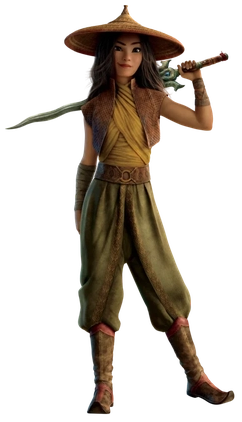
Raya is the franchise’s most recent addition, its first Southeast Asian princess, and in many respects the endpoint of a journey that started with Snow White sleeping in a glass coffin. She’s a warrior. She has trust issues that are complicated and earned rather than convenient. Her story is about learning to extend faith to others even after being burned, and the film doesn’t resolve that tension cheaply.
She also, notably, doesn’t sing. Not once. For a franchise built on musical numbers, that choice signals something about the kind of story Raya and the Last Dragon wanted to tell — and the kind of princess it wanted Raya to be.
What Eighty-Four Years Gets You
When you lay all thirteen princesses out in a row, the arc is impossible to miss. From Snow White, who waits to be kissed awake, to Raya, who faces down plague monsters with a whip-sword and the grudging help of a chaotic dragon, Disney’s definition of “princess” has stretched far enough to accommodate nearly every variation of female protagonist imaginable.
The princesses were always mirrors. Snow White reflected 1930s ideals about feminine purity. Cinderella reflected postwar domesticity. Ariel and Belle reflected a generation of girls who had been told they could want things. Mulan and Moana reflected a franchise slowly coming to terms with the fact that strength and femininity were never opposites. And Raya, who trusts no one and saves everyone anyway, reflects whatever this era is — complicated, a little battered, still reaching.
None of them are perfect. Some of them are actively problematic in ways their creators probably never intended. But taken together, they tell a story that’s worth following — not because every chapter is good, but because the whole thing is going somewhere.
And honestly? I’m curious to see who comes next.
Who’s your favorite Disney Princess, and do you think the franchise has finally figured out what it’s doing? And what about the non-princess princesses (Eilonwy from The Black Cauldron, Kida from Atlantis: The Lost Empire, the Frozen sisters)? Should they be added to Disney’s official line-up? Drop your thoughts in the comments.

