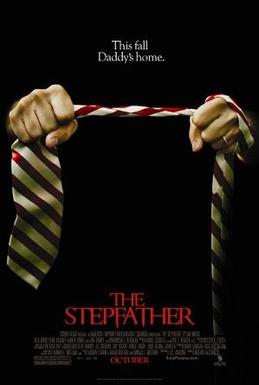
2009
Directed by Nelson McCormick
Welcome back to Movie Monday, where I continue my masochistic journey through the films that have left permanent scars on my cinematic psyche. As always, the usual caveat applies: this list is entirely subjective, shaped by my personal experiences and prejudices. If The Stepfather remake holds a special place in your heart—if Dylan Walsh’s performance resonated with you, if you found the thriller elements genuinely suspenseful, if this was your introduction to the story and you loved it—I’m not here to take that away from you. I’m just here to explain why, for me, this movie represents everything wrong with the unnecessary horror remake trend that plagued the late 2000s.
This week brings us to number 34: The Stepfather, a 2009 remake that took a genuinely unsettling 1987 psychological thriller and transformed it into exactly the kind of generic, sanitized, teen-targeted product you’d expect to see sandwiched between episodes of Gossip Girl on The CW.
My Introduction to Jerry Blake
Before I can properly eviscerate the remake, I need to establish my history with the original. Unlike many horror franchises that I discovered in my teenage years or adulthood, I was introduced to The Stepfather relatively young, courtesy of a mother who had a pretty liberal attitude toward horror films. Somewhere in the late 1980s, I watched Terry O’Quinn transform the seemingly mundane concept of a stepfather into something genuinely terrifying.
The original 1987 film, directed by Joseph Ruben and written by Donald E. Westlake, was loosely based on the crimes of John List, a New Jersey man who murdered his entire family in 1971. But the film was less interested in true crime recreation and more focused on creating a chilling portrait of American suburban anxiety. O’Quinn’s performance as Jerry Blake—a man who murders families when they fail to live up to his idealized vision of domestic perfection—was a masterclass in understated menace. He didn’t need to shout or brandish weapons to be terrifying. His terror came from the cognitive dissonance between his Norman Rockwell exterior and the murderous psychopath lurking just beneath the surface.
The original film worked because it understood that the scariest monsters are the ones who look exactly like us. Jerry Blake could be your neighbor, your coworker, the guy coaching Little League. That mundane familiarity made the horror personal in a way that supernatural slashers never could.
I even watched the sequels—Stepfather II in 1989, which had diminishing returns but still featured O’Quinn’s committed performance, and Stepfather III in 1992, a straight-to-TV affair that replaced O’Quinn with another actor and was exactly as forgettable as that sounds. I can’t claim to be fanatically attached to the original film or its franchise, but I appreciated what made the first film work: intelligent writing, social commentary about Reagan-era family values, and a lead performance that elevated the material.
Which brings us to 2009, when Hollywood decided that what the world really needed was a watered-down, PG-13, teen-friendly version of this story, stripped of everything that made it interesting.
The Netflix Queue of Curiosity
I encountered The Stepfather remake around 2010, while I was still living in North Carolina, through the now-nostalgic medium of Netflix DVD-by-mail. Remember when Netflix was primarily a service that mailed you physical discs in those iconic red envelopes? Before streaming dominated everything, before “Netflix and chill” became a thing, there was the simple pleasure of curating your DVD queue and waiting for the mailman to deliver your entertainment.
I added The Stepfather to my queue out of a mixture of curiosity and cautious optimism. At that point in my life, I was still the kind of person who would give remakes a chance, operating under the possibly naïve belief that sometimes filmmakers remake movies because they have a new perspective or something fresh to bring to the material. I’d been burned before—I’d seen the Friday the 13th remake, the Nightmare on Elm Street remake, the Halloween remakes—but I kept showing up like Charlie Brown convinced that this time, Lucy wouldn’t pull the football away.
I’ll also admit to a less noble motivation: Amber Heard was in it, and at the time, I thought she was attractive. This was before the Johnny Depp trials, before the world got a comprehensive education in her character (or lack thereof), when she was just a rising actress appearing in genre films. So yes, shallow aesthetics played a role in my decision to watch. I’m not proud of it, but I’m being honest.
What I got when that red envelope arrived was exactly what I should have expected: a competent but completely soulless exercise in corporate filmmaking, designed to appeal to the broadest possible audience while offending no one and saying nothing.
The Generic Template
The 2009 remake follows the basic structure of the original: a man (now named David Harris, played by Dylan Walsh) murders his family, assumes a new identity, and inserts himself into a new family situation. When his new stepson Michael (Penn Badgley) becomes suspicious, David’s carefully constructed façade begins to crack, leading to violence.
But where the original film used this premise to explore themes of toxic masculinity, unattainable ideals of domestic perfection, and the darkness lurking beneath suburban normalcy, the remake uses it as a framework for a standard-issue thriller designed to give teenagers a few jumps and maybe a mild sense of unease. It’s the difference between a film that has something to say and a film that’s just checking boxes.
The casting perfectly exemplifies the problem. Penn Badgley, fresh off his success as Dan Humphrey on Gossip Girl, is positioned as the protagonist—a clean-cut, conventionally attractive high school student who serves as the audience’s point of identification. This isn’t inherently wrong; the original film also featured a teenage protagonist in Jill Schoelen’s Stephanie. But the remake shifts the focus almost entirely to Michael and his generic teen drama concerns, reducing the stepfather himself to just another obstacle in a young adult thriller.
The entire production has that unmistakable CW teen drama aesthetic: attractive young people in well-lit suburban settings, dealing with “dark” material that never gets too dark, never challenges the audience, never risks making anyone genuinely uncomfortable. It’s Disturbia-lite, One Tree Hill with a body count, Gossip Girl goes homicidal. The film feels like it was reverse-engineered from a marketing meeting: “What if we took this cult horror film and made it safe for the Twilight demographic?”
The Dylan Walsh Problem
Look, I have nothing personal against Dylan Walsh. He’s a perfectly competent actor who has done solid work in television. But asking him to fill Terry O’Quinn’s shoes in this role is like asking someone to recreate the Mona Lisa using crayons. It’s not entirely his fault—the script gives him nothing to work with—but the comparison is inevitable and devastating.
Terry O’Quinn’s Jerry Blake was terrifying because of his restraint. His performance was all about the tension between his desperate need to maintain the perfect family and the rage simmering just beneath his pleasant exterior. The most chilling scene in the original film is when Jerry goes down to the basement and has a complete breakdown, screaming about his failed families—and then instantly snaps back to cheerful normalcy when his stepdaughter appears. It’s a master class in showing rather than telling, in letting the audience see the fractures in a psyche desperately trying to hold itself together.
O’Quinn understood that the character worked because he was so committed to the lie. Jerry Blake genuinely believes he can achieve the perfect family; his murders aren’t casual sadism but the actions of a man who cannot accept failure. There’s a twisted idealism to the character that makes him more than just a generic slasher villain.
Dylan Walsh’s David Harris, by contrast, is just… a guy. A vaguely threatening guy who does vaguely threatening things. The performance lacks the layers, the complexity, the specific pathology that made O’Quinn’s version memorable. Walsh plays the role as generically sinister, hitting the expected beats without finding anything interesting in the character. He’s not helped by a script that seems embarrassed by the psychological complexity of the source material and would rather just get to the next jump scare.
The remake also makes the baffling decision to show us David’s murders at the beginning of the film in graphic detail—well, as graphic as PG-13 allows—which immediately removes any ambiguity about the character. In the original, we see Jerry leave his murdered family and watch him build a new life, but the film trusts us to understand the horror without wallowing in it. The remake front-loads the violence as a hook, then spends the rest of the runtime trying to build suspense we’ve already resolved.
The PG-13 Sanitization
Which brings us to one of the remake’s most fundamental failures: the decision to pursue a PG-13 rating instead of the R rating that the material demands.
I understand the economic logic. PG-13 horror films can reach a wider audience, particularly teenagers who can see them without parental accompaniment. The mid-to-late 2000s saw a proliferation of PG-13 horror aimed at capturing the youth market: Prom Night, The Fog, The Uninvited, and countless others. These films made money, at least initially, by appealing to teenagers looking for a safe thrill.
But The Stepfather is not a story that can be effectively told within PG-13 constraints. This is a film about a man who murders multiple families, including children, in pursuit of an unattainable ideal. The horror of that concept requires a certain level of darkness, a willingness to go to uncomfortable places. You can’t explore the psychology of a family annihilator while making sure everything stays family-friendly.
The original film earned its R rating honestly. It was violent when it needed to be, but more importantly, it was psychologically disturbing. The violence wasn’t the point—the point was the cognitive dissonance of watching this seemingly normal man reveal himself to be capable of extraordinary evil. The film understood that true horror comes from implication and context, not just bloodshed, but it wasn’t afraid to show the consequences of violence when necessary.
The remake neuters all of this. Deaths happen off-screen or are shot in ways that minimize any real impact. The violence is choreographed to be thrilling rather than horrifying, exciting rather than disturbing. It’s violence as spectacle, not violence as meaningful consequence. The film wants to have it both ways—it wants the cachet of being a “dark thriller” while making sure no one in the audience ever feels truly disturbed.
This sanitization extends beyond just the violence. The entire premise is softened and simplified. The original film’s commentary on toxic masculinity and impossible domestic ideals is stripped away, leaving just a basic “crazy killer pretends to be normal” plot that could be grafted onto any generic thriller. The film is so afraid of making anyone uncomfortable that it removes everything that made the story worth telling in the first place.
The Remake Epidemic
The Stepfather was part of a broader trend of unnecessary horror remakes that plagued the late 2000s and early 2010s. I’ve subjected myself to more of these than any reasonable person should: the Friday the 13th remake that added nothing to the formula, the Nightmare on Elm Street remake that made the unforgivable sin of making Freddy Krueger boring, Rob Zombie’s Halloween films that mistook brutality for depth, and the infamous Wicker Man remake that at least had the decency to become a meme (“NOT THE BEES!”).
These remakes all share common failures: they mistake familiarity for quality, assume that modern audiences need everything explained and simplified, and prioritize marketability over artistry. But more fundamentally, they exist without purpose. They’re not remakes because someone had a new vision for the material or something fresh to say. They’re remakes because studios own the intellectual property and want to monetize it with minimal creative risk.
The Stepfather is a perfect example of this cynical approach. Take a moderately recognizable title, cast some attractive young actors to draw the teen demographic, sand off any rough edges that might alienate mainstream audiences, and release it as a low-risk product designed to turn a modest profit. The film cost $20 million and grossed $31 million—not a blockbuster, but profitable enough to justify its existence from a purely financial standpoint.
But from an artistic standpoint? From the perspective of whether this film needed to exist, whether it contributes anything to cinema or tells a story worth telling? It’s completely hollow.
I used to be the kind of person who would give remakes the benefit of the doubt. I’d show up with cautious optimism, hoping that maybe this time, filmmakers would find something new in familiar material. But I’ve been burned too many times. At this point, there has to be a genuinely compelling reason for me to watch a remake—some indication that the filmmakers have an actual vision rather than just a property to exploit.
The tragic irony is that the original Stepfather is readily available, perfectly watchable, and superior in every way. If someone is curious about this story, the 1987 film is right there, waiting to be discovered or rediscovered. It hasn’t aged poorly; if anything, its commentary on toxic ideals of family perfection is more relevant now than ever. Why would anyone choose the watered-down imitation over the genuine article?
What Made the Original Work
To understand why the remake fails, we need to acknowledge what made the original succeed.
Terry O’Quinn’s performance is the obvious centerpiece, but it’s not just that he’s a good actor playing a scary character. O’Quinn understood that Jerry Blake is a true believer. He’s not a sadistic killer who enjoys violence; he’s a man with an idealized vision of family that he cannot reconcile with reality. When his families inevitably fail to live up to his impossible standards—when his stepdaughter rebels, when his wife questions him, when the children don’t fit the Norman Rockwell portrait in his head—he experiences it as a personal betrayal worthy of the death penalty.
This makes Jerry Blake more terrifying than any supernatural monster because his pathology is recognizable. We all know people who can’t handle reality not matching their expectations, who double down on their delusions rather than adjust their worldview. Jerry Blake is the extreme manifestation of that tendency, taken to its logical and horrifying conclusion.
The original film also benefited from Donald E. Westlake’s screenplay, which was smart enough to make Jerry Blake the protagonist in many ways. We spend time with him, see him try to build his perfect family, watch him struggle to maintain his facade. This creates a deeply uncomfortable intimacy—we’re not just observing a monster from a safe distance, we’re being invited into his perspective, which makes the horror more personal.
Director Joseph Ruben understood that less is more. The most effective horror in the film comes from small moments: Jerry’s forced smile cracking at the edges, his too-enthusiastic attempts at normalcy, the way he has to constantly remind himself of his current identity. The film trusts its audience to pick up on these details without underlining everything.
And perhaps most importantly, the original film has a point of view. It’s not just a thriller about a killer stepfather; it’s a commentary on Reagan-era family values, the pressure to maintain appearances, the dark side of suburban conformity. Jerry Blake is a monster, but he’s a monster created by a culture that demands perfection while ignoring the human complexity that makes perfection impossible.
The remake has none of this. It’s content to simply retread the basic plot without understanding what made that plot meaningful.
The Missed Opportunity
What frustrates me most about The Stepfather remake is that the core concept could have been updated in interesting ways. The original film’s commentary on 1980s family ideals could have been translated into commentary on 2000s family dysfunction. The rise of social media, the performance of perfect family life on platforms like Facebook, the increasing pressure to present an idealized version of yourself to the world—these are all themes that could have been woven into a modern retelling.
Imagine a version where the stepfather character is obsessed with crafting the perfect family image for social media, where his murders are triggered by posts that disrupt his carefully curated online narrative. Imagine exploring how modern helicopter parenting and overinvolved stepparents might mask predatory behavior. Imagine updating the original’s satirical edge for a new generation of anxieties.
Instead, the remake just goes through the motions. It’s a cover song performed by musicians who don’t understand why the original worked, hitting the notes without capturing the melody.
Why The Stepfather Earns Its Spot at Number 34
The Stepfather remake lands at number 34 on my worst movies list because it represents the absolute worst instincts of corporate filmmaking. This is a movie that exists purely because someone owned the rights and thought they could make a quick profit by repackaging it for a new generation.
It takes a genuinely interesting psychological thriller and transforms it into generic, forgettable product. It replaces complexity with simplicity, commentary with cliché, psychological horror with jump scares. It sanitizes material that demands darkness, simplifies characters that require depth, and mistakes familiarity for quality.
Most damningly, it’s completely unnecessary. The original film is still available, still effective, still worth watching. This remake doesn’t improve on the original, doesn’t offer a new perspective, doesn’t justify its own existence beyond the profit motive. It’s a cinematic dead end, a film that contributes nothing except evidence that sometimes studios will remake anything if they think they can make money from it.
I’m grateful that I only watched this film once, back in 2010 when it arrived in that red Netflix envelope. The memory was fresh enough that I didn’t feel compelled to subject myself to it again for this review. Some films benefit from reconsideration and reevaluation. This is not one of them.
I’ve learned my lesson about unnecessary horror remakes. These days, I need a genuinely compelling reason to watch a remake—some indication that the filmmakers have an actual vision, something new to bring to the material. The Stepfather had no such vision. It’s a hollow exercise in exploitation, taking a perfectly good film and transforming it into something that nobody asked for and nobody needed.
The Bottom Line
The Stepfather remake is what happens when you prioritize marketability over meaning, when you value intellectual property more than actual ideas. It’s a film that looked at Terry O’Quinn’s chilling performance and thought, “What if we made this safe for teenagers?” It’s a film that took Donald E. Westlake’s smart screenplay and decided it needed to be simpler and more generic. It’s a film that exists because it could be profitable, not because anyone had something to say.
In the hierarchy of unnecessary remakes, The Stepfather isn’t the absolute worst—we’ll get to some truly abysmal entries as this list continues—but it might be one of the most pointless. At least The Wicker Man remake was spectacularly, memorably bad. The Stepfather remake can’t even achieve that distinction. It’s just mediocre, forgettable, and completely redundant.
If you’re curious about the story of a serial killer who murders families in pursuit of domestic perfection, do yourself a favor: skip this remake and watch the 1987 original. Terry O’Quinn’s performance alone is worth the price of admission, and you’ll get actual psychological depth instead of generic thrills. The original is right there, waiting to be discovered or rediscovered. There’s absolutely no reason to waste time on this inferior copy.
Next Week on Movie Monday
Join me next Monday when we take our monthly break from my worst movies list to enjoy some Disney animation with a look at Robin Hood. It’s finally time to catch up with the Merry Men in animal form as they dodge the Sheriff of Nottingham and take down Prince John.
Until then, may your remakes have actual reasons to exist and your horror films not be afraid of actually being horrifying.
What are your thoughts on The Stepfather remake? Did you see it? Did you appreciate it more than I did? Have you subjected yourself to the original 1987 film, and if so, how do they compare in your estimation? Most importantly, at what point did you give up on unnecessary horror remakes, or are you still showing up with optimistic curiosity? Share your experiences in the comments below—I’m particularly curious to hear from anyone who saw the remake first and then went back to discover Terry O’Quinn’s definitive performance.
 The Confusing Middle
Haven’t seen any of the Stepfather movies, but I’m sure the remake is awful.
LikeLiked by 1 person