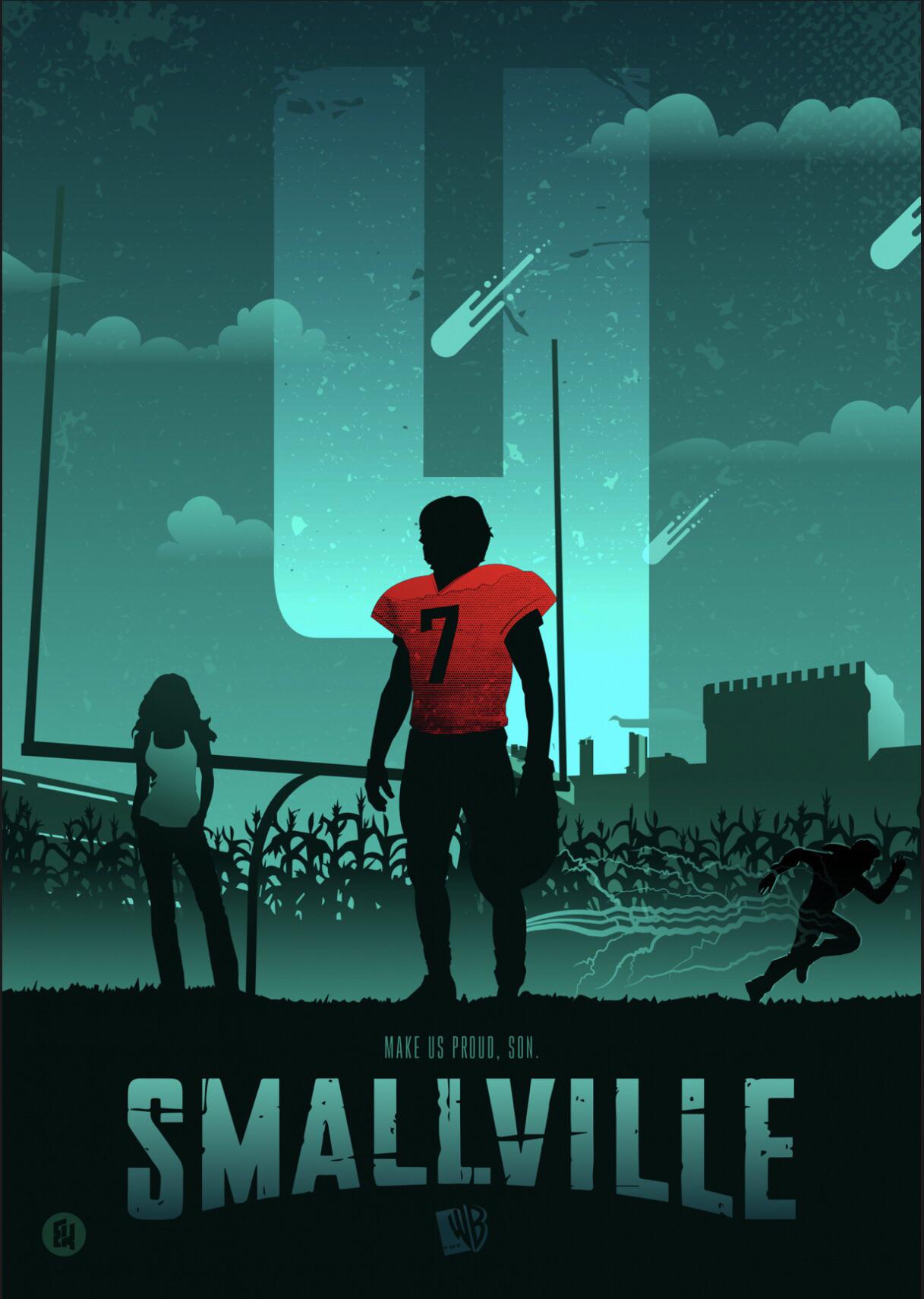
Welcome back to Rewatching Smallville, my weekly dive into the iconic series that explores Clark Kent’s journey before becoming Superman. Whether you’re a long-time fan or new to the show, you’re invited to join in each Tuesday as I revisit episodes and share my thoughts and observations. Be sure to share your own memories and theories in the comments below!
Content Warning: This episode deals with themes of mental illness, family trauma, and apocalyptic fears.
Sometimes the most effective way to understand a character isn’t through their actions or dialogue, but through their nightmares. “Scare,” the tenth episode of Smallville‘s fourth season, strips away all pretense and social masks to reveal what truly terrifies our heroes—and the results are more unsettling than any meteor freak could ever be.
Written by Kelly Souders and Brian Peterson and directed by David Carson, “Scare” essentially hands each main character a psychological evaluation administered by a weaponized toxin. It’s Smallville doing Batman villain territory, complete with fear-inducing chemicals that would make Jonathan Crane proud. The episode succeeds because it understands that sometimes the most compelling superhero stories happen when the cape comes off and we examine what lies beneath.
The Scarecrow Connection
Let’s address the scarecrow in the room. “Scare” is about as close as Smallville gets to straight-up adapting a Batman storyline without actually featuring the Dark Knight. The fear toxin concept is lifted directly from Scarecrow’s playbook, and the episode doesn’t try to hide its influences. Much like Dr. Jonathan Crane’s experiments, the LuthorCorp toxin forces victims to confront their deepest psychological wounds through vivid, terrifying hallucinations.
The timing feels intentional, arriving just a year before Christopher Nolan’s Batman Begins would bring Scarecrow’s fear toxin to the big screen with devastating effect. Where Nolan’s film used the concept to explore urban decay and institutional corruption, Smallville turns the lens inward, using the device to examine how teenage and young adult fears differ from more mature anxieties. The result is an episode that functions as both thriller and character study, revealing truths that normal dramatic scenes might take seasons to uncover.
What makes Smallville‘s approach particularly effective is how it grounds the fear toxin in the show’s existing mythology. By making it a LuthorCorp experiment involving meteor rocks, the episode maintains continuity with the series’ established rules while borrowing from DC’s broader sandbox. It’s smart crossover writing that enhances rather than contradicts the show’s internal logic.
Lex’s Presidential Nightmare
Michael Rosenbaum delivers some of his finest work in the series during Lex’s apocalyptic vision, and it’s worth noting that the nuclear destruction sequences are lifted directly from Terminator 3: Rise of the Machines. Recognizing those shots adds an extra layer of unease—they’re real enough that they were deemed suitable for a major motion picture’s depiction of humanity’s end.
Lex’s nightmare reveals the scope of his ambitions alongside his growing awareness of their potential consequences. The vision of himself as President launching nuclear missiles isn’t just megalomania—it’s guilt. Rosenbaum plays the sequence with a mixture of horror and recognition, suggesting that Lex understands his capacity for destruction even as he pursues power.
The detail that really sells the sequence is the field of bones Lex sees afterward, complete with what appear to be the skeletal remains of various DC heroes, including what looks suspiciously like Batman’s cowl among the debris. It’s a subtle nod to the broader DC universe while emphasizing the personal nature of Lex’s fears. He’s not afraid of being defeated by heroes—he’s afraid of becoming the kind of villain who makes heroes necessary in the first place.
The episode cleverly connects this vision to Cassandra Carver’s prophecy from a first season episode, creating continuity that suggests Lex’s fate isn’t random but the inevitable result of choices he’s actively making. The toxin doesn’t create false fears—it amplifies existing anxieties, and Lex’s terror at his own potential for evil rings completely authentic.
Clark’s Secret Identity Anxiety
Tom Welling brings understated devastation to Clark’s hallucination, which cuts to the heart of the series’ central dramatic tension. His vision of a second meteor shower isn’t just about physical destruction—it’s about the revelation of his role in the first shower and the inevitable loss of everyone he loves once they learn the truth.
The sequence where Lana discovers Clark’s alien origins and kills him with kryptonite is brutal precisely because it feels emotionally plausible. While the actual violence is clearly fantasy, the underlying fear—that Clark’s loved ones will reject him once they know what he really is—drives much of the series’ ongoing drama. The fact that his fear specifically involves being blamed for the deaths of Lana’s parents adds a layer of guilt that makes his reluctance to reveal his secret feel completely justified.
Welling plays Clark’s post-hallucination scenes with a new weight, particularly in his final conversation with Chloe. When she opens up about her fears regarding hereditary mental illness, Clark has the perfect opportunity to reciprocate with his own vulnerability, but his nightmare has reinforced his conviction that honesty will only lead to rejection and loss. It’s a character moment that explains years of Clark’s future decisions while demonstrating how fear can become self-fulfilling prophecy.
The episode’s final moments, where Clark explicitly tells his parents that his hallucination has made him more afraid to tell his friends about his secret, provide crucial insight into why Season 4 Clark often feels more isolated than his earlier incarnations. The toxin has essentially weaponized his anxieties, making rational fears feel overwhelming and insurmountable.
Lana’s Abandonment Complex
Kristin Kreuk brings genuine pathos to Lana’s vision of loss, which strips away all of her defensive mechanisms to reveal the abandonment anxiety that drives much of her behavior throughout the series. The image of her surrounded by the corpses of everyone she’s ever loved—parents, friends, and eventually herself—is Smallville at its most unflinchingly psychological.
What makes Lana’s nightmare particularly effective is how it recontextualizes her often-criticized tendency toward melodrama. When viewed through the lens of someone who genuinely believes that everyone she cares about will eventually leave her (usually through death), her intense reactions to relationship conflicts and her difficulty trusting others’ commitments make perfect sense. The vision suggests that Lana’s emotional walls aren’t just teenage drama—they’re psychological survival mechanisms.
The detail that Clark doesn’t appear among the visible corpses in her hallucination is interesting, either suggesting she views him as invulnerable or, more troublingly, that he’s already emotionally distant enough that losing him doesn’t register as her worst fear. Given the timing in Season 4, when Clark and Lana’s relationship is particularly strained, the latter interpretation feels more likely.
Kreuk plays Lana’s recovery from the hallucination with a brittle fragility that suggests the vision has confirmed rather than created her fears. Her subsequent interactions with Jason carry new weight when viewed as coming from someone whose deepest terror involves being abandoned by the people she trusts most.
Chloe’s Hereditary Fears
Allison Mack delivers powerhouse work in both Chloe’s hallucination sequence and her subsequent revelation about her mother’s institutionalization. The vision of herself bound in a straitjacket, warning that “none of the women in their family have escaped,” is Smallville at its most genuinely disturbing.
Mack plays the sequence with mounting horror that feels visceral rather than performative. The transformation from curious investigation to absolute terror as Chloe realizes she’s looking at her own potential future creates genuine unease. The black eyes and scarred mouth of her nightmare self suggest not just mental illness but complete loss of identity—a fear that hits particularly hard for a character whose sense of self is so tied to her intellectual capabilities.
The episode’s revelation that Chloe has recently discovered her mother’s mental illness and its hereditary nature provides crucial context for understanding her character’s evolution throughout Season 4. Her increasing intensity and boundary-pushing behavior can now be read as someone trying to accomplish as much as possible before potentially losing her faculties, adding urgency to her investigative work that goes beyond simple teenage ambition.
Mack’s delivery of Chloe’s confession to Clark about feeling “much less scared” after sharing her secret provides a beautiful contrast to Clark’s inability to reciprocate. It’s a moment that demonstrates how emotional intimacy can defuse fear’s power while simultaneously showing how Clark’s supernatural circumstances make normal human solutions unavailable to him.
Jason’s Betrayal Nightmares
Jensen Ackles brings manic energy to Jason’s fever dream, which reveals his awareness that his relationship with Lana is built on fundamental deception. The vision of Lana discovering his true motives and choosing Clark over him before ultimately stabbing him captures the specific anxiety of someone living a lie while genuinely caring about their victim.
Ackles plays Jason’s hallucination with the desperation of someone who knows they deserve the punishment they’re receiving. The detail that Lana uses scissors—a decidedly unglamorous weapon—to kill him suggests that Jason’s subconscious views his eventual exposure as mundane rather than dramatic, just the inevitable consequence of sustained dishonesty.
The sequence works because it acknowledges that Jason’s growing feelings for Lana are real even as his initial motives remain suspect. His fear isn’t just about being caught—it’s about losing someone he’s come to genuinely care about through his own deception. It’s a complexity that makes Jason more sympathetic even as it confirms the ultimate futility of his position.
Jason’s post-recovery consideration of leaving Smallville feels like a direct response to his nightmare’s warning. Even though he survives the toxin, the vision has shown him the emotional truth of his situation: that his presence in Lana’s life is ultimately harmful to both of them.
The LuthorCorp Connection
The episode effectively uses the fear toxin crisis to advance Season 4’s ongoing themes about corporate responsibility and the cost of unchecked scientific experimentation. Lex’s decision to shut down the project despite its military value and financial potential represents a rare moment of clear moral choice that contrasts sharply with his father’s historical approach to LuthorCorp’s more questionable ventures.
The detail that the toxin was created through experiments on unconscious subjects using meteor rocks provides a perfect encapsulation of how LuthorCorp’s research methods inevitably create the very problems they claim to be solving. The fact that Lex himself becomes a victim of his own company’s experiments adds poetic justice while demonstrating how corporate malfeasance ultimately harms everyone, including those in power.
Dr. Ford’s insistence on testing the antidote before administering it, contrasted with Lex’s willingness to take an untested cure himself, creates an interesting moral dynamic. Lex’s choice to assume personal risk rather than experimenting on others represents genuine character growth, even as his overall trajectory continues toward darkness.
Lionel’s Mysterious Benefactor
John Glover brings his usual mixture of charm and menace to Lionel’s release from prison, though the episode wisely keeps the identity of his benefactor mysterious for now. His claim that he’s “guilty of many crimes, but not the one for which he was convicted” creates an interesting moral puzzle—while technically true based on the show’s continuity, it also represents the kind of selective honesty that makes Lionel perpetually untrustworthy.
The detail that Lionel chooses to remain in prison because it’s where he can “do the most good” suggests either genuine redemption or incredibly sophisticated manipulation. Glover’s performance keeps both possibilities alive, creating the kind of ambiguity that makes Lionel such a compelling antagonist throughout the series.
The Accountability Problem
One of the episode’s most glaring issues becomes apparent in its resolution—or rather, its complete lack of consequences for LuthorCorp’s role in the crisis. Despite releasing a toxin that kills multiple people and terrorizes an entire town, Lex and his company face absolutely no legal, financial, or social repercussions. Chloe’s frustrated observation that “there’s no sign of a lawsuit” and the whole incident is “just being completely forgotten about” highlights a pattern that becomes increasingly problematic as the series progresses.
This stands in stark contrast to the previous episode’s exploration of privilege and consequence. Where “Bound” examined how wealth can insulate people from accountability, “Scare” goes a step further by suggesting that sufficient corporate power can make even mass casualties disappear from public consciousness. The episode’s failure to address this creates an uncomfortable subtext: that LuthorCorp’s experiments can literally kill innocent people without meaningful consequences.
The missed opportunity here is particularly frustrating because the episode does show Lex making moral choices—shutting down the project, taking personal risks to help victims—but these individual gestures feel hollow when placed against the complete absence of institutional accountability. It’s one thing to show Lex as personally decent in a crisis; it’s another to suggest that personal decency absolves corporate malfeasance.
Chloe’s anger about the cover-up serves as the episode’s moral conscience, but her frustration ultimately goes nowhere, reinforcing the sense that in Smallville‘s world, the wealthy and powerful operate by different rules than everyone else (though this may be the most realistic element from this episode). It’s a troubling message that becomes even more problematic when viewed as part of Lex’s overall character arc.
Direction and Technical Elements
David Carson brings appropriately claustrophobic direction to the episode’s psychological horror elements while maintaining Smallville‘s established visual style. The hallucination sequences feel genuinely unsettling without relying on gore or cheap shock tactics, using lighting and sound design to create unease.
The decision to reuse nuclear destruction footage from Terminator 3 proves inspired, lending Lex’s presidential nightmare a visceral reality that original effects might not have achieved on a television budget. The familiarity of the images adds to their impact—these aren’t fantasy explosions but documented depictions of civilization’s end.
The episode’s pacing effectively balances action and character development, using the mystery of the toxin’s spread to maintain tension while allowing each character’s fear sequence to breathe and develop naturally. The decision to show most hallucinations in full rather than cutting away maintains their psychological impact while trusting the audience to handle mature themes.
Season 4 Context and Themes
“Scare” serves an important function in Season 4’s exploration of how secrets and lies corrode relationships even when maintained with good intentions. Each character’s nightmare reveals how their private fears directly relate to their public deceptions, creating a thematic coherence that strengthens the season’s overall arc.
The episode also continues Season 4’s examination of how Clark’s secret identity creates barriers to genuine intimacy, not just romantic but friendship-based as well. His inability to comfort Chloe with his own vulnerability demonstrates how his alien heritage isolates him in ways that go far beyond physical differences.
Most importantly, “Scare” establishes psychological baselines for each character that will inform their behavior throughout the remainder of the series. Understanding what terrifies Clark, Lex, Lana, Chloe, and Jason provides crucial context for interpreting their future choices and relationships.
The Verdict
“Scare” stands as one of Season 4’s most psychologically sophisticated episodes, using its borrowed Batman concept to explore character depths that normal dramatic scenes might never reach. The episode succeeds because it treats its fear toxin as a storytelling device rather than a gimmick, using the hallucinations to reveal genuine character truths rather than cheap thrills.
The performances across the board are exceptional, with each actor bringing commitment and vulnerability to material that could easily have become ridiculous in less capable hands. The episode’s willingness to explore dark psychological territory while maintaining Smallville‘s essential optimism creates the kind of tonal complexity that marks the series at its best.
Most importantly, “Scare” demonstrates that sometimes the most effective superhero stories are the ones that examine what happens when the powers fail and characters are forced to confront their humanity. By stripping away all pretense and forcing each character to face their deepest fears, the episode creates genuine emotional stakes that resonate far beyond its single-episode crisis.
It’s Smallville doing psychological horror with intelligence and heart, proving that borrowed concepts can become something entirely new when filtered through the right creative vision. And unlike poor Jason’s nightmare, this episode definitely doesn’t fall flat.
What did you think of each character’s worst fear? Did any of the hallucinations surprise you, or did they feel like natural extensions of existing character traits? And how do you feel about Smallville’s decision to borrow so heavily from Batman’s rogues gallery for this storyline? Share your thoughts and memories in the comments below!
 The Confusing Middle

How strange that they used a Scarecrow concept in Smallville.
LikeLiked by 1 person