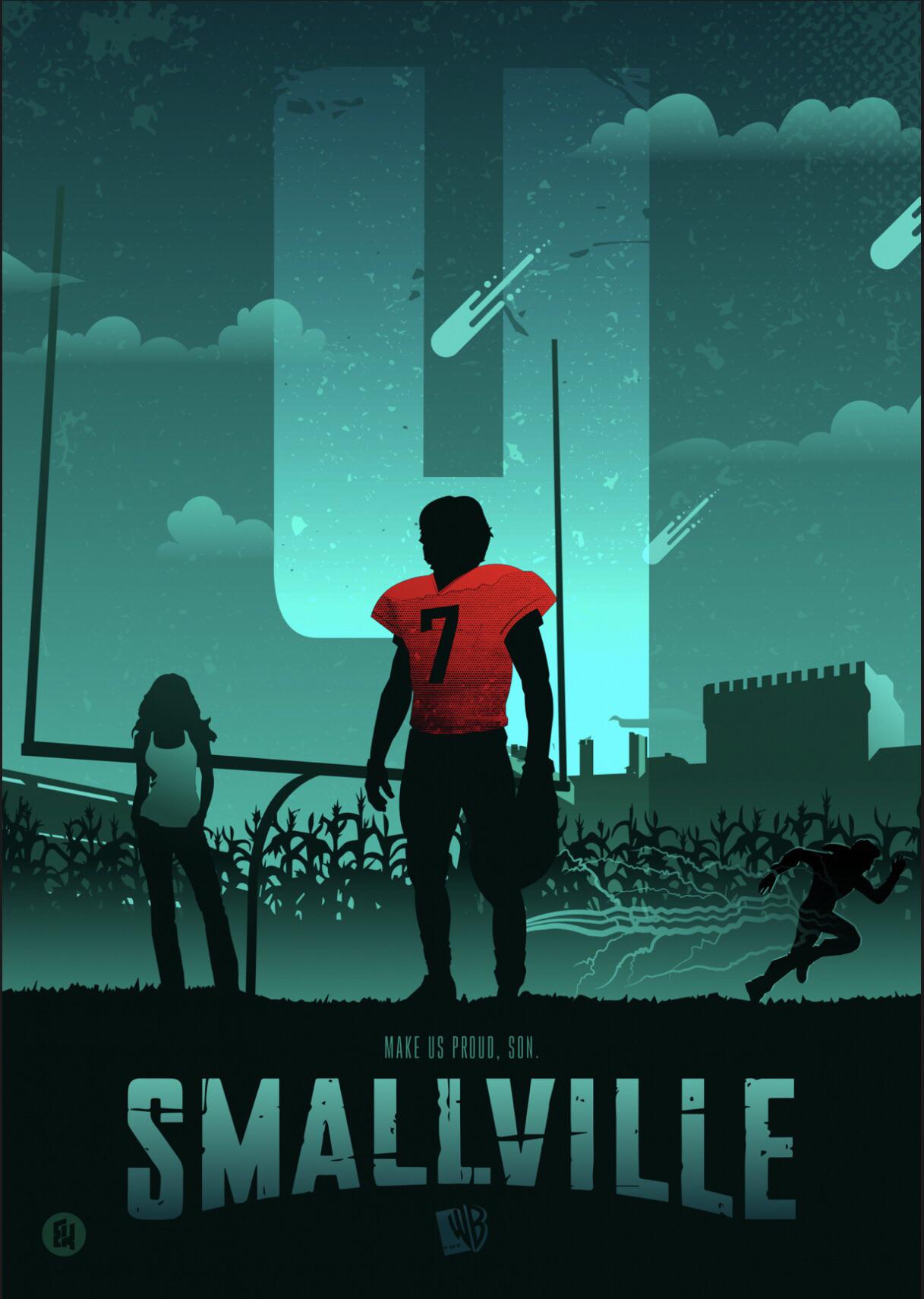
Welcome back to Rewatching Smallville, my weekly dive into the iconic series that explores Clark Kent’s journey before becoming Superman. Whether you’re a long-time fan or new to the show, you’re invited to join in each Tuesday as I revisit episodes and share my thoughts and observations. Be sure to share your own memories and theories in the comments below!
Content Warning: This episode deals with themes of sexual misconduct, stalking, and revenge.
Kids, remember the time your Aunt Robin tried to kill Lex Luthor?
Oh, you don’t remember that? Well, let me tell you about the time a future SHIELD agent and Canadian news anchor decided that the best way to handle being ghosted by a billionaire was to frame him for murder, then tie him up and set him on fire. It was legen… wait for it… dary. But we’ll get to that.
“Bound” arrives as episode nine of Season 4, following the supernatural hijinks of “Spell,” and immediately establishes itself as a very different kind of Smallville episode. Where the previous installment dealt with magical possession and over-the-top witch antics, “Bound” grounds itself firmly in the more sordid realities of human behavior, exploring themes of sexual exploitation, obsession, and the consequences of treating people as disposable.
It’s also the episode that proves Smallville could handle noir-influenced storytelling when it wanted to, even if the execution occasionally stumbles under the weight of its own moral complexities.
The Morning After From Hell
The episode opens with what might be the most film noir-inspired sequence in the series’ history. Lex waking up next to a bloody corpse, with no memory of the previous night, immediately establishes stakes and atmosphere that feel pulled from a classic murder mystery. The visual of Lex’s confused horror, combined with the maid’s hysterical screaming, creates genuine tension that the show rarely achieves with its more familiar meteor freak storylines.
Michael Rosenbaum sells Lex’s confusion and mounting panic beautifully, conveying both his genuine bewilderment and the underlying fear that maybe, just maybe, he actually did commit murder. It’s a performance that asks viewers to sympathize with a character who we’ll soon learn has been treating women terribly, creating the kind of moral complexity that Smallville handles best when it commits to exploring uncomfortable territory.
The episode’s structure as a mystery thriller allows it to gradually reveal information about Lex’s behavior while building toward the revelation of the real killer. It’s an approach that lets the audience piece together Lex’s moral failings alongside Clark’s growing disappointment, creating parallel tracks of discovery that keep the pacing tight and the stakes personal.
The Playbook of Privilege
What makes “Bound” particularly effective is how it examines the casual cruelty of wealthy privilege without excusing it. Lex’s revelation that he maintains a database of women who have “stalked” him after brief relationships initially seems paranoid until we realize these are women seeking basic acknowledgment after being intimate with him. The detail that he sends diamond earrings as dismissal gifts paints a picture of someone who has systematized the process of discarding people.
The episode doesn’t let Lex off the hook by making him a complete victim. While Shannon Bell’s methods are clearly psychotic, her core grievance—that Lex told her he loved her, then completely ignored her existence—reflects a pattern of behavior that the episode treats as genuinely harmful. Lex’s admission to Clark that Shannon “might have been crazy, but she was right about one thing” shows a character capable of recognizing his own moral failures, even if he’s been unwilling to change them.
Rosenbaum brings nuanced layers to these scenes, particularly in the final loft conversation with Clark. His delivery of “when I thought I was going to die, I was almost relieved that the world would be rid of me” feels genuinely self-aware rather than self-pitying, suggesting that Lex understands the weight of his actions even if he’s struggled to break these patterns.
The episode’s examination of how wealth insulates people from consequences feels particularly relevant, showing how Lex’s ability to hire lawyers and manage media allows him to treat the aftermath of Shannon’s crimes as primarily a public relations problem rather than a moment for genuine self-reflection.
Shannon Bell: When Obsession Turns Lethal
Cobie Smulders brings manic energy and genuine menace to Shannon Bell, creating a character who feels both sympathetic and terrifying. Her transformation from mousy legal assistant to confident killer works because Smulders plays both versions as authentic aspects of the same person rather than complete personality switches.
The reveal sequence, where Shannon undoes her hair and removes her glasses while asking “Don’t you recognize me?” provides both a clever nod to Superman’s civilian disguise and a moment of genuine horror as Lex realizes how completely he failed to see her as a person. Smulders delivers the line with perfect bitter satisfaction, conveying years of resentment finally finding an outlet.
Shannon’s plan—recruiting another discarded woman, murdering her, and framing Lex—demonstrates both criminal intelligence and deep psychological damage. The episode wisely doesn’t try to excuse her actions, but it does provide enough context to understand how someone might reach this level of destructive obsession when treated as completely disposable by someone they trusted.
The final confrontation, where Shannon douses Lex with wine and prepares to burn him alive, brings genuine stakes to their conflict. Her monologue about how he slept with her multiple times but didn’t even recognize her captures the specific cruelty of being treated as forgettable by someone you considered significant.
Smulders balances Shannon’s justified anger with her clearly unhinged methods, creating a character who serves as both a legitimate consequence of Lex’s behavior and a cautionary tale about how grievances can metastasize into something far more dangerous than their original cause.
Clark’s Moral Compass in Crisis
Tom Welling does some of his best work in Season 4 during the scenes where Clark grapples with his growing disappointment in Lex. The conversation where Clark tells his parents “it seems like Lex only cares about himself” captures someone who’s been forced to reevaluate a friendship he thought he understood.
Clark’s decision to work with Lionel, despite his reservations, shows his willingness to accept help from morally questionable sources when innocent lives are at stake. His interactions with Lionel in prison effectively convey someone who recognizes manipulation while still engaging with it out of necessity.
The previous episode’s revelation that Clark is still a virgin adds an interesting character detail that contrasts with Lex’s casual approach to physical relationships. It suggests that Clark’s alien heritage and moral framework have kept him from engaging in behavior he might later regret, creating an implicit contrast with Lex’s human appetites and their consequences.
Welling brings quiet disappointment to Clark’s final scene with Lex, conveying someone who wants to maintain faith in a friend while struggling with mounting evidence of that friend’s character flaws. His delivery of “I hated that feeling” when describing how Lionel seemed more honest than Lex captures the specific pain of losing trust in someone you care about.
The Lionel Wildcard
John Glover continues to make Lionel’s supposed redemption feel both genuine and suspicious simultaneously. His claim that switching bodies with Clark has healed both his liver and his destructive impulses creates interesting questions about whether supernatural experiences can fundamentally change someone’s nature.
Lionel’s assistance in solving the mystery feels both helpful and self-serving, advancing his goal of rebuilding a relationship with Lex while demonstrating his continued strategic thinking. Glover plays these scenes with enough sincerity to make Lionel’s change of heart feel possible while maintaining the underlying calculation that makes him perpetually untrustworthy.
The final scene between Lionel and Lex, where Lionel says he simply wants to be Lex’s father, provides a nice counterpoint to the episode’s themes about the consequences of treating people as disposable. Lex’s response—”Don’t expect another miracle”—suggests he recognizes the gesture while remaining skeptical about its authenticity.
Direction and Technical Elements
Terrence O’Hara brings noir atmosphere to the episode without overwhelming Smallville’s established visual style. The hotel and prison scenes feel appropriately claustrophobic, while the mansion sequences maintain the show’s typical polish while incorporating darker lighting that reflects the episode’s themes.
The murder scene staging effectively balances graphic implications with broadcast television limitations, creating genuine shock without gratuitous imagery. The elevator surveillance footage sequence provides crucial plot advancement while maintaining visual interest through editing choices that emphasize the characters’ detective work.
The final fire sequence benefits from practical effects that create real danger without requiring elaborate special effects work. Clark’s power use feels organic to the rescue rather than showy, maintaining the episode’s grounded tone even during its superheroic moments.
Why “Bound” Works Despite Its Discomfort
The episode succeeds because it treats its dark subject matter seriously rather than using it for cheap thrills. Shannon’s grievances are presented as legitimate even when her methods are clearly wrong, while Lex’s behavior is condemned without making him irredeemably evil.
The mystery structure allows the episode to examine themes of privilege and consequence without feeling preachy, letting viewers reach their own conclusions about character behavior while providing clear moral stakes. The revelation that magic can hurt Clark from the previous episode contrasts nicely with this story’s demonstration that human cruelty can be just as dangerous in different ways.
Most importantly, “Bound” uses its thriller elements to advance character development rather than replacing it. Clark’s growing understanding of Lex’s flaws, Lex’s rare moment of genuine self-reflection, and even Lionel’s continued attempts at redemption all feel like natural extensions of the season’s ongoing character arcs.
The Larger Season 4 Context
“Bound” serves an important function in Season 4’s gradual darkening of Lex’s character while maintaining viewer sympathy for his journey toward eventual villainy. By showing his capacity for both cruelty and self-awareness, the episode establishes that Lex’s fall isn’t inevitable but rather the result of choices he continues to make despite understanding their consequences.
The episode also continues the season’s theme of Clark facing threats that require more than physical strength to overcome, as Shannon’s manipulation and Lex’s moral crisis can’t be solved with superpowers alone.
The Verdict
“Bound” stands as one of Season 4’s more mature episodes, tackling difficult themes with more nuance than the show typically brings to its villains-of-the-week. While the subject matter makes it uncomfortable viewing, the episode’s willingness to examine the real consequences of treating people as disposable creates genuine dramatic weight.
Cobie Smulders delivers a memorable guest performance that balances sympathy and menace, while Michael Rosenbaum brings new depth to Lex’s ongoing moral decline. The episode proves that Smallville could handle noir-influenced storytelling when it committed to exploring the darker aspects of human behavior.
Most importantly, “Bound” feels like an episode with something to say about privilege, consequence, and the importance of treating others with basic human dignity. It’s Smallville at its most uncomfortable, but also at its most willing to grapple with the moral complexities that make its best episodes resonate beyond their superhero framework.
And kids, that’s how your Aunt Robin learned that trying to murder people is generally not the best way to process rejection. She got much better at handling disappointment after joining SHIELD. True story.
What did you think of the episode’s handling of its dark themes? Did Lex’s moment of self-awareness feel genuine, or too little too late? And how do you feel about the show’s decision to tackle such mature subject matter in what’s ostensibly a teen-friendly superhero series? Share your thoughts and memories in the comments below!
 The Confusing Middle

I forgot Cobie Smulders was on the show. This was a dark episode.
LikeLiked by 1 person