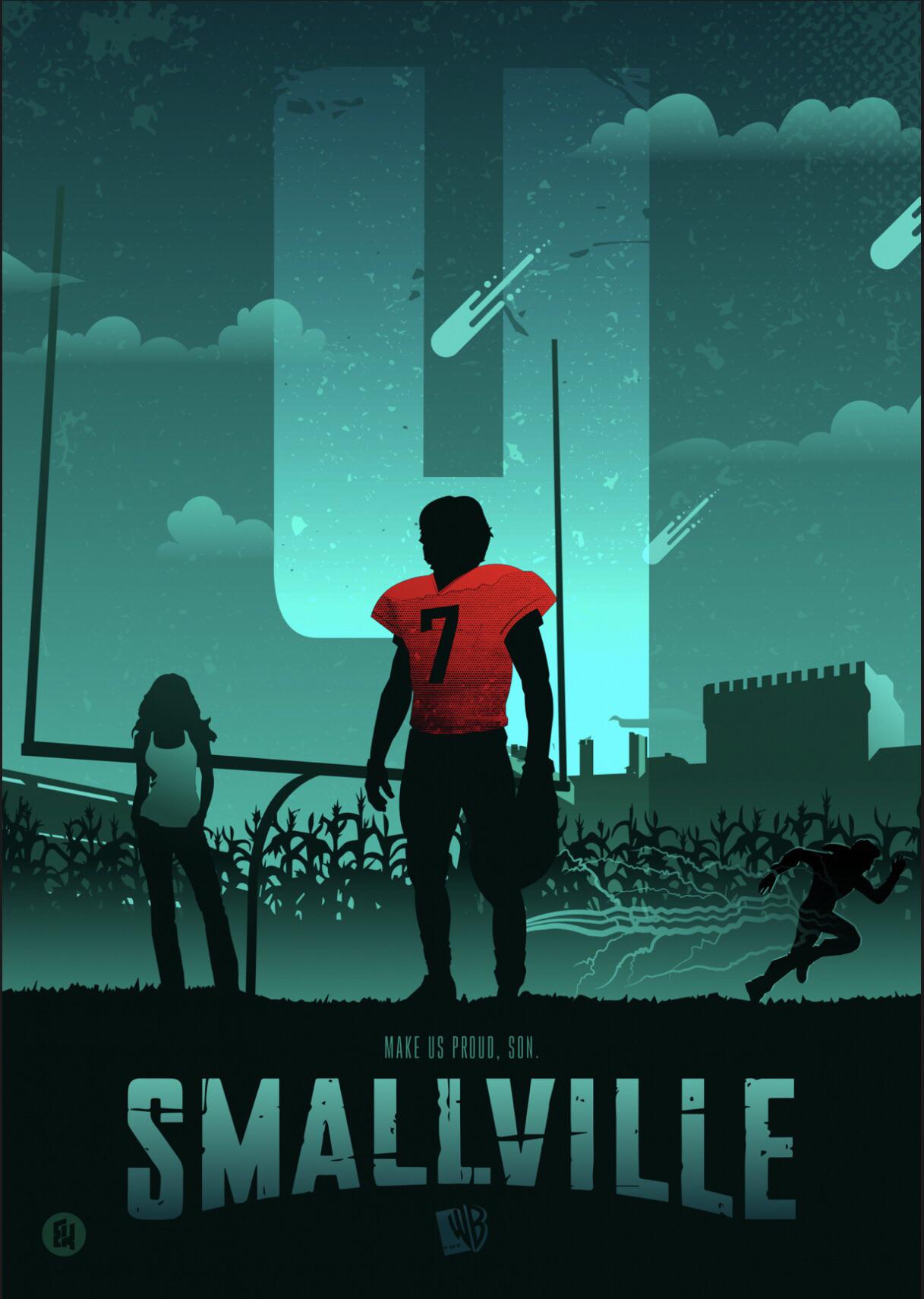
Welcome back to Rewatching Smallville, my weekly dive into the iconic series that explores Clark Kent’s journey before becoming Superman. Whether you’re a long-time fan or new to the show, you’re invited to join in each Tuesday as I revisit episodes and share my thoughts and observations. Be sure to share your own memories and theories in the comments below!
Sometimes you watch a Smallville episode and think, “Well, that was a perfectly serviceable hour of television.” Other times you watch an episode and wonder what exactly the writers’ room was thinking when they decided to take one of Superman’s most reality-bending comic book villains and turn him into a high school bookie with a mild case of verbal mind control. “Jinx” falls firmly into the latter category, delivering an episode that’s entertaining enough in isolation but feels like a profound misunderstanding of its source material wrapped in a fairly standard “Clark learns to be responsible with his powers” storyline.
We’re deep into Season 4 now, and the show has found its rhythm exploring Clark’s senior year while juggling increasingly complex mythology around the Stones of Power. Coming off the genuinely disturbing body-swap horror of “Transference,” “Jinx” feels like the show taking a much-needed breather with a lighter, more comedic approach to the meteor freak of the week format. The problem is that when you slap the name “Mxyzptlk” on your antagonist, you’re setting expectations that a simple gambling storyline just can’t meet.
The Great Mxyzptlk Misunderstanding
Let’s address the elephant in the room first: this is not Mr. Mxyzptlk. In the comics, Mxyzptlk is a fifth-dimensional imp with reality-warping powers so vast that he can reshape entire universes on a whim. He’s not bound by physical laws, can manipulate time and space at will, and represents one of the few threats that Superman can’t simply punch his way through. The only way to defeat him is typically through wit and trickery—getting him to say or spell his name backwards, which banishes him back to his own dimension.
What we get in “Jinx” is Mikhail Mxyzptlk, a foreign exchange student from the Balkans with the ability to control people through verbal commands. It’s… fine, I guess? Trent Ford brings an appropriately smarmy confidence to the role, and there’s something deliciously unsettling about watching him casually destroy people’s lives with single-word commands. But calling this character “Mxyzptlk” feels like naming your pet goldfish “Galactus”—technically you can do it, but it suggests a fundamental misunderstanding of scale.
The show clearly did some research into the comic book character. The backwards name spelling (Kltpzyxm), the family history of supernatural abilities, even the general concept of an otherworldly threat that can’t be defeated through conventional means—it’s all there in some form. But by stripping away the cosmic scope and reality-warping powers, Smallville has essentially created a completely different character who happens to share a name with a classic Superman villain.
This wouldn’t be quite so frustrating if the show hadn’t proven it could successfully adapt comic book characters in creative ways. Their version of Brainiac works brilliantly precisely because it maintains the essential threat level and intellectual challenge of the original while adapting the concept to fit Smallville’s more grounded approach. Here, they’ve taken a cosmic-level threat and turned him into someone who could realistically be defeated by a good pair of noise-canceling headphones.
Football as Character Development Vehicle
Thankfully, the episode works better when it focuses on Clark’s ongoing struggle with his place on the football team. We’re continuing the storyline from previous episodes where Clark is finally getting to play the sport he loves, but constantly has to hold back to avoid seriously injuring his opponents. It’s a nice metaphor for Clark’s broader challenges in learning to navigate the world with godlike abilities.
Tom Welling brings real emotional weight to Clark’s conversations with his parents about whether he should continue playing. The scene where he practices throwing footballs through a tire, then deliberately weakens himself with kryptonite to make himself miss, perfectly captures Clark’s internal conflict. He desperately wants to be normal, to excel at something without his powers being a factor, but he’s slowly learning that his abilities are so integral to who he is that separating them is nearly impossible.
The episode does a nice job exploring the psychology of someone who has to consciously choose to fail at things he could easily dominate. When Clark tells Jonathan that he has to make “a conscious decision to fall during every game so others don’t get hurt,” it’s a genuinely poignant moment that illustrates the kind of daily sacrifices Clark makes that nobody else can understand.
John Schneider brings his usual gravitas to Jonathan’s concerns about Clark playing, but the episode wisely avoids making Jonathan simply the overprotective father. His worry isn’t just about Clark getting caught—it’s about the moral implications of Clark participating in a competitive sport where his natural advantages make true competition impossible. It’s the kind of ethical complexity that Smallville handles well when it bothers to dig into it.
Martha’s role is smaller but equally effective. Annette O’Toole’s delivery of the line about never seeing Clark trip without kryptonite being involved hits just the right note of realization mixed with concern. The Kent parents’ eventual acceptance of Clark’s decision to keep playing feels earned because the episode takes time to explore their legitimate concerns rather than just having them be obstacles to overcome.
Chloe’s Gambling Problem and Character Growth
Allison Mack gets some nice material to work with as Chloe gets drawn into the underground betting ring, initially as part of her journalistic investigation but eventually because she enjoys the thrill of winning. It’s a relatively minor character beat, but it adds some texture to Chloe’s character beyond just “Clark’s loyal friend who investigates things.”
The episode could have easily made Chloe’s involvement purely professional, but giving her a genuine gambling problem—even a minor one—makes her feel more human. Her excitement about her shopping spree and reluctance to give up the high of winning big feels authentic, and Mack plays it with just enough enthusiasm to make Chloe’s temporary moral flexibility believable.
The forced kiss scene between Mikhail and Chloe is genuinely unsettling in a way that works for the episode. It’s a violation that feels appropriately creepy without being exploitative, and it gives Chloe personal stakes in taking Mikhail down beyond just helping Clark. The aftermath, where Chloe is left confused and uncertain about what just happened, is played well by Mack.
Chloe’s technical solution to Mikhail’s powers—jamming his “frequency” with loudspeaker feedback—is exactly the kind of pseudo-scientific technobabble that Smallville specialized in, but it works within the episode’s established rules. The idea that Mikhail’s family was historically defeated by swarms of locusts disrupting their mental control signals is delightfully absurd while providing a logical framework for how to beat him.
Lex’s Machinations and the Jason Problem
The subplot involving Lex’s manipulation of Jason and Lana’s relationship showcases both the character’s strategic brilliance and his fundamental inability to understand that some things can’t be controlled through manipulation. Michael Rosenbaum brings his usual layered performance to Lex’s scenes, making it clear that his motivations are both personal (wanting Clark to have a chance with Lana) and strategic (removing a potential threat to his influence over Clark).
Jensen Ackles continues to do solid work as Jason, particularly in the scenes where he’s trying to balance his feelings for Lana with his professional responsibilities as assistant coach. The revelation that he lied to Coach Quigley about Clark’s drug test results to protect both Clark and his relationship with Lana shows Jason’s essential decency while highlighting the impossible position he’s in.
Kristin Kreuk gets less to do as Lana, but her anger at Clark (who she assumes revealed her relationship) feels genuine. The episode does a nice job showing how Lex’s manipulation creates real consequences for everyone involved, even when his ultimate goals might seem benign.
The introduction of Level 33.1 at the episode’s end provides an intriguing glimpse into Lex’s larger plans for dealing with meteor-enhanced individuals. The suggestion that Mikhail might regain his powers in LuthorCorp custody opens up interesting possibilities, even if the character never appeared again on the show.
Technical Execution and Direction
Director Paul Shapiro keeps things moving at a brisk pace, and the football sequences are filmed with appropriate energy and excitement. The production makes good use of the Rotary Stadium location, creating convincing crowd scenes and game atmosphere that sells the importance of the championship game to the characters and community.
The special effects work is minimal but effective. Mikhail’s powers are portrayed through subtle performance cues rather than flashy visuals, which keeps the focus on the characters while maintaining the show’s relatively grounded approach to supernatural abilities. The brief use of Clark’s X-ray vision to see Mikhail threatening Chloe works well and provides a nice action beat for the climax.
The episode benefits from strong pacing that balances its multiple storylines without any of them feeling shortchanged. The gambling investigation, Clark’s football struggles, and Lex’s manipulation of Jason all get adequate screen time and development, creating a complete hour of television rather than just a meteor freak showcase.
Missed Opportunities and Adaptation Issues
The most frustrating aspect of “Jinx” is how close it comes to being something special without quite getting there. The core concept of Clark facing an opponent who can’t be defeated through physical strength alone is solid, and Ford’s performance as Mikhail is appropriately menacing. But by tying this character to the Mxyzptlk legacy, the episode sets up expectations it has no intention of meeting.
A simple name change would have solved most of these problems. Call him Mikhail Volkov or Mikhail Petrov or literally anything else, and suddenly you have an original Smallville creation that works perfectly within the show’s established mythology. The backwards name spelling and family history of supernatural abilities could remain exactly the same—they’re interesting details that don’t require connection to a specific comic book character.
The episode also feels like a missed opportunity to explore the broader implications of people with supernatural abilities existing outside of Smallville. Mikhail’s family history suggests that meteor freaks (or whatever you want to call them) have existed for centuries and across multiple continents. That’s a fascinating concept that could have been explored more deeply, but the episode treats it more as flavor text than meaningful worldbuilding.
The Broader Season 4 Context
“Jinx” serves its purpose within Season 4’s larger arc without being essential viewing. The advancement of Clark’s football storyline provides character development, Lex’s manipulation of Jason sets up future conflicts, and the introduction of Level 33.1 plants seeds for later episodes. But unlike some Season 4 episodes that feel crucial to understanding character motivations or mythology, “Jinx” could be skipped without significantly impacting your understanding of the season.
That said, the episode does contribute to the season’s ongoing exploration of Clark learning to balance his normal life with his growing understanding of his alien heritage. The football storyline provides a relatively low-stakes environment for Clark to grapple with questions about fairness, competition, and using his abilities responsibly—themes that will become much more important as he grows into his Superman identity.
The episode also continues Season 4’s pattern of introducing threats that can’t be solved through pure physical force, requiring Clark to think strategically and rely on his friends for support. It’s good preparation for the larger challenges he’ll face, even if Mikhail himself doesn’t represent a particularly memorable obstacle.
Why “Jinx” Still Works Despite Its Flaws
For all its adaptation issues, “Jinx” succeeds as an entertaining hour of television that advances character relationships while providing a reasonably compelling villain-of-the-week story. The football sequences are exciting, the gambling subplot adds stakes beyond just “stop the bad guy,” and the various character moments feel genuine and earned.
The episode also benefits from strong performances across the board. Welling continues to find new ways to explore Clark’s internal conflicts, while the supporting cast brings depth to what could have been thankless roles. Even when the plot mechanics don’t quite work, the character interactions remain engaging.
Most importantly, “Jinx” understands that Smallville works best when it focuses on the human elements of its superhero story. Clark’s struggle with his place on the football team resonates because it’s really about his struggle to find his place in the world. Lex’s manipulation of Jason and Lana’s relationship matters because it shows how his need for control damages the relationships he claims to value.
The Verdict
“Jinx” stands as a perfectly adequate episode that’s frustrating primarily because of its adaptation choices rather than any fundamental storytelling problems. Strip away the Mxyzptlk name and you have a solid Smallville episode that explores interesting themes while advancing ongoing character arcs. Keep the name and you have an episode that feels like a profound misunderstanding of classic Superman mythology.
The episode works as a breather between more mythology-heavy installments, providing character development and relationship advancement without requiring viewers to keep track of complex ongoing plots. It’s the kind of episode that demonstrates Smallville’s strengths when it focuses on character-driven stories rather than trying to service comic book expectations it’s not equipped to meet.
Just don’t go in expecting to see Clark face off against a reality-warping cosmic entity. This Mxyzptlk’s biggest trick is making football players fumble at convenient moments, which is either the most underwhelming supervillain power in comic book history or a perfect metaphor for how Smallville handled its source material adaptations.
What did you think of Smallville’s take on the classic Mxyzptlk character? Did the football storyline work for you, or did Clark’s moral dilemmas feel overwrought? And how do you feel about Lex’s manipulation of Jason and Lana’s relationship—strategic brilliance or unnecessary cruelty? Share your thoughts and memories in the comments below!
 The Confusing Middle

Smallville’s depiction of Mr. Mxyzptlk is so baffling to me, but what else would you expect from the early 2000’s. I hope one day we get a comic accurate live action version of the villain.
LikeLiked by 1 person
With James Gunn in charge of the DCU, I think the chances of that happening are better than ever. Though I do remember Howie Mandel playing Mxy on an old episode of Lois & Clark, but it was still less than comic accurate.
LikeLiked by 1 person
I was thinking the same thing.
LikeLiked by 1 person
Pingback: Rewatching Smallville – Episode 74 | The Confusing Middle