Origins and Etymology
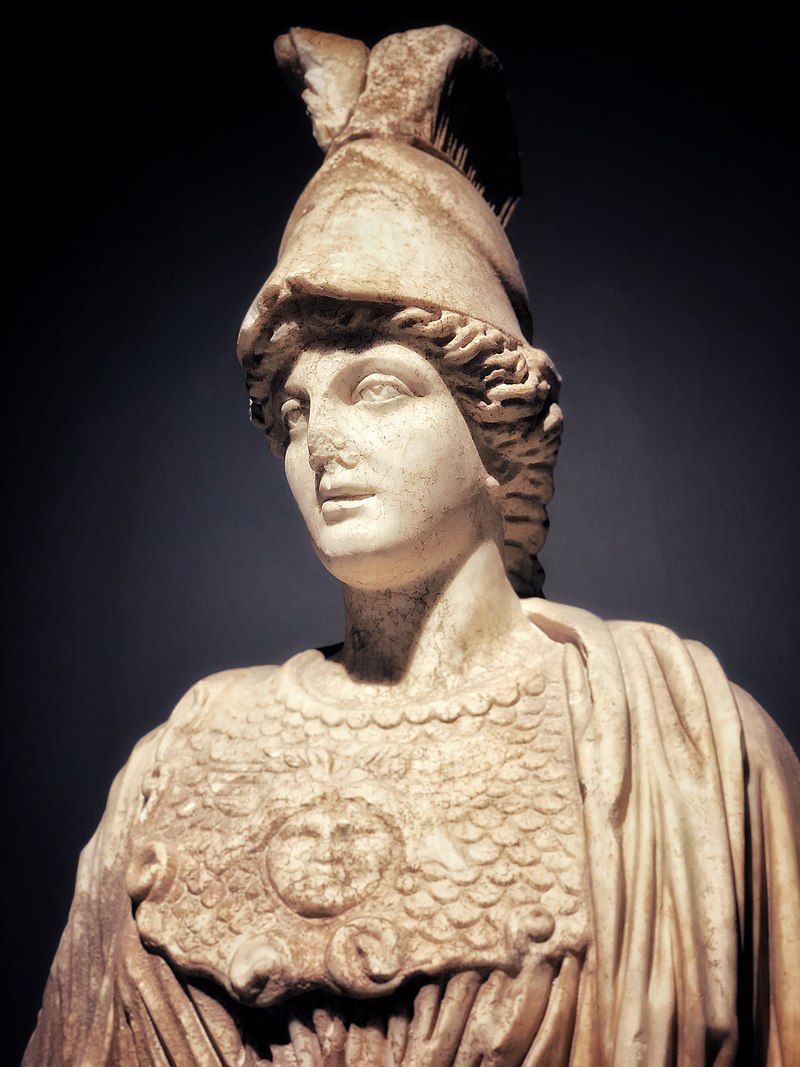
Athena, the Greek goddess of wisdom, warfare, and handicrafts, is one of the most revered deities of ancient myth. Her name is likely derived from the ancient Greek city of Athens, the plural toponym “Athenai” reflecting the sisterhood devoted to her worship. Some scholars believe Athena’s origins may trace back to Minoan and Mycenaean goddesses like the Cretan “mistress” Athana potnia.
In Plato’s dialogue Cratylus, the famous philosopher provides fanciful etymological speculations, suggesting Athena’s name stems from Greek words meaning “divine intelligence” or “she who knows divine things.” Other proposed roots link her to words meaning “mind”, “diligence”, or concepts like the sky, moon, and air. The uncertainties around her name’s derivation speak to Athena’s complexity and evolution over centuries of Greek mythology.
Birth from the Head of Zeus
Perhaps the most famous origin myth recounts Athena’s unique birth, springing fully-grown and armored from the head of Zeus, the king of gods. In Hesiod’s ancient Theogony, Zeus swallowed the pregnant Titaness Metis (“wisdom”) whole to prevent a prophecy that her son would overthrow him. But Athena emerged from Zeus’s skull after he was struck with a labrys axe, born directly from divine wisdom itself.
This peculiar birthing mythologizes Athena as the feminine incarnation of Zeus’s intelligence. In some versions, she announced her arrival with a mighty war cry that shook the heavens. Her bizarre genesis symbolizes her transcendence as an intellectual rather than biological offspring – the personification of pure, reasoned thought.
Patroness of Athens
Pseudo-Apollodorus recounts the famous founding myth of Athens, where Athena and Poseidon vied to become the city’s patron deity. Poseidon thrust his trident into the Acropolis, creating a saltwater spring. But Athena gave the more valuable gift of the first domesticated olive tree, bestowing wood, oil, and food. King Cecrops accepted Athena’s gift, making her the preeminent goddess of ancient Athens.
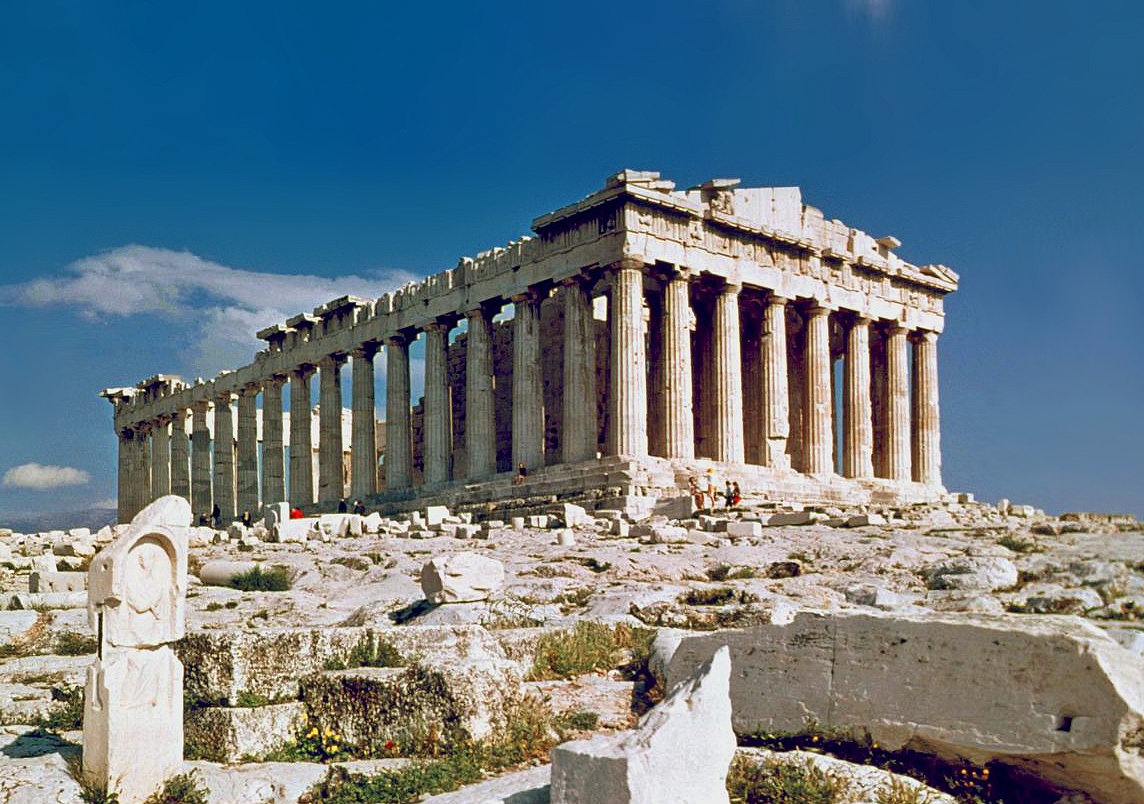
As Athena Polias (“of the city-state”), her cult was central to Athenian identity. The majestic Parthenon was her primary temple. She was celebrated annually in the Panathenaic festival, where a new peplos robe was ritually woven for her cult statue. Artworks frequently depicted Athena’s potent symbols – owls, olive branches, Gorgon heads, snakes, and the fearsome aegis breastplate.
Goddess of War and Heroes
While a patron of civic intelligence and crafts like weaving, Athena’s warrior prowess was unmatched. As Athena Promachos, she brilliantly led soldiers into righteous combat, in contrast to her brutish brother Ares who embodied mindless slaughter. She favored cunning heroes like Odysseus, Perseus, and Heracles over brute force, guiding their heroic quests. At Troy, the “gray-eyed goddess” was the fierce protector of Achilles and Diomedes.
In her role as patroness of heroes, she ensured triumph for just causes through strategy, not merely bloodshed. This duality reflected the ancient Greek ideals of the warrior-scholar. Countless artworks depict Athena regally brandishing sword and spear, or in the thick of legendary battle scenes from the Iliad and other epics.
Parthenos and Virgin Weaver
Athena’s epithet Parthenos (“the Virgin”) underscored her role as a chaste war deity, unlike the matronly goddesses. As an unwed martial virgin, she defied traditional feminine roles. When the smith god Hephaestus tried to rape her, she rebuffed him, wiping his semen onto the earth to give birth to the hero Erichthonius.
The goddess was also patron of weavers and craftspeople, known as Ergane (“the Industrious One”). Athena’s contest with the mortal weaver Arachne, turning her into the first spider, symbolized the goddess’s judgment against hubris and mortals overreaching their status.
Cultural Legacy
With her multifaceted nature… embodying feminine intelligence, strategy, and the manly virtues of heroic action… Athena endures as an influential cultural icon. Her ancient cult prefigured the ideal of Athens as a center of reasoned discourse and democracy.
In the Renaissance and later eras, Athena’s imagery was appropriated as a symbol of liberty, human progress, and the educational arts. Her name was invoked by the Romans as Minerva, projecting Graeco-Roman ideals of civilization triumphing over barbarism. Athena remains a vibrant reminder that the mythic Greeks prized the fusion of wisdom, skill, and strategic force as personified in their “bright-eyed” goddess.
 The Confusing Middle
Really enjoyed it.
As a kid, I loved Greek mythology and I remember I particularly liked Athena, the warrior and the wise one.
LikeLiked by 1 person
Thank you!
LikeLike
Great collection of facts about Athena 🙂
Ronel visiting for A: My Languishing TBR: A
Abominable Wraiths
P.S. You’re not on the master list, I found you on the theme reveal, remember to sign up before the end of the weekend: https://forms.gle/41PjgHFL4zwnM2Am7
LikeLiked by 1 person
Thank you! I didn’t realize I wasn’t on the list!
LikeLiked by 1 person
Pingback: A to Z Challenge Theme Reveal 2025 | The Confusing Middle