Welcome to The Best Movies I’ve Never Seen! This is the part of the blog where I work my way through 100 films I’ve never seen that are generally considered to be great. You’re invited to watch along with me if you can find a copy or find it streaming. So grab some popcorn and let’s get started!
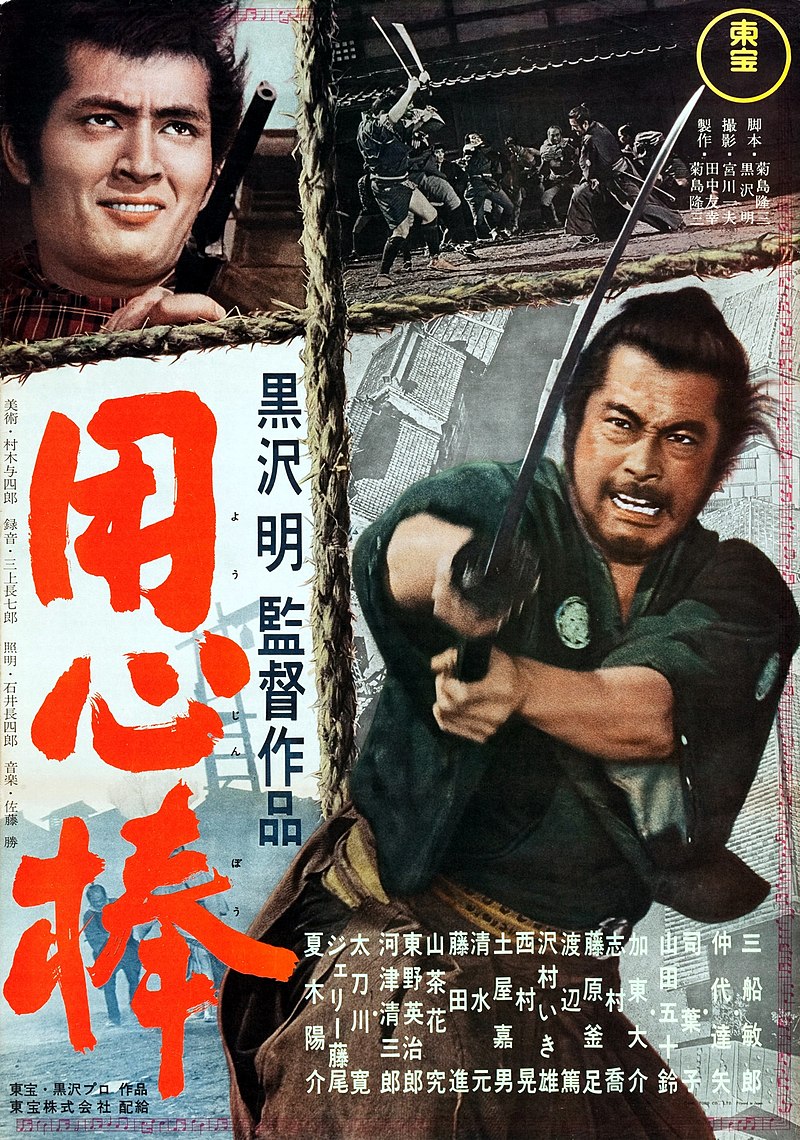
Yojimbo
1961
Directed by Akira Kurosawa
In the grand tapestry of Japanese cinema, Akira Kurosawa stands as a legendary weaver of tales, and Yojimbo (1961) is a brilliant thread in his cinematic quilt. With masterful storytelling, sharp wit, and Toshiro Mifune’s iconic performance, this film has carved a permanent place in the pantheon of classic samurai cinema.
Set in a dusty, lawless town during Japan’s Edo period, Yojimbo introduces us to an unnamed ronin, played with charismatic swagger by Toshiro Mifune. He’s a wandering warrior who stumbles upon this forsaken outpost, torn apart by two rival gangs, the Silk and Sake breweries. Here, where chaos reigns and death lurks around every corner, our ronin, whose only name is “Sanjuro,” makes his home.
Kurosawa masterfully uses the stark, windswept landscapes to convey the bleakness of this lawless frontier, mirroring the moral ambiguity of our lone hero. This is a place where the line between good and evil is blurred, and Sanjuro, with his tattered kimono and piercing eyes, fits right in.
The brilliance of Yojimbo lies in its simplicity and complexity. Sanjuro, initially motivated only by a desire for financial gain, soon finds himself entangled in a web of deceit and violence as he pits the two criminal factions against each other. It’s like watching a high-stakes chess game, where every move carries a life-or-death consequence. The tension is palpable as Sanjuro manipulates and outsmarts his adversaries.
Mifune’s portrayal of Sanjuro is iconic, epitomizing the rugged, morally ambiguous samurai archetype. His rugged charm and impeccable swordsmanship are balanced by a sense of humor that’s both cynical and endearing. You’ll find yourself chuckling at his witty one-liners even as he dispatches his foes with ruthless efficiency.
Kurosawa’s direction is impeccable. His use of wide shots to capture the vast, desolate landscape, juxtaposed with tight close-ups that reveal the inner turmoil of the characters, is nothing short of genius. The dusty streets become a character in their own right, bearing witness to the bloodshed and betrayal.
One cannot overlook the film’s score, composed by Masaru Sato, which adds another layer of tension and emotion to every scene. The hauntingly beautiful melodies stay with you long after the credits roll.
Yojimbo is more than just a samurai flick; it’s a meditation on power, greed, and the thin line between hero and antihero. It’s a timeless tale that has influenced countless films, including Sergio Leone’s A Fistful of Dollars, which borrowed liberally from Kurosawa’s masterpiece.
In the end, Yojimbo is a gripping and timeless masterpiece that continues to captivate audiences today. It’s a testament to the enduring power of storytelling and the genius of Akira Kurosawa. If you haven’t had the pleasure of witnessing the deadly dance of Yojimbo, do yourself a favor and delve into this classic. It’s a cinematic journey that will leave you breathless, pondering the enigmatic code of the samurai long after the final duel has ended.
 The Confusing Middle