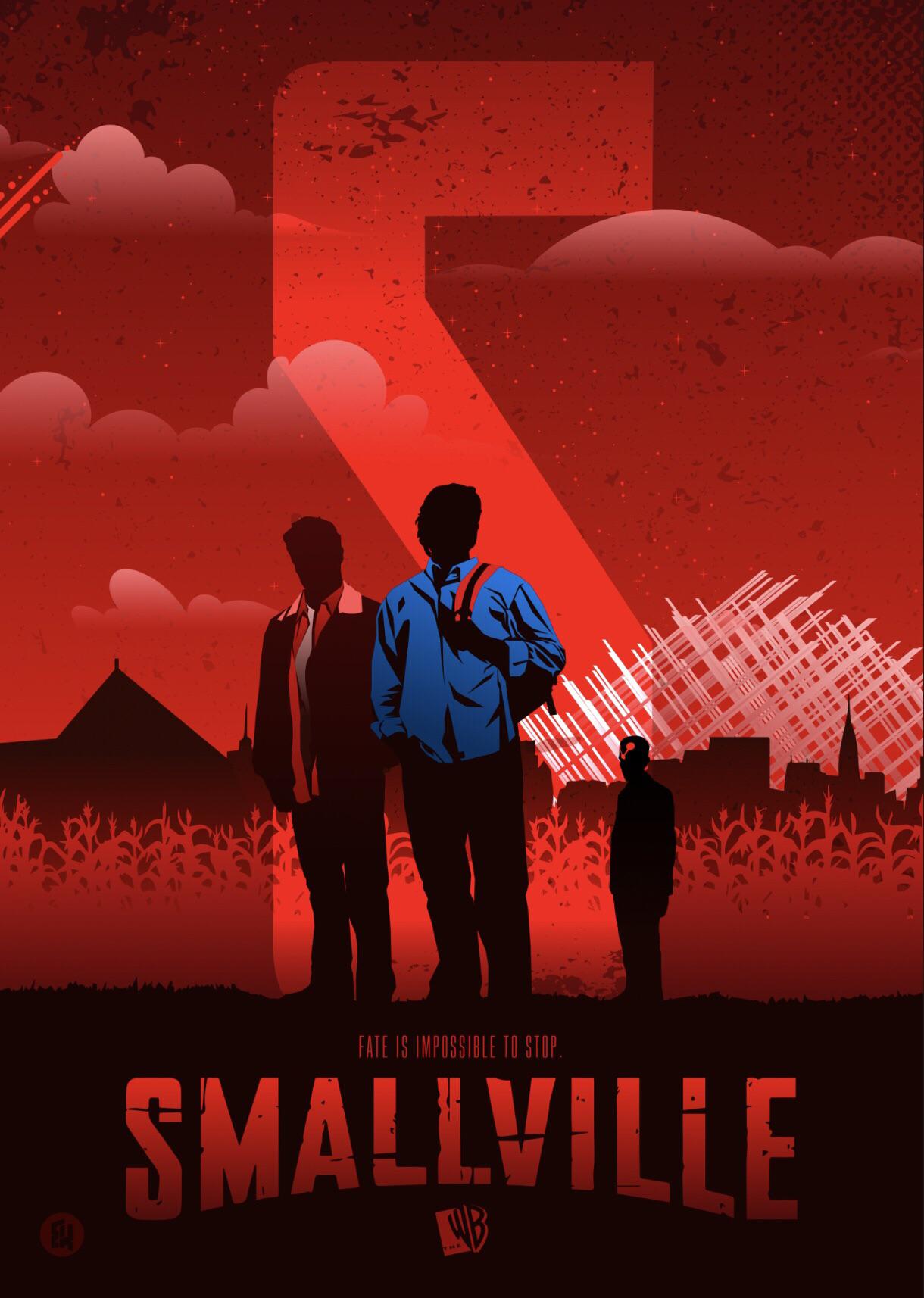
Welcome back to Rewatching Smallville, my weekly dive into the iconic series that explores Clark Kent’s journey before becoming Superman. Whether you’re a long-time fan or new to the show, you’re invited to join in each Tuesday as I revisit episodes and share my thoughts and observations. Be sure to share your own memories and theories in the comments below!
Last week, I made the case that “Mortal” was one of the more quietly satisfying episodes the show had produced in a while — that it found the version of the “Clark loses his powers” formula where the formula actually justified itself. Clark was human. Clark was happy. Clark solved the problem with a sledgehammer and a flash grenade and the help of a very capable friend, and it meant something because he’d earned it. The ending was honest and a little melancholy and pointed toward something more complicated ahead. It felt, for once, like the show was willing to sit in the discomfort of a choice rather than immediately walking it back.
“Hidden” is the episode where the walking back begins.
That’s not entirely fair, and I want to be clear about that upfront. “Hidden” is a narratively convenient but emotionally honest episode. The convenience is real — Clark gets his powers back inside of forty-five minutes of television, which is not a lot of time to let a genuinely interesting premise breathe — but the emotional honesty is real too. The episode understands what it’s doing, and it makes sure the reset costs Clark something. The question is whether that cost lands as tragedy or as setup. Probably both, if we’re being generous. Definitely more setup than tragedy, if we’re being accurate.
Still: there’s good stuff here. Let’s get into it.
The Morning After, and the Most Uncomfortable Breakfast in Smallville History
“Hidden” picks up after the events of “Mortal.” Clark and Lana have spent the night together in Clark’s room at the Kent farm, and when a radio alarm goes off at 6:30 in the morning, they have approximately thirty seconds of blissful contentment before the panic sets in.
The scene is genuinely funny. Clark hits his foot getting out of bed and yelps — because he’s human now, and stubbed toes hurt — and Lana jokes about staying for breakfast while Clark calculates exactly how many minutes he has before his parents surface. He manages to get Lana approximately as far as the kitchen before Jonathan and Martha appear, and the resulting tableau is the kind of deeply awkward family moment that the show usually sidesteps in favor of more dramatic confrontations.
Did they really think they would get away with this? Yeah, it’s 6:30 in the morning. But Clark’s father is a life-long farmer. He’s already been up for two hours by this point. Shouldn’t Clark have expected his parents to be waiting for him to come down for breakfast before heading out to start those daily chores?
Martha’s response is warm and a little flustered. Jonathan’s response, per a note in the episode’s production history, was the result of a negotiation between John Schneider and the producers — Schneider felt that Jonathan would have been considerably harder on Clark in this moment, and what made it to screen was apparently the compromise version. You can see it in the performance. Jonathan is contained. Measured. Almost unnaturally so. Whatever he actually wanted to say in that moment is being held just below the surface, which, if you think about it, tells you everything you need to know about how much Jonathan Kent has always swallowed on behalf of his son.
Lana handles the situation with more composure than Clark, which tracks. She tells the Kents that this was a decision she and Clark made together and that if they’re angry, they should be angry at both of them. It’s a good line, and Kristin Kreuk delivers it with the quiet dignity of someone who has decided she’s not going to apologize for a thing.
Martha’s response — “We’re not mad. It’s just… you’re both in new territory” — is exactly what Martha Kent would say, and Annette O’Toole makes it land with the precise mixture of love and bemusement and parental concern that the character does better than almost anyone else on this show.
The morning-after scene is brief, but it does the work it needs to do. It’s warm and a little ridiculous and it treats Clark and Lana like actual young adults navigating actual human complications, which is sometimes all you need.
Gabriel Duncan, Smallville’s Most Convenient Old Friend
Then there’s Gabriel.
Chloe gets a phone call from Gabriel Duncan, a former Smallville High student who worked on the Torch with her. He’s warning her to get out of Smallville before it’s destroyed, and Chloe receives this information with the particular mix of alarm and exasperation that is Chloe Sullivan’s default setting for most things involving Smallville’s apparent death wish against its own population.
Here’s the thing about Gabriel, though. Chloe talks about him like he was her right-hand man at the Torch for years. Like he was practically her partner. Like his absence from her life has been a notable gap. And yet — and this will shock no one who has watched this show for any length of time — Gabriel Duncan has never appeared on screen before this episode. Not once. He is, in the great tradition of Smallville, a character who has apparently been profoundly important to our protagonists for their entire high school tenure and simply never required any camera time to prove it.
Smallville does this constantly, and it never stops being a little funny. Lana had a best friend in Season One who vanished. Clark had childhood friends who showed up in crisis situations and were never seen again. The meteor freak population of Smallville apparently includes dozens of people whose transformations took place entirely off-screen. And now Chloe has Gabriel, who did “computer work on the Torch” and apparently constituted a significant piece of her high school experience despite the fact that we, the audience, are meeting him for the first time as he is in the process of attempting to destroy the town.
To the episode’s credit, Gabriel’s motivations are at least coherent. His father was the “lighthouse keeper” for the local nuclear missiles — a detail that raises its own questions about Smallville’s proximity to Cold War infrastructure, but fine — and the 2005 meteor shower transformed his father into a meteor freak. His father, consumed by what he was becoming, begged Gabriel to end his life. Gabriel’s response to this trauma was to develop a plan to destroy every meteor-infected person in Smallville by launching a nuclear missile at the town, which is a solution with some obvious logistical issues that the episode politely declines to address in any detail.
Gabriel is not a particularly threatening villain, even though he killed three people. He’s more of a plot delivery mechanism than a character — a way to get Clark into a situation where he can be shot, which is what the episode actually needs him for. The tragedy of his backstory is handled efficiently rather than deeply, and Johnny Lewis gives the performance the material calls for without having much runway to do anything more interesting with it. He’s fine. He accomplishes his narrative function. The episode moves on.
Clark Gets Shot, and the Show Faces a Reckoning
The sequence that follows is where “Hidden” earns its keep.
Clark and Chloe cook up a plan to draw Gabriel out: Chloe calls him, claims her car is stuck, says she can’t escape. Gabriel comes to help. Clark confronts him. And Gabriel — who is, let’s remember, a guy who just shot two military guards in cold blood at a missile launch facility — shoots Clark in the abdomen and leaves him bleeding in the road.
What happens next is one of the more genuinely affecting sequences the show has attempted. Clark is rushed to a hospital. Lana arrives and talks to him through tears about how he’s always trying to be the hero. Clark regains consciousness for a moment, manages a smile, and then flatlines. The crash team can’t bring him back. Dr. Harden calls his time of death: 7:18 AM. Lana is ushered out of the room, and when Jonathan and Martha see her face, they understand what it means before anyone says a word.
The performances in this sequence are doing a lot of heavy lifting, and they mostly pull it off. Kristin Kreuk is genuinely good in the hospital scenes — the grief feels real, and the episode doesn’t rush past it. Tom Welling doesn’t get to do much here beyond look pale and then briefly peaceful, but he makes the small beat of Clark smiling at Lana before he dies count for something.
Clark is dead for a few minutes of screen time. The show understands that it can’t keep him that way, and it doesn’t pretend otherwise. But it lets the death sit for a beat longer than it might have, and the restraint matters.
Jor-El in a Lionel Suit
Here is where things get genuinely strange, and where the episode asks you to do a fair amount of audience goodwill work on its behalf.
As Clark flatlines, something happens at Belle Reve. Lionel Luthor — who has been catatonic for weeks, covered in Kryptonian symbols, doing the full haunted-vessel routine — snaps out of his trance. His cataracts clear. He punches through the glass of his cell with sudden superhuman strength and speeds out of the facility. When Clark finds himself at the Fortress of Solitude, it’s Lionel standing there. But it’s not Lionel.
The conceit the show is asking us to accept here is this: when Lionel’s body was activated by the Crystal of Water back in “Commencement,” he became an oracle of Kryptonian knowledge — a vessel for Jor-El to inhabit if Clark ever needed him. That time, apparently, is now.
John Glover is excellent in this scene. He has spent weeks playing Lionel as an empty, trance-like container, and now he’s being asked to play someone else entirely — someone ancient and loving and deeply alien — while still reading as Lionel in body and voice. He finds a register that works: quiet authority, something close to grief, the unmistakable cadence of a father talking to a son he loves more than that son has ever fully understood. Glover’s pose in the scene reportedly echoes Marlon Brando’s iconic Jor-El from the 1978 Superman film, which is exactly the kind of detail the show is usually best at when it’s at its best.
The weirdness of the Lionel-as-Jor-El mechanic is real, and it’s worth acknowledging. This is a significant escalation of a character thread that has been simmering since Season Three, and it requires some faith that the show knows where it’s going. Taken on its own terms, though, the scene works. The conversation between Clark and Jor-El is genuinely moving — Jor-El tells Clark that his destiny is too important to sacrifice, that he is being returned to life with his powers restored, and that this rectification comes with a price. The life force returned to Clark will be exchanged for the life of someone he loves. It is, as Jor-El puts it, Clark’s darkest hour.
Clark, to his credit, immediately says to leave him dead. Let it go. He doesn’t want the deal. And Jor-El, with the terrible patience of someone who has already made the decision, tells him it’s too late. The choice was made when Clark chose to relinquish his powers and disobey him in the first place. This is the consequence of that choice.
The hug that follows — Jor-El embracing Clark, saying “always know that I love you” — is the kind of moment that shouldn’t work as well as it does, given that the love is coming from John Glover’s face and Lionel Luthor’s body. But Glover makes it work, and Welling receives it with the right combination of grief and loss and something that isn’t quite acceptance. It’s a good scene.
Clark Kent Rides a Missile
Back at the silo, the missile launches. Chloe, having neutralized Gabriel, finds herself watching in horror as there’s nothing more she can do. And then Clark — super-powered once again, returned from the dead, wearing his classic blue shirt and red jacket combination because apparently that’s what you wake up in at the Fortress of Solitude — comes streaking back to Smallville.
What follows is one of the more visually ambitious sequences the show has attempted. Clark catches up to the missile in flight and climbs it — not just bracing against it, but actually hauling himself up to the nose cone, using his whole body, shoulders and arms working against the physics of a missile doing its level best to deliver a nuclear payload to a small Kansas town. The detail that Tom Welling was involved in the discussion about how to choreograph this moment — that his stunt double suggested Clark should actually climb rather than just hold on — shows in the result. It feels earned, in the way that physical superhero moments on this show often don’t.
Clark disables the warhead. The missile crashes harmlessly. Smallville survives, which is good, because there are a lot more seasons of television to get through.
The Accounting
The aftermath of “Hidden” is where the episode does its most interesting work, and also where it functions most clearly as a setup for what’s coming rather than a resolution of what’s already happened.
Clark comes home and tells his parents he’s no longer human. He’s subdued. Guilty. When Jonathan asks if Jor-El wanted something in return, Clark lies and says no. It’s a small moment, but it matters — Clark has been lying by omission to the people around him his entire life, but lying directly to his father about something this significant is a different register. Tom Welling plays it quietly, and the quiet is the point.
The Lex and Lana scene at the Luthor Mansion provides the episode’s best dramatic irony. Lana storms in with Clark’s medical records — all normal, she says, which is apparently what happens when you die and then un-die and your alien physiology erases all the evidence — and tells Lex that he needs to accept that Clark is fine. Lex, with the measured, infuriating precision that Michael Rosenbaum does better than almost anyone, counters that normal people don’t rise from the dead. After Lana leaves, Lionel arrives — out of his trance, entirely nonchalant, claiming no memory of anything that happened. Lex, bewildered, decides to treat his father’s apparent recovery as something approaching good news.
The Lionel thread here raises more questions than the episode answers, which is probably intentional. John Glover gets to play the delicious ambiguity of a man who may or may not remember being inhabited by an alien intelligence, doing it with the self-satisfied ease of a man who has always known more than everyone in the room and has never seen a reason to share.
The episode closes with Clark and Chloe in the loft. Chloe — because Chloe is always right — tells him that he can’t have a real relationship with Lana without telling her the truth. Clark says he can’t expect Lana to react the way Chloe did. He’s afraid. He’s guilty. He admits, quietly, that giving up his powers was a terrible mistake — not because the life they pointed toward wasn’t real, but because the cost of getting them back was something he wasn’t prepared to carry.
It’s a good scene, and it’s the scene that does the most to make “Hidden” worth the reset it requires. Clark isn’t restored to the status quo and happy about it. He’s restored to the status quo and haunted by it. The life Jor-El warned him about — the darkest hour, the exchange — is out there somewhere ahead of him, and he knows it, and he can’t tell anyone.
So Does “Hidden” Work?
Mixed, as I said at the top. It’s narratively convenient but emotionally honest, and those two things coexist here with more grace than the show usually manages when it’s forcing a reset.
The convenience is real. Three episodes into Season Five, Clark has his powers back, the “human Clark” experiment has been filed under “interesting while it lasted,” and the show is broadly returning to its established rhythms. Gabriel Duncan served his purpose and exits the narrative without leaving much of a mark. The Smallville High Ghost Student problem remains unsolved, and Chloe’s warmth toward a character we’ve never met will always be a minor distraction.
But the emotional honesty is real too. Clark comes back from the dead carrying a secret that is going to cost him something enormous, and the episode doesn’t pretend that the restoration of his powers is a happy ending. It’s a reprieve with a bill attached, and the bill is going to come due. The show has set something in motion here that matters, even if it doesn’t yet know exactly how to reckon with it.
And in the meantime: John Glover got to play Jor-El, Clark rode a missile, and Martha Kent navigated the morning-after conversation with exactly the warmth and grace you would expect from the best TV mom of the early 2000s. That’s not nothing.
What are your memories of “Hidden”? Does the Lionel-as-Jor-El conceit work for you, or does it strain credibility past the breaking point? And how did the speed of Clark’s restoration land — did it feel earned, or did you want the show to sit in the human Clark premise a little longer? Share your thoughts in the comments below!
 The Confusing Middle