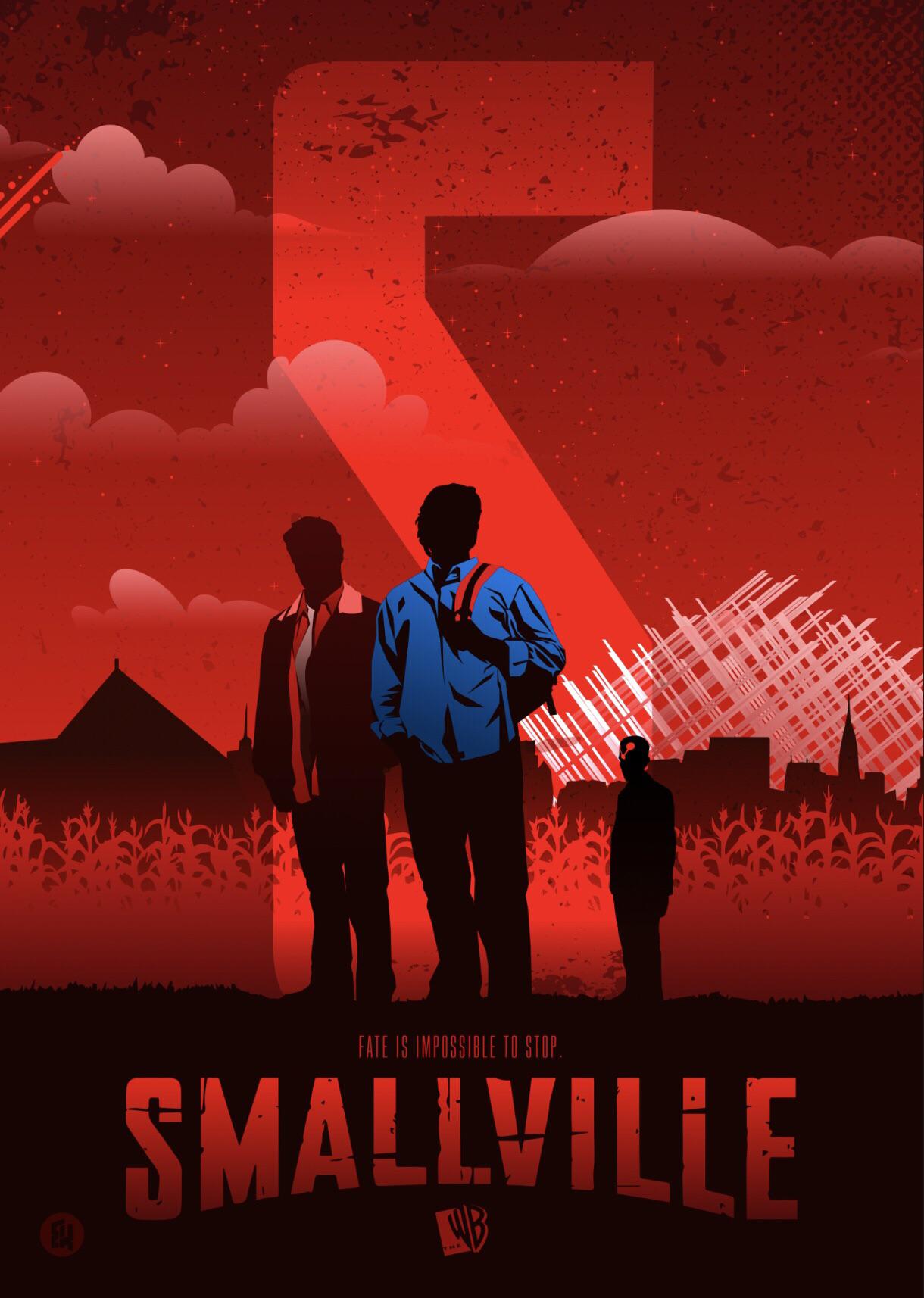
Welcome back to Rewatching Smallville, my weekly dive into the iconic series that explores Clark Kent’s journey before becoming Superman. Whether you’re a long-time fan or new to the show, you’re invited to join in each Tuesday as I revisit episodes and share my thoughts and observations. Be sure to share your own memories and theories in the comments below!
“Arrival” ended with Clark Kent stripped of his powers by Jor-El, a consequence of choosing Lana over his Kryptonian destiny. It was a reset button — the show’s sixth trip to the “Clark is powerless” well — but I made the argument last week that the setup at least pointed toward something more interesting than the formula usually delivers. “Mortal,” the second episode of Season 5, is the payoff on that promise. And here’s the thing: it actually earns it. For once, Clark losing his powers isn’t a detour from the story. It is the story. The difference is subtle but significant, and it makes “Mortal” one of the more quietly satisfying episodes the show has produced in a while.
A Barn, a Beautiful Morning, and the Luxury of Ordinary Pain
The episode opens with something Smallville doesn’t let itself do very often: a moment of genuine, unhurried contentment. The citizens of Smallville are helping raise a barn, with Clark and Jonathan working alongside their neighbors. Jonathan asks Clark how he’s adjusting to life without powers, and Clark’s answer is telling. He doesn’t mind being sore. He doesn’t mind the pain. After years of being invulnerable, the simple fact of feeling something — even something uncomfortable — reads as a gift rather than a complaint.
It’s a small scene, but it does a lot of work. Clark isn’t in denial about what he’s lost. He’s made a choice, and he’s choosing to embrace the life that choice opens up. Chloe, in her characteristic way, gently suggests his destiny might be bigger than farm life, and Clark brushes it off. He’s happy. He’s with Lana. The world is not on his shoulders for the first time in his memory. It’s the kind of morning you want to last a little longer than it does — which, this being Smallville, means it lasts approximately until the next scene.
There’s also a nice moment with Lex arriving to tell Clark he hopes they can rebuild their friendship. Clark is civil. Lex is measured. Neither of them fully means what they’re saying, and the show knows it — but in the early morning light of a barn raising, surrounded by neighbors and family, it’s easy to let it feel like hope. That hope has a short shelf life. But more on that in a minute.
Martha Kent and the Most Devastating Words on Television
Before the real trouble starts, Clark and Lana have retreated to the barn loft. They’re making out. Clark — being Clark, a young man who has apparently decided to handle every romantic situation with maximum earnestness — suggests they slow down because he wants their first time to be special. It’s sweet. It’s also slightly ridiculous in the way that Clark Kent being earnest frequently is. And then the three fugitives from Belle Reve show up and the moment is thoroughly ruined.
But before the episode gets to the hostage situation, it gives us one of its best small moments. Jonathan and Martha arrive at the farm looking for Clark. Clark, standing at the door, tries badly to explain that Lana went inside to lie down. His parents notice something is off. And then Martha Kent, with the calm, unflappable energy of a woman who has been navigating the complications of raising an alien child for the better part of two decades, looks at her son and says:
“Why is your shirt on inside-out?”
Annette O’Toole delivers this line with exactly the right amount of knowing amusement, and it is, without question, the funniest moment of the episode. Clark Kent — the boy who once caught a car like a beach ball, who has outrun tornadoes and wrestled meteor-infected teenagers — cannot successfully lie to his mother about what he’s been up to in a hayloft. The universe is just and good.
The Fugitives, the Serum, and the Human Hero Problem
So: the actual plot. Tommy Lee and the Twins are former Belle Reve test subjects who were injected with green kryptonite and have since become addicted to it. Tommy has electrical powers. The Twins can generate a combined force field that can hold off an entire police department. They’ve come to Smallville because they’ve heard about Clark Kent — the guy who apparently keeps putting metahumans away at a rate that has made him something of a legend in Belle Reve’s social scene — and they figure he can get them more of the serum they’ve been craving.
What follows is genuinely entertaining, mostly because the episode leans all the way into the absurdity of Clark trying to operate like a secret agent without a single superpower to fall back on. He enlists Chloe, who shows up with a trunk full of spy equipment from eBay, and together they break into LuthorCorp’s Level Three during a security shift change. The whole sequence is played with a self-aware humor that the show often struggles to find — particularly in the ventilation duct.
Clark is crawling through the air system in the dark. It’s a million degrees. He keeps going in circles. Chloe, monitoring from a laptop outside, has approximately zero patience for his complaints. When Clark laments that Pete was much better at pep talks in these situations, Chloe — with all the genuine human indignation of someone who has been Clark’s sidekick for years — wheels on that revelation like a heat-seeking missile.
“Pete!? You told Pete your secret?!”
And Clark, in a moment of perfect comedic timing, hits his head on the ductwork.
The banter between Clark and Chloe in this episode is the best the show has written for them in a while, and it’s grounded in a real dynamic: Chloe is brilliant, resourceful, and has been doing this hero-adjacent work for years. Clark, without his powers, is essentially just a tall guy with a flashlight who gets tired. Their back-and-forth has the natural rhythm of two people who are genuinely comfortable with each other, and it’s fun to watch. “Gosh, Clark, I didn’t realize super-whining was one of your powers” might be the line of the episode.
The break-in works, mostly, though the room containing the serum is crossed with security laser beams that burn Clark’s arm when he reaches through them. It’s a small moment, but an important one — Clark’s vulnerability to physical harm is played here not for drama but for grounded reality. This is what it’s like to be human. Things hurt. You bleed. You still do what needs to be done.
Clark Kent: Man of Sledgehammer
The climax back at the Kent farm is where the episode makes its strongest case for what it’s actually about. Clark arrives at a scene surrounded by cops who can’t get through the Twins’ force field. He talks the sheriff into letting him handle it. And then he goes in there — no powers, no backup, armed with a sledgehammer and a flash grenade that Lois apparently gave Chloe as a graduation present, which is exactly the kind of detail that makes Lois Lane the best — and he wins.
He uses the flash grenade to disorient Tommy and the Twins. He dodges Tommy’s energy blast and uses the physics of the moment to redirect it into the Twins, breaking their concentration. He brings the sledgehammer down on the electrical equipment to short out Tommy’s power source. And then he punches him. Just a regular human punch. Clark Kent, who once bent steel with his bare hands, takes down the villain with his own two fists and nothing else.
It’s not graceful. It’s messy and physical and requires a lot more planning than Clark usually needs to put in. But it works, and the episode earns something by making Clark’s victory feel worked for. This is the argument the episode makes for the “Clark loses his powers” formula: when the powerlessness is the point, rather than a detour, the hero’s victory means something different. Clark isn’t waiting to get his abilities back so he can solve the problem. He solves the problem himself, with ingenuity and stubbornness and the help of a very capable friend. That’s a better story.
Lex Luthor Gets Punched
Here’s where things get genuinely interesting in a way that goes beyond this single episode. After everything is resolved, Chloe mentions that someone was watching their break-in at LuthorCorp. Cut to Lex in his mansion, watching a security tape, deeply troubled by what he’s seeing: Clark Kent being burned by a laser. Lex knows what Clark is. He doesn’t understand what this means. And then Clark walks into the room.
What follows is one of the more memorable confrontations the two have had, precisely because it doesn’t play out the way Smallville confrontations usually do. Clark doesn’t just give a speech. He punches Lex. Knocks him right to the floor. And then Lex — to his considerable credit as a character — punches Clark back. Clark’s lip splits. He bleeds. And when he looks up and asks Lex if he’s satisfied now, the question lands differently than it would have a season ago.
Lex and Clark have been doing this complicated dance for four years — the friendship straining and recovering and straining again, always operating with Clark’s secret as the unspoken weight between them. This episode marks the end of their friendship, which is the kind of thing you can only say in retrospect and only if you’re willing to be somewhat generous about the timeline. But there’s something final in the texture of the scene. Clark isn’t appealing to Lex anymore. He’s done trying to perform for him, done hoping Lex’s better nature will win out. He’s angry and he’s bleeding and he’s human, and he punches his former best friend in the face, and it costs him something.
Tom Welling and Michael Rosenbaum are both very good here. The fight carries real emotional weight because neither of them is fully wrong about the other.
Candles, Coldplay, and Clark’s First Time
After everything, Clark goes to Lana’s apartment at the Talon. He’s banged up. He doesn’t tell her about the fight with Lex. He talks to her, obliquely, about how he thought his life would be simpler and easier without his powers, and how he’s discovering that certainty about what comes next isn’t something you can ever really have. Lana takes care of his wounds. And they make love for the first time.
It’s handled tastefully and with genuine tenderness. The scene doesn’t overplay the milestone — it lets the quiet intimacy of the moment carry the weight rather than swelling it up into something overwrought. Coldplay plays on the soundtrack. Candles are involved.
This is, incidentally, the subject of a delightful piece of trivia. The WB series Everwood — airing the previous season — had a scene where two characters discuss their first times. One of them says it “doesn’t have to be all candles and Coldplay,” but it should be special. A few months later, Clark and Lana lose their virginity to, specifically, candles and Coldplay. Whether this was intentional is genuinely unclear, but it’s the kind of coincidence that makes television history worth paying attention to.
More importantly: Clark’s conversation with Lana before the moment matters. He says he thought his life would be different without his powers — easier, simpler, somehow more his own. And instead what he’s found is that uncertainty doesn’t go away. The complications don’t simplify. You can lose the thing that made you special and still be standing in the middle of a world that doesn’t particularly care to wait for you to figure out what comes next. That’s a real human feeling, and the episode earns it.
So Does “Mortal” Actually Work?
Yes. Quietly, without a lot of fanfare, it does. It takes a formula the show has run into the ground five previous times and finds the version of it where the formula actually justifies itself. Clark without his powers isn’t, in this episode, a detour from the story — it is the story. He has to be a hero without the tools that made heroism easy, and the episode rewards that challenge rather than just enduring it.
The Twins are a bit forgettable as antagonists, and Tommy Lee is more entertaining than he is genuinely threatening. But the episode isn’t really about them. It’s about Clark figuring out who he is when the invulnerability is gone — and finding out, somewhat to his own surprise, that the answer isn’t nothing. He still solves the problem. He still saves his family. He still punches the guy.
He just bleeds a little more afterward. Which, for once, feels like exactly the right answer.
What are your memories of “Mortal”? Does the human Clark hero moment land for you, or does the powerless formula feel tired no matter the execution? And what did you make of the Lex confrontation — did it feel like a genuine ending to that friendship, or just another chapter in the saga? Share your thoughts in the comments below!
 The Confusing Middle