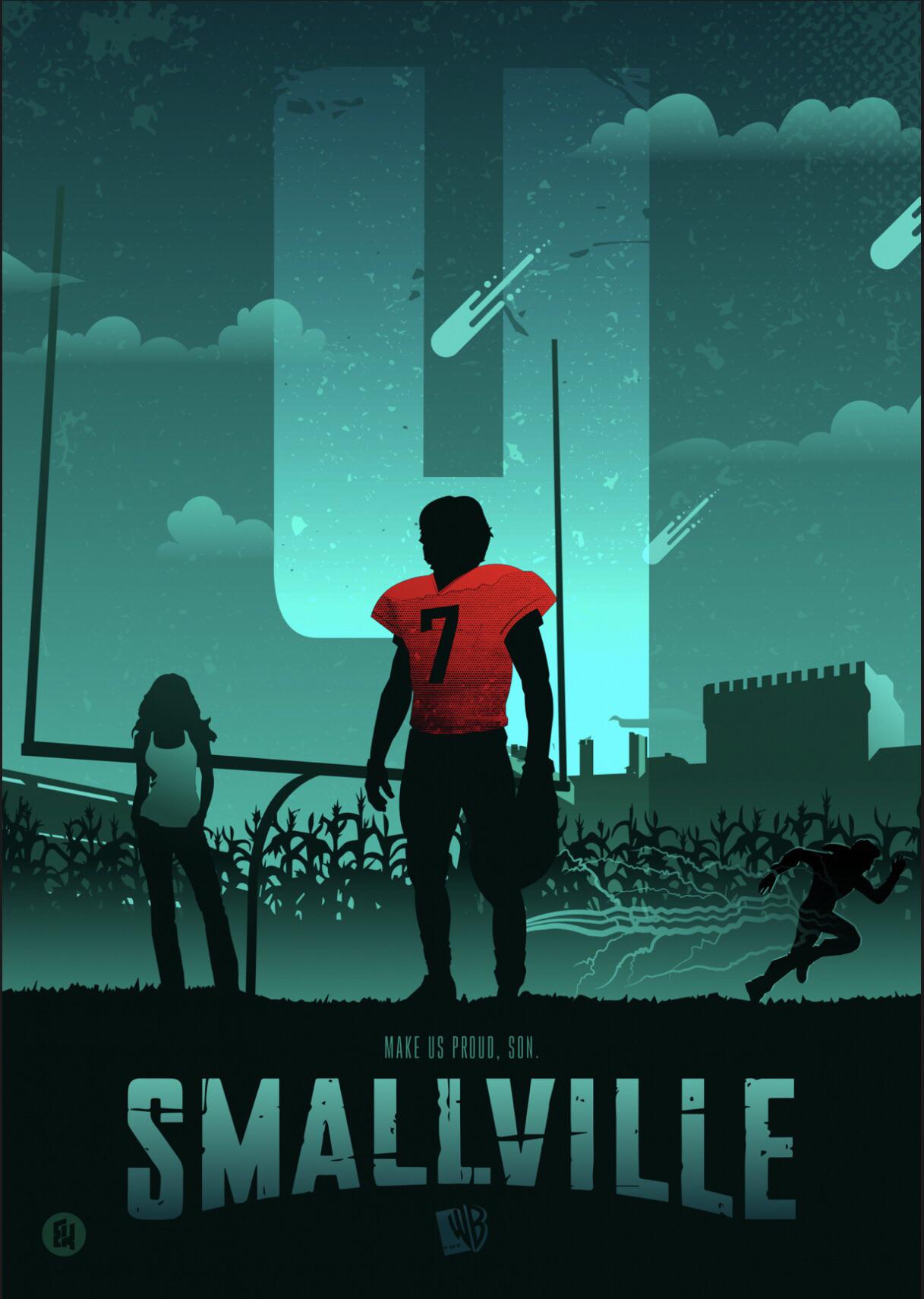
Welcome back to Rewatching Smallville, my weekly dive into the iconic series that explores Clark Kent’s journey before becoming Superman. Whether you’re a long-time fan or new to the show, you’re invited to join in each Tuesday as I revisit episodes and share my thoughts and observations. Be sure to share your own memories and theories in the comments below!
After the emotional devastation of “Pariah” and the moral complexity of “Recruit,” Smallville returns to its comfort zone with “Krypto,” an episode that manages to be both heartwarming and surprisingly deep in its exploration of trust, loyalty, and the universal need for companionship. As someone who now watches this episode with my own dog Krypto by my side, I find myself appreciating the simple joy of Clark finally finding a friend who doesn’t require any masks or pretense—even if that friend happens to have four legs and a tail.
Written by Luke Schelhaas and directed by James Marshall, “Krypto” serves as a much-needed respite from the darkness that has characterized much of Season 4. Yet beneath its lighter tone lies a thoughtful meditation on what it means to be different, the ethics of exploitation, and the bonds that transcend species. The episode also advances the season’s mythology through the Genevieve/Jason subplot, revealing connections that will have major ramifications for the remainder of the season.
The genius of “Krypto” lies in how it uses a seemingly simple premise—Clark finds a super-powered dog—to explore complex themes about identity, acceptance, and the price of being extraordinary. While the episode could have been purely comedic fluff, it instead delivers genuine emotion while examining how even our four-legged friends can become victims of humanity’s worst impulses.
Man’s Best Friend, Kryptonian’s Perfect Companion
The central relationship between Clark and the dog that would become Shelby represents something profound in Clark’s journey. Here, finally, is a being with whom Clark can be completely himself. No careful modulation of strength when playing fetch, no pretense of strain when pulling a tractor, no need to hide his speed when running through the fields. The joy on Tom Welling’s face when Clark realizes he’s found a kindred spirit—even of a different species—is palpable.
What makes this relationship particularly poignant is how it highlights Clark’s essential loneliness. Yes, he has his parents who know his secret, and now Chloe has joined that exclusive club, but with all of them, there’s still a performance required. Clark must always be careful, always controlled, always mindful of maintaining his human facade. With Shelby, all of that falls away. The scene where the dog observes Clark using super-speed to repair the barn post isn’t played for comedy but for connection—here are two beings who understand each other without words.
The episode cleverly parallels Clark’s relationship with Shelby to his relationships with humans. Just as Clark must hide his abilities from most people, Shelby has been forced to hide from a world that would exploit his powers. Both are refugees from situations that would have destroyed them, both finding sanctuary at the Kent farm. When Clark tells Lex the dog is “perfectly normal,” he’s protecting Shelby the same way his parents have always protected him.
Welling plays Clark’s growing attachment to the dog with touching vulnerability. His insistence that Shelby deserves a chance, that he’s a good dog who just needs understanding, is clearly Clark advocating for himself as much as for his new friend. The fear in his voice when Jonathan suggests the dog might need to be put down speaks to Clark’s deep-seated anxiety about what would happen if his own differences were discovered and deemed too dangerous.
Lois Lane: Chaos Agent and Reluctant Dog Rescuer
Erica Durance continues to prove why her addition to the cast was inspired, turning what could have been a simple plot device—someone needs to hit the dog with their car—into character development gold. Her opening scene, featuring boxes of her belongings and a newly homeless status after her expulsion from Met U, immediately connects this episode to the previous week’s events while maintaining Lois’s irrepressible spirit.
The episode mines consistent comedy from Lois’s severe dog allergy, with Durance playing the physical comedy with commitment while never letting it undermine Lois’s essential competence. Her sneezing, watery eyes, and general misery around the very creature she rescued creates a perfect ironic tension—she saved Shelby but can’t get near him, embodying Lois’s recurring role as someone whose good intentions often lead to complicated consequences.
What’s particularly effective is how the episode uses Lois’s allergy as both comic relief and character insight. Despite her physical distress, she never suggests getting rid of the dog. She rescued him, she takes responsibility for him, and she’ll suffer through the allergies if necessary. This stubborn loyalty, even when it causes her personal discomfort, is quintessentially Lois Lane.
Her investigation into the dog’s origins, conducted with typical Lane determination despite her streaming eyes and constant sneezing, showcases the investigative instincts that define her character. When she points out that only Lex and the veterinary brothers knew about Shelby’s location, she’s demonstrating the logical thinking that will one day make her a great reporter. The fact that she delivers this deduction while barely able to see through allergic tears makes it even more impressive.
The Greenfield Brothers: When Opportunity Becomes Exploitation
The Greenfield brothers serve as more than just villains of the week; they represent a particularly insidious form of corruption. Unlike many of Smallville‘s antagonists who are transformed by meteor rocks against their will, Josh Greenfield made a conscious choice to experiment on innocent animals, turning them into tools for crime. Diego Klattenhoff and Nolan Gerard Funk play the brothers with a disturbing casualness about their cruelty that makes them more unsettling than many of the show’s more overtly powerful villains.
Josh’s background as a LuthorCorp lab employee who decided to go rogue with the research raises uncomfortable questions about scientific ethics and corporate responsibility. The revelation that he continued the experiments after LuthorCorp shut them down suggests someone who saw opportunity where others saw moral boundaries. His treatment of Hercules—keeping the aggressive dog caged and antagonized—shows a complete disregard for the suffering of the creatures he’s exploiting.
The dynamic between the brothers, with Josh as the amoral brains and Zack as the somewhat reluctant muscle, creates an interesting parallel to other partnerships in the series. Like Lex and Lionel, or even Clark and his parents, they represent different approaches to power and its use. But where those other relationships involve moral guidance and genuine care, the Greenfield brothers show what happens when ambition operates without conscience.
Their use of the dogs as living tools for theft is particularly disturbing because it corrupts what should be a pure relationship. Dogs are naturally loyal, naturally eager to please, and the brothers exploit these traits for criminal gain. When Hercules attacks Jonathan, it’s not because the dog is evil but because he’s been trained and conditioned to violence. The tragedy is that both dogs are victims as much as they are weapons.
Jonathan’s Arc: From Skepticism to Acceptance
John Schneider gets to play a lovely arc within this single episode, moving from protective skepticism about the super-powered dog to acceptance and even affection. Jonathan’s initial reluctance isn’t about the dog itself but about the danger it represents—both to their secret and to their safety. His practical concerns about a super-strong animal they can’t control are entirely reasonable, especially given their history with meteor-infected creatures.
The scene where Jonathan is attacked by Hercules while doing evening chores is genuinely frightening, not just because of the physical danger but because it represents the violation of the farm’s sanctuary. The Kent farm has always been portrayed as a safe haven, and having it invaded by a weaponized animal feels like a fundamental breach of that security.
Yet it’s telling that when Shelby saves Jonathan from Hercules, his attitude immediately shifts. Jonathan Kent is nothing if not fair, and he recognizes that Shelby chose to protect him, chose to defend the farm, chose to be good when he could have simply fled. Schneider plays this realization with subtle grace—you can see Jonathan reassessing his prejudices about the dog in real-time.
His final acceptance of Shelby into the family, despite the obvious risks, speaks to Jonathan’s growth as a character. He’s learned to judge individuals by their actions rather than their origins or abilities—a lesson that obviously has profound implications for how he’s raised Clark. When he tells Clark he can keep the dog, he’s not just allowing a pet; he’s acknowledging that different doesn’t mean dangerous.
Martha’s Wisdom: The Name That Connects Generations
Annette O’Toole doesn’t get as much screen time in this episode, but she makes every moment count. Martha’s role as the voice of compassion and understanding provides the emotional bridge between Jonathan’s pragmatism and Clark’s enthusiasm. Her observation that Clark seems happier with the dog than he’s been in weeks shows her maternal insight into her son’s essential loneliness.
The revelation that Martha had a dog named Shelby as a child is more than just a naming solution—it’s a connection across generations, a reminder that the need for animal companionship is universal and timeless. By suggesting this name, Martha is both honoring her own past and blessing Clark’s future with this new friend. It’s a small moment that speaks to the show’s consistent theme of legacy and inheritance.
Martha’s acceptance of the chaos Shelby brings—from the destroyed dining room table to the midnight refrigerator raid—shows her understanding that some disruptions are worth enduring. She recognizes that Clark needs this friendship, needs something in his life that accepts him completely without question or condition.
The Mythology Deepens: Genevieve’s Revelations
While the dog story provides the episode’s heart, the Genevieve/Jason/Lana subplot delivers crucial mythology development. Jane Seymour brings a chilling intensity to Genevieve’s revelation about her family’s connection to Isobel Thoreaux, transforming what seemed like simple disapproval of Jason’s girlfriend into something far more sinister and ancient.
The revelation that Genevieve’s ancestors burned Isobel at the stake, and that Isobel vowed revenge on all their descendants, recontextualizes the entire season. This isn’t just about finding mysterious stones; it’s about a centuries-old vendetta that has ensnared multiple families across generations. Genevieve’s manipulation of Jason and Lana’s relationship—she “knew they would be attracted to each other”—reveals a woman playing a very long game with her son as an unwitting pawn.
Jensen Ackles plays Jason’s growing horror at his mother’s revelations with compelling vulnerability. The man who seemed so confident and worldly when we first met him is revealed to be as much a victim of manipulation as anyone else. His confrontation with Genevieve shows a son realizing his entire relationship might have been orchestrated, that what felt like free will was actually careful manipulation.
The episode cleverly parallels the two storylines—just as the Greenfield brothers exploit their dogs for personal gain, Genevieve has been using her son as a tool in her larger scheme. Both situations involve trust betrayed and natural relationships corrupted for ulterior motives. The difference is that while Shelby gets rescued and finds a genuine family, Jason remains trapped in his mother’s web.
Chloe’s Careful Dance
Allison Mack continues to navigate Chloe’s new knowledge of Clark’s secret with impressive subtlety. Her performance when she sees the tractor in the yard—putting on a show of surprise while immediately covering for Clark—shows someone learning to live with dangerous knowledge. Her quick thinking about the emergency brake “slipping” demonstrates not just loyalty but active protection of Clark’s secret.
The brief moment when Chloe and Clark have time alone, and she mentions he can “be himself” with the dog, carries layers of meaning. She’s acknowledging his secret without revealing her knowledge, offering comfort without breaking his trust. Mack plays these moments with a delicate balance of knowing and not-knowing that maintains the dramatic tension while showing Chloe’s growth.
Her comment about Clark being able to be himself with her too—delivered almost as an afterthought—is particularly poignant. She’s offering herself as another safe space, another being who accepts him completely, but she can’t say it directly. The tragedy is that Clark doesn’t understand the full import of her words, doesn’t realize she’s offering him exactly what he’s found with Shelby—complete acceptance.
The Ethics of Enhancement
Beneath its feel-good story about a boy and his dog, “Krypto” raises disturbing questions about scientific ethics and the exploitation of enhancement. LuthorCorp’s experiments on dogs, using meteor rock to give them super-strength, represents a special kind of violation—taking innocent creatures and transforming them into something they were never meant to be.
The episode doesn’t shy away from showing the consequences of these experiments. Hercules has been turned aggressive and violent, while Einstein/Shelby maintains his gentle nature despite his powers. The difference seems to be in how they’ve been treated post-experimentation—Hercules was weaponized while Shelby escaped that conditioning.
Lex’s claim that the dogs were “humanely destroyed” is chilling in its corporate coldness. These living beings were created, used, and then discarded when the project was deemed unsuccessful. That two survived is presented as a failure of the system rather than a mercy. Michael Rosenbaum delivers these lines with just enough ambiguity to leave us wondering how much Lex really knows and how much he’s willing to overlook.
The parallel to Clark’s own situation is obvious but effective. He too is enhanced beyond normal human capabilities, he too could be seen as a subject for experimentation if discovered. When Clark rescues Shelby from the burning truck despite the kryptonite, he’s not just saving a dog—he’s affirming that beings like them have value beyond their abilities, that they deserve life and freedom regardless of how they came to be different.
A Return to Heart
After weeks of darkness, betrayal, and moral complexity, “Krypto” offers something precious in the Smallville universe—uncomplicated joy. The image of Clark playing with Shelby, both of them using their powers freely and without fear, represents a kind of pure happiness that’s been largely absent from Season 4. It’s a reminder that sometimes the most profound connections are the simplest ones.
The episode works because it doesn’t try to be more than it is. It’s not attempting to revolutionize the series or introduce game-changing mythology. It’s simply the story of a boy finding a dog who understands him, wrapped in enough action and danger to keep things interesting. After the heavy lifting of recent episodes, this return to Smallville‘s comfort zone feels earned and necessary.
Yet even in its lighter moments, the episode doesn’t abandon the series’ core themes. The exploration of what makes someone—or something—worthy of protection, the examination of how power can be exploited or respected, the question of whether different automatically means dangerous—these are all classic Smallville concerns, just filtered through a more optimistic lens.
The Verdict
“Krypto” succeeds by embracing its own simplicity while still delivering emotional and thematic depth. It provides a necessary tonal break from the season’s darker elements while advancing important character and mythology arcs. The episode reminds us that Smallville works best when it grounds its superheroic elements in recognizable emotions and relationships.
The introduction of Shelby gives Clark something he’s desperately needed—a friend who requires no explanations, no excuses, no carefully modulated behavior. That this friend happens to be a dog makes the relationship both safer and somehow purer than his human connections. It’s a friendship without agenda, loyalty without conditions.
The episode also serves as a metacommentary on the series itself. Like Shelby, Smallville has always been about taking something that could be ridiculous—a super-powered alien living on a farm in Kansas—and finding the genuine emotion and meaning within it. “Krypto” celebrates that approach, showing that sometimes the most fantastic elements can illuminate the most human truths.
As I watch this episode now with my own Krypto beside me, I’m struck by how perfectly it captures the unique bond between humans and dogs, enhanced abilities or not. There’s something profound about the trust a dog places in their human, and the responsibility we take on in return. For Clark, who carries the weight of so many secrets, finding a being who accepts him completely without judgment must feel like coming home.
The episode ends with Shelby officially part of the Kent family, running free on the farm, his temporary powers now gone but his loyalty unquestioned. It’s an image of hope in a season that has often felt hopeless, a reminder that acceptance and understanding are possible, even for those who are different. Sometimes, the most heroic thing isn’t saving the world—it’s simply offering a home to someone who needs one.
What are your memories of meeting Shelby for the first time? How did this lighter episode feel after the intensity of recent weeks? And fellow pet owners—does this episode hit differently now that you have your own four-legged friend? Share your thoughts below!
 The Confusing Middle
So glad Krypto was introduced on the show. Even though they ended up calling him Shelby.
LikeLiked by 2 people