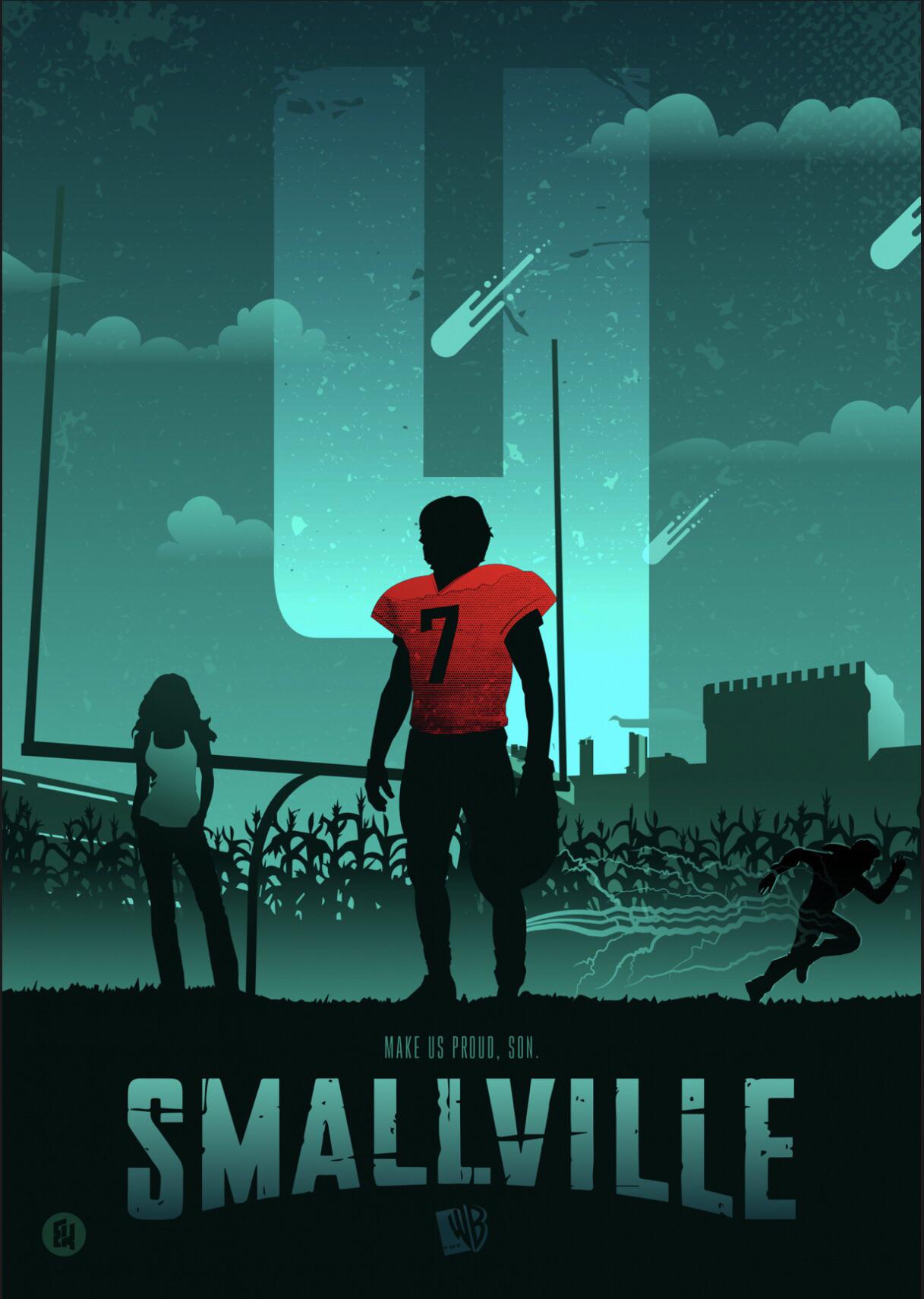
Welcome back to Rewatching Smallville, my weekly dive into the iconic series that explores Clark Kent’s journey before becoming Superman. Whether you’re a long-time fan or new to the show, you’re invited to join in each Tuesday as I revisit episodes and share my thoughts and observations. Be sure to share your own memories and theories in the comments below!
There’s a peculiar kind of whiplash that comes from following one of Smallville‘s darkest episodes with what amounts to a college recruitment comedy that happens to feature murder. “Recruit,” the thirteenth episode of the fourth season, attempts to balance frat party hijinks with a meditation on the corrupting nature of competitive sports, resulting in an hour that never quite decides what it wants to be. Yet beneath its uneven tone lies a surprisingly prescient exploration of how systems create the very monsters they claim to condemn.
Written by Todd Slavkin and Darren Swimmer and directed by Jeannot Szwarc, “Recruit” serves multiple narrative functions—it removes Clark from the college football path, solidifies Lois’s place in the Kent household, and provides Chloe her first opportunity to navigate knowing Clark’s secret. The episode works best when it focuses on the parallels between Clark and Geoff Johns, two gifted athletes grappling with the temptation to use their advantages, but struggles when it tries to blend serious themes with sorority house antics and drinking contests.
Coming directly after “Pariah’s” devastating exploration of prejudice and loss, “Recruit” feels almost jarring in its return to more conventional Smallville territory. Where the previous episode left Clark cradling Alicia’s body and nearly committing murder, this one opens with Lois winning a drinking contest at a frat party. The tonal shift is so complete it’s almost disorienting, as if the show itself needed to retreat from the darkness it had just explored.
The Pressure Cooker of College Athletics
Chris Carmack’s portrayal of Geoff Johns presents us with a villain who is both completely understandable and utterly condemnable. Unlike many of Smallville‘s meteor freaks who are corrupted by their powers or driven mad by circumstances, Geoff made a conscious choice to cross the line from unfair advantage to murder. His trajectory from small-town football star to killer athlete provides a dark mirror to Clark’s own journey.
The episode establishes Geoff as someone who played fair in high school—a detail that becomes crucial to understanding his fall. It wasn’t the acquisition of powers that corrupted him but the system he entered. College football, with its massive stakes, rabid fans, and win-at-all-costs mentality, transformed his ability from a gift into a weapon. When Geoff tells Clark about the pressure from alumni, coaches, and sponsors, he’s describing a very real aspect of college athletics that the show rarely addresses so directly.
What makes Geoff particularly effective as a cautionary tale is that his initial uses of his power seem almost reasonable. A light paralysis here and there to slow down an opponent—is that really so different from any other competitive advantage? The episode suggests that the line between enhancement and cheating is less clear than we might like to believe, especially in a world where everyone is looking for an edge.
The progression from using his powers to win games to murdering those who might expose him feels both shocking and inevitable. Once Geoff crossed that first line, each subsequent violation became easier to justify. By the time we meet him, he’s so deep in his own rationalization that he can smother his roommate and still see himself as the victim of circumstance.
Clark’s Road Not Taken
Tom Welling plays Clark’s recruitment journey with an interesting mix of genuine excitement and growing unease. The episode smartly positions Clark at a crossroads where he must choose between the easy path of athletic glory and the harder road of maintaining his integrity. His tour of Metropolis University becomes a tour of who he could become if he allows his powers to define his public identity.
The sorority house sequence, while tonally inconsistent with the episode’s darker themes, serves to highlight Clark’s fundamental discomfort with the performative aspects of college athletics. The way he’s immediately treated as a commodity—something to be acquired and displayed—clearly unsettles him. His relief at finding Lois in the closet speaks to his need for something genuine in an environment that feels entirely artificial.
Clark’s decision to walk away from football entirely might seem extreme, but it represents a crucial moment in his development. He’s not just rejecting a scholarship; he’s rejecting a version of himself that would require constant deception and compromise. The image of him standing alone in the empty stadium at episode’s end—surrounded by what could have been—provides one of the season’s most poignant visual metaphors for the isolation that comes with being different.
The parallel between Clark and Geoff extends beyond their abilities. Both are small-town kids thrust into a larger world, both have gifts that could guarantee success, and both face the question of how to use those gifts ethically. That Clark chooses to walk away while Geoff doubled down on his deception speaks to the different moral frameworks they’ve developed, but also to the different support systems they have in place.
Lois Lane: Force of Nature
Erica Durance continues to establish Lois as a character who refuses to be victimized even when she literally cannot move. Her introduction via drinking contest victory immediately sets her apart from the more reserved characters that typically populate Smallville. This is someone who enters every room like she’s kicking down the door, and Durance plays that energy with infectious enthusiasm.
The episode uses Lois’s predicament—accused of paralyzing someone she merely defended herself against—to explore how her assertiveness is both her greatest strength and her most consistent source of trouble. Her investigation into Coop’s death, conducted with typical Lane disregard for rules or privacy, showcases the investigative instincts that will one day make her a Pulitzer Prize winner.
What’s particularly effective about Lois’s role in this episode is how her very presence disrupts the carefully constructed world of college athletics. She’s immune to the glamour, unimpressed by the tradition, and unwilling to look the other way when something seems wrong. Her blunt question to Marcus about urine samples—delivered with zero subtlety or shame—represents a refreshing directness in a world built on polite fictions.
Her paralysis and near-drowning serve as more than just peril for Clark to rescue her from; they represent the vulnerability beneath her bravado. Durance plays these scenes without sacrificing Lois’s essential strength—even paralyzed, she’s clearly fighting, clearly thinking, never truly helpless despite her physical state.
Chloe’s Secret Knowledge
Allison Mack navigates Chloe’s first episode with knowledge of Clark’s secret with impressive subtlety. Every interaction between Chloe and Clark now carries additional weight, with Mack layering in small reactions that suggest Chloe’s new understanding without making it obvious. Her comment about Clark having an “unfair advantage” in football walks right up to the line without crossing it.
The episode smartly doesn’t have Chloe immediately confront Clark or dramatically reveal her knowledge. Instead, she makes small adjustments—glossing over her football comment, racing to find Clark when Lois is in danger, showing no surprise when Clark somehow saves Lois from the sewers. These micro-moments build a new dynamic between the characters without requiring explicit acknowledgment.
Her final conversation with Clark, where she tells him he’s “destined to do a lot more in this world than just score touchdowns,” represents a perfect example of how to write around a secret. The words work whether or not Clark knows that Chloe knows, but they carry extra resonance for the audience who understands the full context. Mack’s delivery—mixing pride, sadness, and certainty—suggests someone who finally understands her best friend’s burden.
The financial aid subplot, while minor, provides cover for Chloe’s continued presence in Clark’s life as they prepare for college. By establishing that she’ll also attend Met U, the show maintains their proximity while acknowledging that their relationship has fundamentally changed. The fact that she expresses respect rather than disappointment when Clark rejects the scholarship shows how her knowledge has shifted her perspective on his choices.
Toxic Masculinity and Sports Culture
“Recruit” deserves credit for its unflinching look at how competitive sports can foster and reward toxic masculine behaviors. The episode presents a world where winning justifies everything, where violence is celebrated if it happens on the field, and where women exist primarily as rewards or distractions for successful athletes.
The frat party opening immediately establishes this dynamic—Coop’s drunken aggression toward Lois is treated as normal behavior until she defends herself. The fact that she’s initially arrested for protecting herself while he’s seen as the victim speaks to how these environments protect predatory behavior while punishing those who resist it.
The sorority house sequence, despite its comedic tone, presents a disturbing picture of how women are expected to participate in their own objectification to support the football program. The sisters’ immediate willingness to do “anything” to secure Clark’s commitment, including what amounts to attempted group seduction, is played for laughs but reveals something deeply wrong with how these institutions operate.
Geoff’s murders—both attempted and successful—represent the logical endpoint of a culture that tells young men they’re special, that winning is everything, and that obstacles should be removed by any means necessary. His genuine tears over Coop’s death don’t absolve him but rather illustrate how this toxic culture creates people capable of terrible acts while still seeing themselves as victims.
The episode also explores how this culture perpetuates itself through complicity and silence. Marcus knows about the fake urine samples but says nothing. The coach either doesn’t know or doesn’t want to know. The entire system depends on people looking the other way, which makes Lois’s aggressive investigation feel like a necessary disruption.
The Burden of Abilities
At its core, “Recruit” is about the weight that comes with extraordinary abilities. Both Clark and Geoff possess powers that could guarantee them success, but those powers also come with moral choices about how to use them. The episode asks whether having an advantage obligates you to refuse it, or whether the real test is in how you use it.
Geoff’s argument that everyone is looking for an edge isn’t entirely wrong. In competitive sports, athletes use every legal advantage available—superior training, better nutrition, advanced equipment. Where exactly is the line between acceptable enhancement and cheating? If Geoff had been born naturally faster or stronger, would using those gifts be wrong? The episode doesn’t provide easy answers, but it does show the slippery slope that begins when you start justifying small compromises.
Clark’s decision to completely abandon football rather than risk becoming like Geoff might seem extreme, but it reflects his understanding of his own nature. He knows that once he starts using his powers publicly, even in limited ways, it will become increasingly difficult to maintain boundaries. Better to remove himself from the temptation entirely than risk the gradual erosion of his principles.
The episode also touches on how society treats those with advantages differently depending on how those advantages are perceived. Geoff’s talents make him valuable to the university, so his behavior is overlooked until it becomes impossible to ignore. Clark’s abilities, if revealed, would make him either a celebrity or a lab experiment. Neither option allows for a normal life.
Technical Execution and Narrative Choices
Jeannot Szwarc’s direction struggles at times to balance the episode’s conflicting tones. The transitions between comedy and drama often feel abrupt, as if two different episodes were edited together. The frat party sequence and the sorority house scenes feel like they belong in a teen comedy, while the sewer sequence and Coop’s murder are genuinely dark.
The episode’s pacing also suffers from trying to service multiple plotlines. The Jason/Lana/Lex triangle feels particularly disconnected from the main narrative, serving more as obligatory season arc maintenance than organic storytelling. These scenes, while necessary for the broader narrative, interrupt the flow of the college recruitment story.
However, the episode succeeds in its smaller character moments. Clark’s conversation with his parents about the pressure of college football feels genuine and grounded. Lois’s gratitude toward Clark for saving her is played without sentiment or romance, maintaining their dynamic of mutual respect mixed with playful antagonism. Chloe’s careful navigation of her new knowledge shows remarkable restraint from writers who might have been tempted to create more immediate drama.
The Verdict
“Recruit” is a transitional episode that works better in pieces than as a whole. Its exploration of sports culture, toxic masculinity, and the burden of abilities provides thoughtful commentary wrapped in an uneven package. While it lacks the emotional coherence and thematic unity of “Pariah,” it succeeds in moving several character arcs forward while addressing real issues within competitive athletics.
Chris Carmack creates a memorable villain in Geoff Johns, one whose motivations feel disturbingly plausible even as his actions become increasingly monstrous. The parallel between Geoff and Clark provides the episode’s strongest element, showing how similar circumstances can lead to vastly different choices based on character and support systems.
The episode’s treatment of Lois continues to establish her as a force of nature who refuses to be diminished by circumstances or expectations. Her expulsion from Met U, rather than feeling like failure, comes across as a badge of honor—she may have lost her place at the university, but she maintained her integrity and saved lives through her investigation.
Most importantly, “Recruit” marks a turning point for Clark in defining who he won’t be. By walking away from football, he’s choosing a harder path but one that allows him to maintain his integrity. The episode suggests that sometimes the most heroic choice is not to be a hero at all, but simply to refuse to become a villain.
The final image of Clark in the empty stadium serves as a powerful metaphor for the isolation that comes with making difficult moral choices. He stands alone not because he has to, but because he chooses to, understanding that some prices are too high to pay for acceptance or success.
What did you think of Clark’s decision to abandon football entirely? How did the episode handle the parallel between Clark and Geoff’s situations? And what’s your take on Lois’s role as the disruptive force in the world of college athletics? Share your thoughts and memories in the comments below!
 The Confusing Middle
I was never a big fan of the football episodes.
LikeLiked by 1 person