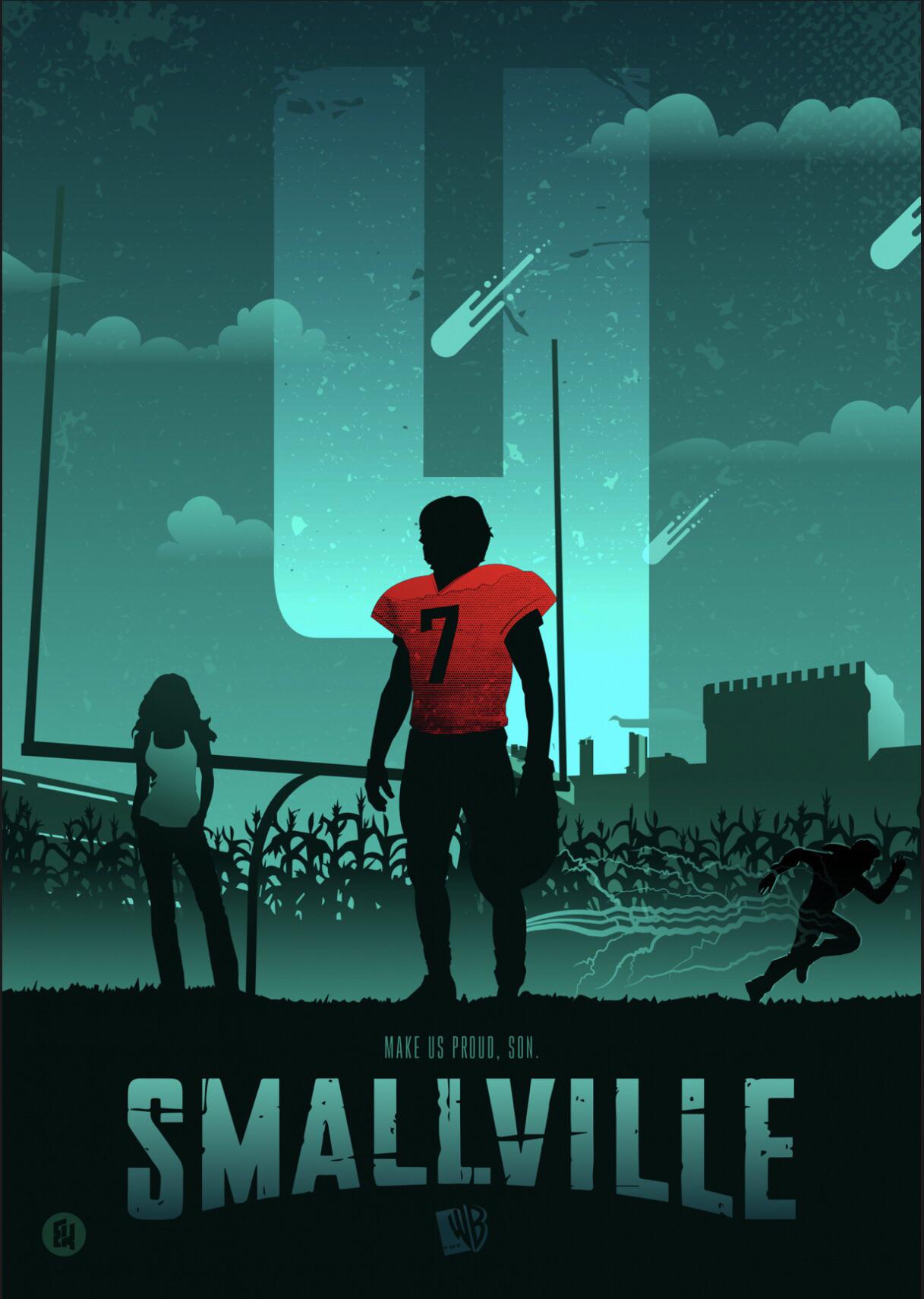
Welcome back to Rewatching Smallville, my weekly dive into the iconic series that explores Clark Kent’s journey before becoming Superman. Whether you’re a long-time fan or new to the show, you’re invited to join in each Tuesday as I revisit episodes and share my thoughts and observations. Be sure to share your own memories and theories in the comments below!
Content Warning: This episode contains themes of violence against women, murder, mental health stigmatization, and mob mentality.
There’s a particular cruelty in watching someone fight for redemption only to be destroyed by the very prejudices they were trying to overcome. “Pariah,” the twelfth episode of Smallville‘s fourth season, delivers one of the series’ most genuinely tragic hours as it explores what happens when fear of the different combines with entitled male rage to create irreversible tragedy. It’s an episode that works both as a devastating character piece and as an uncomfortable mirror reflecting society’s treatment of those deemed “other.”
Written by Holly Harold and directed by Paul Shapiro, “Pariah” serves as the brutal conclusion to Clark and Alicia’s relationship arc while simultaneously delivering one of the series’ most pivotal moments—Chloe’s discovery of Clark’s secret. It’s an hour of television that pushes its protagonist to his darkest point yet, forcing him to confront not just loss but his own capacity for murderous rage. The episode succeeds in creating genuine emotional devastation while revealing uncomfortable truths about how communities respond to perceived threats and how toxic masculinity manifests in “nice guy” entitlement.
The Return of Alicia Baker
Sarah Carter’s final appearance as Alicia Baker begins with a scene that perfectly encapsulates the episode’s central tragedy. The karaoke night at the Talon, which should be a moment of normalcy and fun, becomes a public shaming as the entire crowd turns silent and hostile at Alicia’s appearance. The way the music literally fades out as she enters creates a visceral representation of social rejection that feels both theatrical and painfully authentic.
Carter brings remarkable nuance to Alicia’s final episodes, playing her not as the manipulative obsessive from “Obsession” or even the desperate manipulator from “Unsafe,” but as someone genuinely trying to rebuild her life while carrying the weight of past mistakes. Her tears as she flees the Talon feel earned rather than manipulative, and her subsequent scenes with Clark reveal someone who understands the impossibility of her situation even as she fights against it.
The tragedy of Alicia Baker is that she actually has changed—the growth and self-awareness she demonstrates throughout the episode suggest genuine rehabilitation. But in Smallville, as in real life, the label of “crazy” or “dangerous” becomes a life sentence that no amount of personal growth can commute. The town has decided what Alicia is, and nothing she does can change that predetermined narrative.
Tim Westcott and the “Nice Guy” Who Kills
Derek Hamilton’s portrayal of Tim Westcott represents one of Smallville‘s most insidiously realistic villains—not because of his supernatural sand-based abilities, but because of the terrifyingly familiar psychology behind his actions. Tim is the embodiment of entitled male rage dressed up in the costume of moral righteousness, a “nice guy” whose seeming normalcy masks a violent possessiveness toward women he has no claim to.
The episode brilliantly establishes Tim as someone who flies under the radar precisely because he fits society’s image of respectability. He writes for the school newspaper, shows up at the right social events, and knows how to present himself as concerned rather than obsessed. His ability to literally become invisible through his sand powers serves as a perfect metaphor for how these predatory “nice guys” operate in plain sight, their violence hidden behind facades of civility.
Tim’s stated motivation—that Jason and Lana’s relationship is “wrong” and they “got what they deserved”—reveals the moral framework of someone who believes he has the right to punish women for not conforming to his standards. But the subtext is clear: Tim attacks Lana and Jason not out of genuine moral concern but because Lana chose someone else. His framing of Alicia isn’t just strategic; it’s punishment for her choosing Clark, another rejection in what we can assume is a pattern of women not giving him what he believes he deserves.
This dynamic feels disturbingly prescient in 2025, anticipating conversations about incel violence and toxic masculinity that wouldn’t enter mainstream discourse for years. Tim represents the logical endpoint of unchecked entitlement—when “nice guys” don’t get what they want, their niceness reveals itself as a performance that can quickly transform into violence.
The Weight of Being a Pariah
The episode’s title explicitly identifies Alicia as the pariah, but the concept extends beyond her to explore how communities create and maintain outsider status. The mob mentality that grips Smallville demonstrates how quickly fear overrides logic or compassion. Even when Sheriff Adams confirms that Alicia couldn’t have attacked Jason because she was in interrogation at the time, the town’s narrative has already been written.
Martha and Jonathan’s reaction to Alicia provides perhaps the most painful example of this dynamic. These are genuinely good people who have raised Clark to see the best in others, yet they can’t extend that same grace to Alicia. Their disapproval isn’t based on current evidence but on past history and community consensus. When even the Kents—paragons of rural virtue and compassion—participate in the ostracization, it reveals how deeply these prejudices run.
The episode draws uncomfortable parallels between Alicia’s treatment and real-world stigmatization of those with mental health histories. Her time at Belle Reve becomes a scarlet letter that no amount of treatment or personal growth can remove. Dr. McBride’s threats to have her readmitted based on his assessment rather than her actions demonstrates how psychiatric institutions can become weapons of control rather than places of healing.
Clark’s defense of Alicia places him in the position of choosing between his community and his conviction, a dynamic that will define much of his journey toward becoming Superman. His reminder to his parents that they taught him to look for the good in people becomes a test of whether those values hold when applied to someone society has deemed irredeemable.
Chloe’s Discovery and the Burden of Knowledge
The revelation of Clark’s powers to Chloe represents one of the series’ most skillfully executed pivotal moments. The setup—Alicia’s claim that one of Chloe’s closest friends is a “meteor freak,” followed by the orchestrated car accident—creates a scenario where the revelation feels both shocking and inevitable. Allison Mack plays Chloe’s stunned reaction with perfect calibration, conveying the simultaneous wonder and vertigo of having your worldview fundamentally altered.
The staging of Clark’s reveal deserves particular praise. Having him catch the car in full view, unaware of Chloe’s presence, creates a moment of pure heroism untainted by performance or explanation. This is Clark at his most essentially Superman-like—acting on instinct to save lives without thought of consequences or recognition. The image of him catching the car sideways, rotating it, and gently lowering it to the ground provides a visual that burns itself into both Chloe’s and the audience’s memory.
What makes this revelation particularly effective is how it recontextualizes Chloe’s entire relationship with Clark. Every strange disappearance, every impossible rescue, every deflected question suddenly makes sense. Mack conveys this retroactive understanding through subtle physical choices—the way Chloe can’t quite look at Clark the same way, how she stumbles over responses to simple questions from Lois.
The episode’s handling of the immediate aftermath shows remarkable restraint. Rather than forcing a confrontation or confession, it allows Chloe to sit with this knowledge, to process what it means for her understanding of her best friend. Her decision to take down the Wall of Weird articles about Clark demonstrates an immediate protective instinct that speaks to the depth of their friendship.
Clark’s Descent into Darkness
Tom Welling delivers perhaps his strongest performance of the series as Clark grapples with Alicia’s murder and his own capacity for lethal violence. The image of Clark cradling Alicia’s body while sobbing represents a loss of innocence that goes beyond romantic heartbreak. This is Clark confronting the limits of his power—all his strength couldn’t protect someone who trusted him, who needed him.
The confrontation with Tim becomes a crucial test of Clark’s moral framework. His use of heat vision to severely burn Tim, followed by the attempted strangulation, reveals a Clark capable of the same brutality as any human given sufficient provocation. The fact that he has to consciously restrain his strength while choking Tim—as noted in the episode’s production notes—adds another layer of horror. Even in his murderous rage, Clark has to hold back or risk accidentally decapitating someone with his bare hands.
Welling plays this sequence with frightening intensity, showing us a Clark who has completely abandoned his moral constraints. This isn’t red kryptonite Clark acting without inhibitions; this is regular Clark choosing violence with full awareness of what he’s doing. The tears streaming down his face as he chokes Tim suggest not just grief but a kind of existential horror at what he’s become.
Lois’s intervention provides the external conscience Clark needs in that moment, but the damage to his self-image is already done. Clark now knows what he’s capable of when pushed to his limits, knowledge that will haunt him as he continues developing his moral code. The episode suggests that Superman’s mercy isn’t just about being good—it’s about consciously choosing not to become the monster he could so easily be.
The Failure of Institutions
“Pariah” presents a damning indictment of how institutions handle difference and vulnerability. Belle Reve, ostensibly a treatment facility, becomes a tool for threatening and controlling those who don’t conform. Law enforcement, in the form of Sheriff Adams, proves more interested in closing cases than finding truth. The school system, represented by the Torch newspaper, turns personal struggles into public entertainment.
Dr. McBride’s character embodies the worst aspects of psychiatric authority—using medical power to control rather than heal. His threats against both Alicia and Clark reveal how psychiatric diagnosis can become a weapon, particularly against young people with limited legal recourse. The episode doesn’t explicitly state whether Alicia’s original institutionalization was justified, but it clearly shows how that history becomes a permanent mark against her.
The fact that Tim, an actual murderer, operated freely while Alicia, who was genuinely trying to reform, faced constant suspicion reveals how these systems fail to protect the truly vulnerable while enabling those who know how to appear “normal.” Tim’s ability to write for the school paper and go on dates with Lois shows how predators can hide in plain sight when they match society’s expectations of acceptability.
The Cost of Secrets
While “Unsafe” explored the intoxicating appeal of being known, “Pariah” reveals the deadly cost of secrets in a world unprepared for difference. Alicia’s death occurs precisely because she exists in a space between normal and other—her powers make her suspect, but her lack of community among other “meteor freaks” leaves her isolated and vulnerable.
Clark’s secret-keeping, which he maintains even when it might save Alicia, becomes complicit in her death. His refusal to reveal his powers when she asks him to do so represents a choice to prioritize his safety over hers—an understandable but ultimately fatal decision. The episode doesn’t let Clark off the hook for this choice, forcing him to live with the knowledge that his silence contributed to Alicia’s murder.
The contrast between Clark’s protected status and Alicia’s vulnerability highlights the privilege that comes with being able to pass as “normal.” Clark can hide his difference; Alicia, once exposed, can never again blend in. This dynamic speaks to real-world issues around visible versus invisible disabilities, mental health stigma, and the safety that comes with conformity.
Love, Loss, and Responsibility
The episode’s emotional core lies in Clark’s recognition that he failed someone who loved and trusted him. His confession to his parents that he “can’t forgive himself” for not revealing his powers speaks to a fundamental truth about responsibility—sometimes the greatest failures come not from what we do but from what we fail to do.
Tom Welling and Sarah Carter create a believable sense of connection in their limited scenes together, making Alicia’s death feel like a genuine loss rather than just plot advancement. The small moments—Alicia comparing Clark to a “big cat in a small cage,” their discussion about giving up powers—establish a relationship built on mutual understanding of isolation.
The episode wisely avoids simple resolution to Clark’s grief. His two days of self-imposed isolation in the loft, repetitively throwing a ball against the wall, captures the repetitive nature of grief and self-recrimination. Martha and Jonathan’s attempts at comfort can’t address the fundamental truth Clark has learned: that his choices have life-and-death consequences for those around him.
Technical Execution and Direction
Paul Shapiro’s direction creates a mounting sense of dread that makes Alicia’s death feel inevitable even as we hope for a different outcome. The cold open at the Talon, with its sudden silence and hostile stares, establishes a horror movie atmosphere that persists throughout the episode. The choice to cut away from the actual discovery of Alicia’s body, showing only Clark’s reaction, makes the moment more powerful through restraint.
The episode’s pacing effectively balances multiple storylines while maintaining focus on the central tragedy. The Genevieve/Lex subplot provides necessary breathing room without undermining the main narrative’s emotional weight. Even Lois’s awkward date with Tim serves the larger story by establishing his predatory nature before the final revelation.
The decision to end with Chloe and Clark at Alicia’s grave provides appropriate closure while setting up future narrative developments. Chloe’s subtle hints that she knows Clark’s secret create dramatic tension without forcing premature revelation, allowing both characters time to process their changed dynamic.
The Verdict
“Pariah” stands as one of Smallville‘s most successful attempts at genuine tragedy, creating an hour of television that earns its emotional devastation through careful character work and unflinching examination of prejudice’s deadly consequences. The episode succeeds not just as a conclusion to Clark and Alicia’s arc but as a meditation on how communities create and destroy their outsiders.
Sarah Carter’s final performance as Alicia Baker provides the episode’s emotional anchor, creating a character whose death feels genuinely tragic rather than merely functional. Her ability to convey Alicia’s hope, fear, and ultimate resignation elevates what could have been a simple victim role into something more complex and painful.
The episode’s exploration of toxic masculinity through Tim Westcott feels particularly relevant years later, anticipating cultural conversations about entitlement, violence, and the “nice guy” phenomenon. His role as the true villain hiding behind Alicia’s convenient scapegoating provides bitter commentary on how society often punishes the vulnerable while protecting the privileged.
Most importantly, “Pariah” pushes Clark toward a moral reckoning that will define his journey toward becoming Superman. His near-murder of Tim and his guilt over Alicia’s death establish stakes for his future choices about power, responsibility, and justice. The episode suggests that Superman’s compassion isn’t inherent but chosen, forged through failures and near-catastrophes that teach the cost of both action and inaction.
It’s a dark hour of television that earns its darkness through genuine emotional and thematic complexity. In showing us Clark at his lowest point, “Pariah” paradoxically demonstrates why he’ll eventually rise to become Earth’s greatest hero—not because he’s incapable of darkness, but because he chooses light despite knowing exactly what darkness feels like.
What did you think of Alicia’s death and its impact on Clark’s character development? How do you feel about the revelation of Clark’s secret to Chloe, and did the episode handle Tim’s “nice guy” villain archetype effectively? Share your thoughts and memories in the comments below!
 The Confusing Middle
The tragedy of Alicia Baker was genuinely sad. Chloe learning Clark’s secret was expertly executed. Always great when Superman lifts a car.
LikeLiked by 1 person