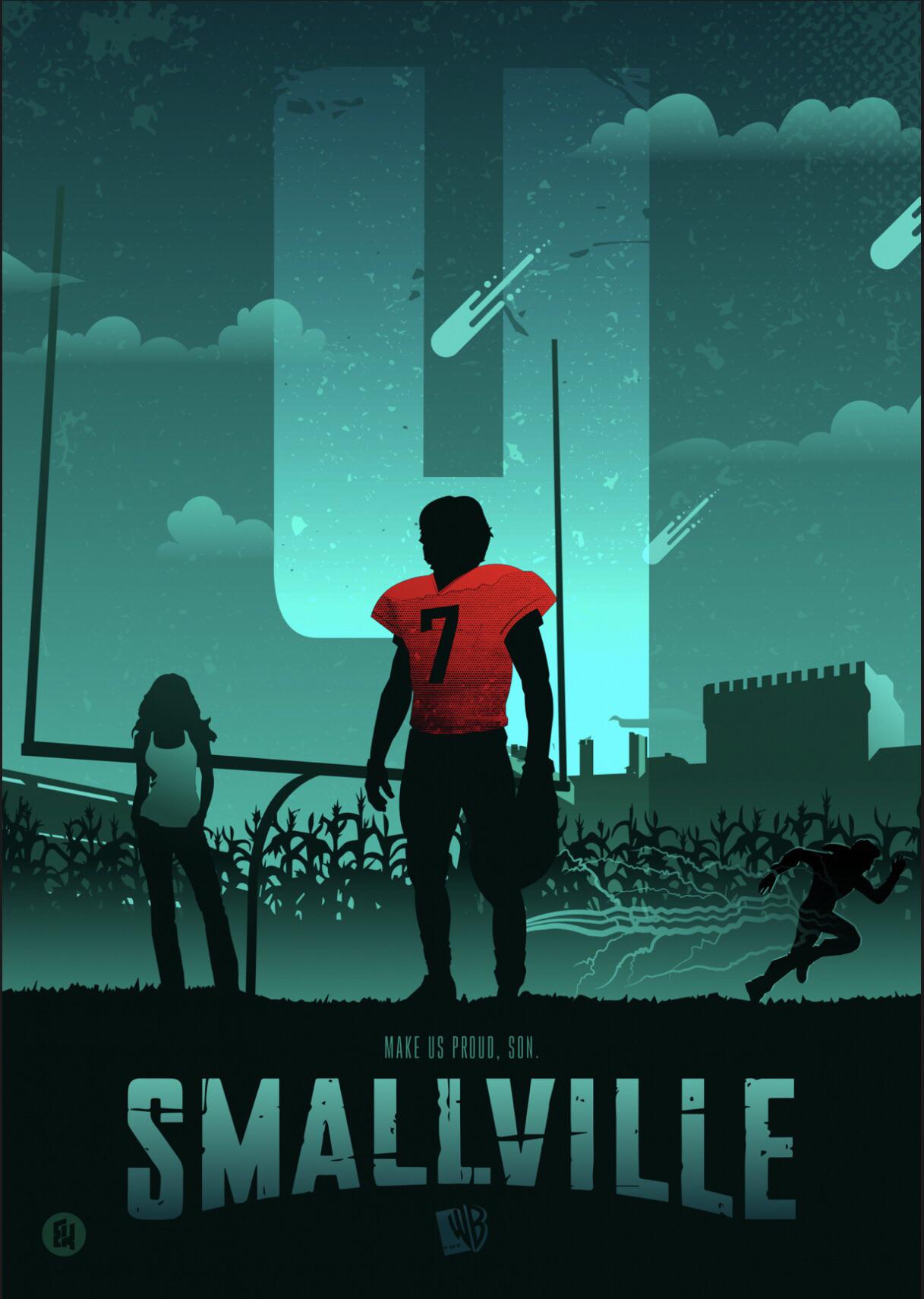
Welcome back to Rewatching Smallville, my weekly dive into the iconic series that explores Clark Kent’s journey before becoming Superman. Whether you’re a long-time fan or new to the show, you’re invited to join in each Tuesday as I revisit episodes and share my thoughts and observations. Be sure to share your own memories and theories in the comments below!
After “Devoted” gave us scientifically-enhanced cheerleader romance schemes, “Run” arrives with perhaps the most important question Smallville had posed since its pilot: what happens when Clark Kent isn’t the fastest person in the room? It’s a premise that sounds simple enough until you realize this show has spent three and a half seasons establishing Clark’s super-speed as his most reliable superpower—the one ability that consistently gets him out of trouble when alien artifacts, meteor freaks, and Luthor family drama threaten to expose his secret.
Enter Bart Allen, a street-smart speedster who can literally run circles around our boy from Kansas, and suddenly Clark’s world gets a lot more complicated. Twenty-one years later, “Run” holds up as both a thrilling introduction to the wider DC Universe and a surprisingly thoughtful meditation on what it means to use extraordinary abilities responsibly. It’s also the episode where Smallville fully commits to building its own version of the superhero team dynamics that would eventually culminate in the Justice League, even if nobody’s ready to call it that quite yet.
Plus, we get to watch someone steal Jonathan Kent’s wallet and live to tell about it, which honestly feels like the real superpower on display here.
The Fastest Thief Alive
Let’s start with Kyle Gallner’s Bart Allen, who immediately establishes himself as Clark’s polar opposite in every way that matters. Where Clark uses his abilities reluctantly and hides them obsessively, Bart treats his super-speed like the world’s greatest party trick. Where Clark was raised by loving parents who taught him responsibility and moral values, Bart learned survival skills on the streets after his own parents couldn’t handle having a super-powered kid.
The character represents a fascinating “what if” scenario: what would happen if someone with Clark’s abilities didn’t have Martha and Jonathan Kent providing moral guidance? Gallner brings such infectious energy to the role that you genuinely like Bart even when he’s being completely irresponsible. When he justifies stealing by claiming he only takes from rich people who won’t miss it, it’s wrong but understandable coming from a teenager who’s been fending for himself for years.
What makes Bart’s introduction work so well is how the episode uses him to illuminate Clark’s character development. When Bart suggests they team up and “use their abilities to have fun,” Clark’s immediate rejection reveals how much he’s internalized the Kent family values. This isn’t the confused freshman from Season 1 who was still figuring out right from wrong—this is someone who’s made deliberate choices about the kind of person he wants to be.
The episode also deserves credit for taking Bart’s backstory seriously. His casual mention that his parents “began to treat him differently” after his powers manifested feels like a genuine trauma that shaped his worldview. Of course he doesn’t trust authority figures or believe in using his abilities to help others—he’s never experienced the kind of unconditional love and support that made Clark’s moral development possible.
For comic book fans, this version of Bart Allen represents an interesting hybrid of different Flash family characters. In the comics, Bart Allen was actually Impulse, the hyperactive grandson of Barry Allen who came from the future to join the present-day superhero community. But this Smallville version pulls elements from multiple speedster origins—the lightning accident mirrors Barry Allen’s classic origin story, while the fake IDs reference Jay Garrick (the Golden Age Flash), Barry Allen (the Silver Age Flash), and Wally West (who was Kid Flash before becoming the third Flash).
The show cleverly uses these comic book references as Easter eggs while creating its own version of the character that serves the story’s needs. This Bart may not be from the future, but his joke about being “from the future” when Chloe asks where he’s from feels like a knowing wink to longtime fans who understand the character’s comic book history.
The Need for Speed (And Moral Guidance)
The episode’s handling of super-speed effects deserves special recognition for being both visually impressive and narratively purposeful. When Bart saves Jonathan from the runaway truck, the red-and-yellow lightning effect immediately establishes him as different from Clark while maintaining visual consistency with the show’s established super-speed aesthetic.
More importantly, the sequence establishes that Bart isn’t just faster than Clark—he’s faster and more experienced with his abilities. The scene where he runs across the surface of a lake feels like the show flexing its special effects muscles, but it also serves a character purpose. This is someone who’s had years to experiment with his powers without anyone telling him to be careful or hide what he can do.
The chase sequence through Metropolis provides some of the episode’s most thrilling moments while highlighting the fundamental difference between the two characters. Clark chases Bart because he wants to return stolen property and convince him to do the right thing. Bart runs because it’s fun and he can, treating the whole thing like an elaborate game rather than a moral confrontation.
When Bart shows up in the Kent kitchen drinking orange juice, it’s a perfect encapsulation of his character. He’s not trying to be menacing or prove a point—he’s genuinely excited to meet someone else with super-speed and wants to share that excitement. Gallner plays the moment with such enthusiasm that you understand why Clark might be tempted by Bart’s lifestyle, even if he ultimately rejects it.
The Florida trip sequence works as both wish fulfillment and character development. For one night, Clark gets to experience what it would be like to use his abilities purely for fun, without worrying about consequences or maintaining his secret identity. But the episode is careful to show that even this relatively innocent adventure has costs—they’re gone all night, leaving Martha and Jonathan to worry, and they return to find that Lex has been looking for Clark about something important.
Lex Luthor and the Mystery Manuscript
Speaking of Lex, Michael Rosenbaum brings genuine enthusiasm to the Kryptonian manuscript storyline, and you can see how excited his character is to have something approaching a normal friendship activity to share with Clark. When he shows Clark the 14th century document with Kryptonian symbols, it feels like he’s a kid showing off a cool toy rather than a future supervillain gathering intelligence.
The episode uses Clark’s X-ray vision reveal of the hidden map to advance the ongoing Kryptonian mythology while providing a concrete reason for the theft that drives the plot forward. When Clark sees the repeated phrase “Look deeper,” it’s both a literal translation and a thematic statement about the episode’s exploration of character motivations and moral choices.
The manuscript itself represents everything that makes Lex compelling as a character. His genuine intellectual curiosity about historical mysteries is exactly the kind of trait that could make him a valuable ally, but his willingness to pursue dangerous knowledge without considering the consequences hints at the darker path he’s already walking. When he casually mentions knowing “all the fences in the area,” it’s a reminder that Lex’s legitimate business interests are always shadowed by less savory connections.
Bart’s theft of the manuscript creates the episode’s central moral dilemma while providing an interesting test of the tentative trust Clark and Lex have been rebuilding. When Clark lies about not seeing who took it, he’s protecting Bart despite disagreeing with his methods. When Lex believes the lie, it shows that he still genuinely trusts Clark, even if that trust is becoming increasingly complicated.
The sequence where Bart knocks Clark out with a meteor rock provides a nice callback to the show’s established mythology while demonstrating that Bart isn’t inherently malicious. He could have left Clark defenseless, but instead he closes the lead box so Clark can recover. It’s a small gesture that reveals the decent person underneath the rebellious exterior.
Supporting Characters and Smallville’s Expanding Universe
The episode benefits from strong work by the supporting cast, particularly in how it handles the ongoing Lana and Jason subplot. Jensen Ackles brings appropriate intensity to Jason’s reaction to discovering Lana’s tattoo, and the eventual revelation that the Kawatche Cave symbols match her marking provides important setup for future storylines while maintaining the episode’s focus on Bart and Clark.
Kristin Kreuk’s performance when Lana explains why she left Paris feels genuine and vulnerable. When she tells Jason that seeing the symbols made her realize she couldn’t run away from whatever’s happening to her, it shows real character growth from someone who’s spent most of the series being acted upon rather than making active choices about her own destiny.
The Martha and Jonathan subplot about her throwing herself into Talon management to avoid thinking about his health provides nice emotional grounding for the episode’s more fantastical elements. Annette O’Toole brings such authentic concern to Martha’s explanation that it feels like real marriage dynamics rather than plot convenience.
John Schneider gets some of his best moments of the season when Jonathan advises Clark about dealing with Lex’s friendship overtures. His warning to “be careful” carries extra weight because we know he’s speaking from experience with Lionel, and his concern feels paternal rather than paranoid.
Chloe Sullivan and the Magic of Ordinary Moments
Allison Mack deserves special recognition for making Chloe’s brief interactions with Bart feel significant despite limited screen time. When Bart flirts with her using his “magic trick” of super-speed tulip delivery, Mack’s performance captures both Chloe’s intellectual curiosity about the impossible thing she just witnessed and her genuine delight at being the focus of romantic attention.
The sequence also works because it shows how Bart’s powers could be used for purely positive purposes. There’s nothing harmful or illegal about using super-speed to get someone flowers, and the genuine joy on Chloe’s face suggests that small gestures of kindness might be more meaningful than grand heroic acts.
The scene where Clark introduces Bart as being “from the future” provides some of the episode’s best comedy while establishing the easy camaraderie between the three characters. When Bart jokes about still being in love with Chloe “a hundred years from now,” it’s funny because it’s obviously ridiculous, but Gallner delivers it with such charm that you understand why Chloe is immediately smitten.
These moments also serve an important narrative function by showing how easily Bart could fit into Clark’s normal teenage life if he made different choices. The tragedy isn’t that he’s irredeemably evil—it’s that he’s choosing excitement and independence over connection and responsibility.
Cultural Context and Early 2000s Teen Identity
“Run” aired during a fascinating period in American youth culture, when the internet was beginning to reshape how teenagers thought about identity and community but hadn’t yet become the dominant force in their social lives. Bart’s lifestyle—constantly moving, maintaining multiple identities, living outside traditional social structures—feels both timeless and specifically tied to the early 2000s moment when young people were beginning to experiment with online personas and digital nomadism.
The episode’s treatment of super-speed also reflects early 2000s anxieties about acceleration and instant gratification. Bart represents the appeal of a life without consequences or commitments, where you can literally outrun any problem and start fresh whenever things get complicated. But the episode is careful to show that this approach ultimately leaves him isolated and directionless.
The contrast between Bart’s rootless existence and Clark’s deep connections to family and community speaks to broader cultural tensions about traditional values versus individual freedom that were particularly relevant during the Bush administration era. The episode doesn’t judge Bart’s choices, but it clearly advocates for Clark’s approach to balancing personal desires with social responsibility.
Visual Storytelling and Technical Achievement
Director David Barrett deserves credit for making the super-speed sequences feel both spectacular and grounded in character motivation. The chase scenes work because they’re not just displays of special effects—they’re conversations between characters who are learning about each other through how they use their abilities.
The practical effects work, particularly Bart’s lightning trail and the water-running sequence, holds up remarkably well twenty-one years later. The visual design team clearly put thought into making Bart’s speed effects feel different from Clark’s while maintaining the show’s established aesthetic language for super-powered characters.
The final race between Clark and Bart provides a perfect culmination for their relationship dynamic. When Bart starts running backwards while still outdistancing Clark, it’s both a show-off move and a gesture of friendship—he’s demonstrating his superiority while also giving Clark a chance to see what he’s capable of. Gallner’s salute before disappearing feels like a promise that they’ll meet again rather than a goodbye.
The Larger DC Universe Implications
For longtime comic book fans, “Run” represents Smallville‘s first real step toward building the kind of superhero community that would eventually become the Justice League. Bart’s casual suggestion that people like them should “form a club or a league or something” is obviously meant as setup for future storylines, but it also reflects the episode’s genuine interest in exploring what happens when extraordinary individuals find each other.
The episode works because it focuses on the human elements of superhero community-building rather than just the spectacle. Bart’s excitement at meeting someone else with powers feels authentic, and his disappointment when Clark chooses responsibility over adventure provides real emotional weight to their philosophical conflict.
The various Flash family references scattered throughout the episode serve multiple purposes—they reward comic book knowledge while establishing that this universe contains heroes beyond Superman and his immediate circle. The fake IDs bearing the names Jay Garrick, Barry Allen, and Wally West suggest a larger legacy of heroism that Clark might eventually become part of.
Why “Run” Endures
“Run” succeeds because it uses its superhero premise to explore genuinely difficult questions about responsibility, community, and the price of doing the right thing. Bart isn’t wrong when he points out that Clark could use his abilities to have more fun and live with fewer restrictions. But Clark isn’t wrong when he argues that helping others is more important than personal freedom.
The episode also benefits from refusing to provide easy answers to these moral dilemmas. Bart’s final decision to return the manuscript suggests that Clark’s influence affected him, but he still chooses to leave rather than change his lifestyle. It’s a realistic resolution that acknowledges personal growth while respecting individual autonomy.
Most importantly, “Run” treats its characters with genuine empathy, even when they make questionable choices. Bart’s criminal behavior is never excused, but it’s understood as the product of circumstances rather than inherent evil. Clark’s moral certainty is admirable, but the episode also shows how his privileged upbringing makes certain choices easier for him than they would be for someone in Bart’s situation.
The Verdict
“Run” stands as one of Season 4’s strongest episodes, successfully introducing a major DC Comics character while advancing multiple ongoing storylines and exploring complex themes about power, responsibility, and community. It’s an episode that works both as superhero spectacle and character drama, providing thrilling action sequences while never losing sight of the human emotions driving the plot forward.
The episode also represents Smallville at its most confident, skillfully balancing comic book mythology with grounded character development while maintaining the show’s unique tone and aesthetic. Kyle Gallner’s performance as Bart Allen is so compelling that you genuinely wish he could stick around, which makes his departure feel meaningful rather than convenient.
The real success of “Run” lies in how it expands Clark’s understanding of what it means to be extraordinary while reinforcing the values that make him heroic. Meeting Bart shows Clark that having powers doesn’t automatically make someone a hero—that designation has to be earned through consistent choices to help others rather than just help yourself.
Just maybe don’t trust anyone whose idea of introducing themselves involves stealing your dad’s wallet, no matter how fast they can run or how charming their smile might be. Some first impressions are exactly what they appear to be.
What did you think of Bart Allen’s introduction when “Run” first aired? Did his philosophy about using powers for fun resonate with you, or did you side with Clark’s more responsible approach? And how did you feel about seeing Clark meet someone faster than him for the first time? Share your thoughts and memories in the comments below!
 The Confusing Middle

Loved this episode! Having another DC universe superhero make an appearance must have been so exciting for longtime fans. I was pretty young when I first saw “Run,” so I wasn’t entirely familiar with Impulse. I assumed Bart Allen was the Flash until I learned more about the character. The final run is my personal favorite scene in the episode.
LikeLiked by 1 person