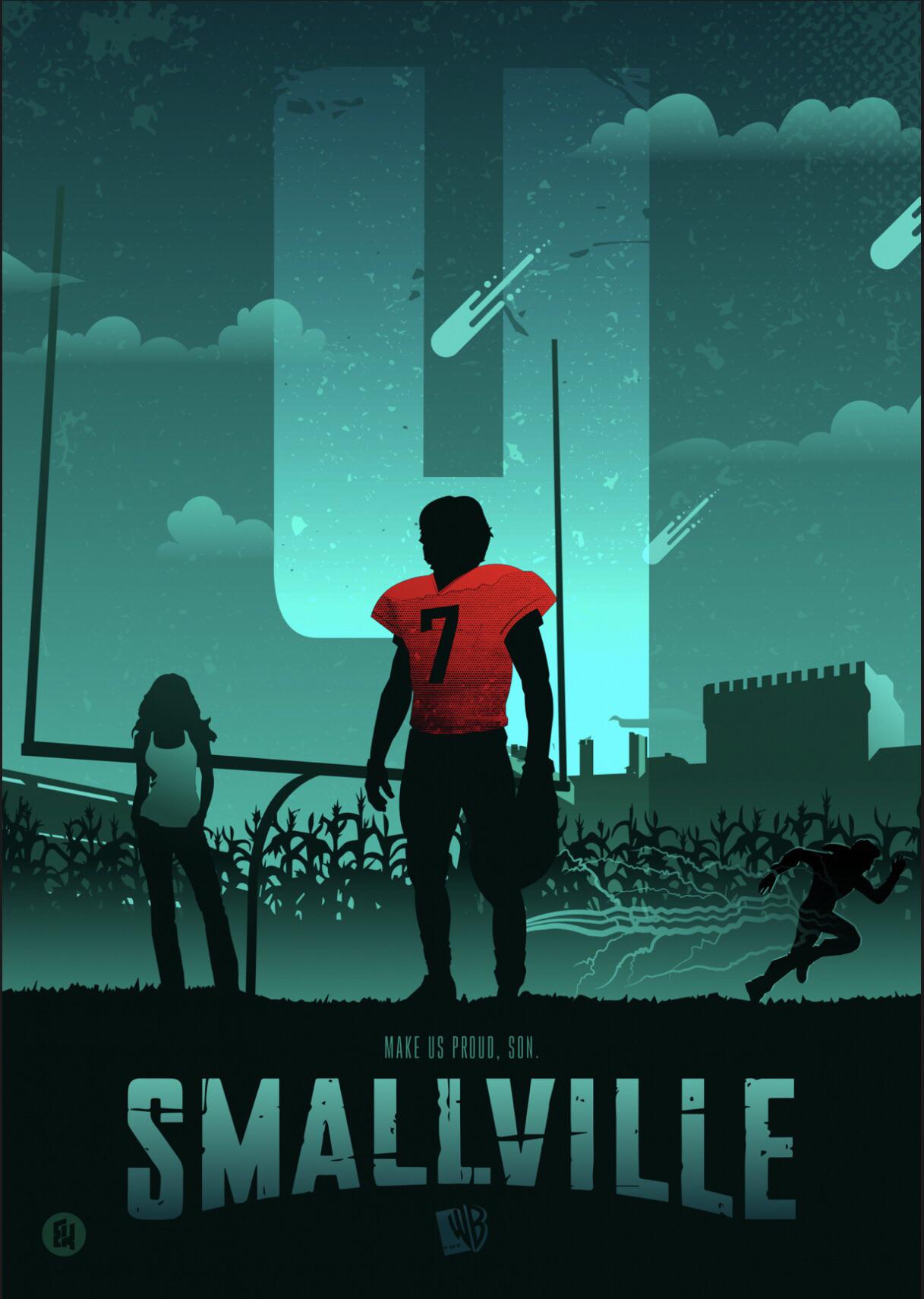
Welcome back to Rewatching Smallville, my weekly dive into the iconic series that explores Clark Kent’s journey before becoming Superman. Whether you’re a long-time fan or new to the show, you’re invited to join in each Tuesday as I revisit episodes and share my thoughts and observations. Be sure to share your own memories and theories in the comments below!
After the absolute chaos of “Crusade”—where Clark went full supervillain, Lois Lane made her spectacular entrance, and half the cast got reset after that nuclear bomb of a season three finale—”Gone” had the unenviable task of proving that Season Four could maintain its momentum. Spoiler alert: it succeeds by doubling down on everything that made the premiere work, then throwing in a liquid metal Terminator knockoff for good measure.
Twenty years later, “Gone” stands as a perfect example of Smallville‘s ability to balance genuine character development with the kind of gloriously absurd superhero shenanigans that would make even the CW’s current lineup say, “Okay, that’s a bit much.”
The Shower Scene That Launched a Thousand Memes
Let’s start with the elephant in the bathroom: Clark Kent has now been naked or semi-clothed in seven episodes, and we’re only one episode into Season Four’s new era. At this point, Tom Welling’s contract should have included a nudity clause and a really good gym membership.
But “Gone” uses Clark’s latest disrobed adventure—this time involving Lois barging into his shower while wearing nothing but his plaid shirt—as more than just fan service. It’s a character establishment moment that tells us everything we need to know about Lois Lane’s boundaries (what boundaries?) and Clark’s continued inability to function around confident women.
When Lois casually mentions, “Besides, my delicate feminine sensibilities weren’t offended the first time I caught a glimpse of Clark junior,” it’s the kind of line that could easily feel crass. Instead, Erica Durance delivers it with such matter-of-fact humor that it becomes endearing rather than awkward. This is a character who treats embarrassing situations like minor inconveniences, which is exactly the kind of energy you need when your future involves dating a man who regularly breaks the laws of physics.
The scene also gives us Martha Kent’s reaction to finding her teenage son in a bathroom with a young woman, which Annette O’Toole plays with the perfect mixture of motherly concern and “not again” exasperation. When Clark tries to clarify that they took “separate showers” while Lois helpfully adds that they “just took a shower,” you can practically see Martha calculating how many more awkward conversations she’ll need to have before Clark moves out.
The Art of Being Lois Lane
“Gone” gives us our first proper glimpse of Lois Lane as an investigative force, and the episode wisely lets her be competent without making her perfect. When she digs up Chloe’s grave (because apparently Lane women don’t believe in asking permission), she’s following a logical investigative instinct. When she gets attacked by a liquid metal assassin, she handles it with surprising resourcefulness before Lana arrives with the assist.
The episode also establishes one of the series’ most important relationship dynamics: Lois and Clark’s immediate chemistry disguised as mutual annoyance. When Clark tells Lana that Lois is “bossy, stuck-up, and rude” and that he “can’t stand her,” followed immediately by Lana’s knowing response that “the best ones always start that way,” it’s the kind of romantic foreshadowing that should feel heavy-handed but instead feels inevitable.
Durance brings something to Lois that the character sometimes lacks in other adaptations: she’s genuinely funny without being a caricature. Her North by Northwest reference while Clark is in the shower, her casual destruction of the Kent family’s non-verbal communication, and her complete lack of filter when discussing helicopter crashes all feel like natural extensions of a character who approaches life as an adventure rather than a problem to be solved.
The episode also takes care to establish Lois’s journalistic instincts in contrast to her cousin’s more methodical approach. When Clark recognizes Nellie Bly as one of Chloe’s heroes while Lois doesn’t, it reinforces what we learned in “Delete”—that Lois has “no interest in journalism” at this point in her life. It’s a nice character detail that makes her eventual career choice feel like genuine growth rather than destiny.
General Sam Lane and the Military-Industrial Complex
Michael Ironside’s casting as General Sam Lane is inspired in the way that only Smallville casting could be. Here’s an actor who’s spent decades playing military hardasses and space villains, and the show drops him into Smallville as Lois’s father—a man whose idea of family bonding apparently involves military helicopters and classified interrogations.
The dynamic between Sam and Lois reveals layers of their relationship without needing extensive exposition. When Sam shows up after the helicopter incident, there’s genuine affection between them, but also a clear pattern of him appearing in her life when she’s crossed military boundaries. Ironside plays Sam as a man who loves his daughter but can’t quite figure out how to parent someone who inherited his stubborn streak without his respect for authority.
The revelation that Sam has been working with Lex adds another layer to Smallville‘s increasingly complex web of relationships. It’s not entirely clear what their arrangement involves, but Clark’s discovery of Sam’s cigar brand in Lex’s office creates the kind of subtle paranoia that the show does best. Is Sam a willing participant in whatever Lex is planning, or is he being manipulated by someone who’s studied the art of reading people?
Jason Teague and the Return of the Romantic Plot Tumor
Jensen Ackles’s return as Jason Teague gives us our first glimpse of what will become one of Season Four’s more problematic elements: the insistence that Lana needs a romantic subplot that doesn’t involve Clark. Jason’s surprise appearance with roses is charming enough, and Ackles has enough natural charisma to sell the gesture, but there’s something slightly off about the entire setup.
When Jason explains that he followed Lana to Smallville rather than trying to convince her to return to Paris, it sounds romantic in theory. In practice, it sounds like the beginning of a very expensive stalking campaign. The fact that Jason can apparently just relocate internationally on a whim suggests either unlimited resources or the kind of obsessive behavior that should probably be addressed in therapy rather than celebrated with rose bouquets.
The episode also continues building the mystery around Lana’s new tattoo and her connection to Countess Isobel Thoreaux. The image of Lana comparing Clark’s photo from the caves to her mysterious symbol in the mirror is striking, but it also feels like setup for a storyline that will require increasingly elaborate explanations to maintain dramatic tension.
Trent MacGowen: The T-1000 We Ordered From Wish
Let’s address the liquid metal elephant in the foundry: Trent MacGowen is basically the T-1000 from Terminator 2, but with a Canadian accent and significantly less intimidating one-liners. The episode doesn’t even try to hide the inspiration—Trent can morph his limbs into metal weapons, turn his entire body liquid to avoid attacks, and meets his end in a foundry surrounded by molten metal, just like his cinematic predecessor.
But here’s the thing: sometimes shameless homage works, and James Bell sells Trent’s menace effectively enough that you don’t spend the entire episode thinking about how much better Robert Patrick did it twelve years earlier. The scene where Trent attacks Lois at the graveyard is genuinely unsettling, and his final confrontation with Clark in the foundry provides some solid superhero action.
The real issue with Trent isn’t his derivative nature—it’s that he’s essentially a plot device designed to create action sequences rather than a character with meaningful motivation. Yes, he’s working for Lionel to eliminate Chloe, but his backstory as a Belle Reve patient feels perfunctory. He exists to provide spectacular villain moments, and while those moments are entertaining, they don’t add much emotional weight to the episode.
The Chloe Mystery Box Payoff
One of “Gone’s” most effective elements is how it handles the resolution of Chloe’s apparent death. The show had temporarily removed Allison Mack from the opening credits to maintain the illusion that Chloe might actually be gone, which was a bold choice for a series that rarely killed off major characters permanently.
The revelation that Lex staged Chloe’s death to protect her from Lionel’s assassination attempts recontextualizes everything we’ve seen about their relationship. Lex’s willingness to fake a friend’s death rather than simply warn her suggests both genuine care and a troubling belief that he knows what’s best for everyone else. It’s the kind of morally ambiguous choice that makes Lex’s eventual transformation into a villain feel like a series of small compromises rather than a sudden personality shift.
Clark’s discovery of the empty coffin using his X-ray vision provides a nice callback to his developing powers, while also establishing that he’s becoming more willing to use those powers for investigative purposes. The fact that he can confirm Chloe’s survival without having to dig up her grave like Lois shows both his practical advantages and his growing confidence in his abilities.
The Lionel Luthor Prison Theater
John Glover continues to be one of television’s great villains, even from a federal penitentiary. His scene being fitted for a new suit while discussing his upcoming trial is peak Lionel—a man so confident in his ability to manipulate any situation that he’s literally measuring for victory attire while incarcerated.
The shower stabbing scene serves multiple purposes: it demonstrates that even in prison, Lionel has enemies, it provides a medical excuse for him to recruit Trent from his hospital bed, and it reminds us that Lionel’s reach extends far beyond conventional power structures. When he tells Trent that he needs insurance against Chloe’s testimony, it’s delivered with the casual tone of a man ordering lunch rather than commissioning murder.
Glover’s performance in these scenes is particularly effective because he never plays Lionel as traditionally evil. Instead, he presents him as a man who genuinely believes that his actions are justified by necessity. When he apologizes to Lex for “not understanding the consequences of betraying his father,” it’s not remorse—it’s a threat delivered with paternal disappointment.
Technical Achievement and Visual Storytelling
Director James Marshall deserves credit for making “Gone” feel both grounded and spectacular. The episode seamlessly transitions between intimate character moments and large-scale action sequences without losing emotional coherence. The helicopter chase feels appropriately dangerous, while the foundry confrontation provides genuine superhero spectacle.
The foundry scene was filmed at Reliance Foundry in Surrey, BC, and the practical location adds weight to the final confrontation that a soundstage probably couldn’t have achieved. When Clark uses his heat vision to melt Trent from behind, the practical effects work sells the moment effectively.
The episode also benefits from strong cinematography that uses lighting and composition to enhance character moments. The scene where Lois digs up Chloe’s grave uses shadows and practical lighting to create genuine atmosphere, while the Kent Farm scenes maintain the warm, grounded feeling that anchors the series’ more outlandish elements.
Mythology Building and Series Continuity
“Gone” does excellent work building connections to the broader Smallville mythology without feeling overly referential. Clark’s mention of his last “co-ed situation” references Alicia Baker teleporting into his bed in “Obsession,” which provides character continuity without requiring detailed exposition.
The episode also plants seeds for future storylines, including General Lane’s promise to take the Kents up on their dinner invitation—a promise he’ll eventually cash in during Season Ten’s “Ambush.” These kinds of long-term payoffs are part of what made Smallville special among network television shows.
The newspaper headline revealing Lionel’s conviction is written by Perry White, the reporter who tried to expose Clark’s secret in Season Three’s “Perry.” It’s the kind of detail that rewards attentive viewers while adding depth to the show’s fictional world.
Cultural Context and Industry Reception
“Gone” aired during Season Four’s overall ratings decline, with the season averaging 4.4 million viewers per week—a significant drop from earlier seasons. The television landscape was changing rapidly in 2004, with shows like Lost and Desperate Housewives redefining serialized drama expectations. Smallville found itself competing not just for viewers, but for cultural relevance in an increasingly crowded marketplace.
The episode received generally positive reception, earning an 8.3 rating on IMDb, though some viewers found the increased comedy elements jarring. Critic Billie Doux gave it four out of four stars, particularly praising Erica Durance’s performance and the episode’s quotable dialogue.
The mixed critical response reflects the challenge facing the show as it evolved from high school drama to superhero adventure. “Gone” represents a tonal shift toward more overt comic book elements, but it manages this transition while maintaining the character development that made earlier seasons compelling.
The Smallville Nickname Origin
One of the episode’s most significant contributions to Superman mythology is Lois’s first use of “Smallville” as a nickname for Clark—a reference that originated in Superman: The Animated Series when Lois Lane first meets Clark Kent in “The Last Son of Krypton: Part II.”
The moment works because it feels natural within the context of their banter rather than forced mythology building. When Lois calls Clark “Smallville” while complaining about his shower habits, it’s both affectionate and slightly mocking—exactly the kind of nickname that sticks because it captures something essential about the person.
Production Notes and Behind-the-Scenes Details
The rifle used by Lois to defeat Trent was actually a prop from the 1998 film Deep Rising—a heavily modified Calico M955A that was known as the Chinese M1-L1 Triple Pulse Rifle in the film, though it functions more like a stun gun in this episode. It’s the kind of budget-conscious prop reuse that was common in network television production.
Sharp-eyed viewers might notice that when Lois is digging up the grave, one of the tombstones in the background reads “James Marshall”—a tribute to the episode’s director. These kinds of Easter eggs were a Smallville tradition that added personality to the production process.
Why “Gone” Works
“Gone” succeeds because it understands that the best Smallville episodes use spectacular elements to enhance character development rather than replace it. Yes, Clark throws a liquid metal assassin through foundry equipment, but the episode’s real strength comes from moments like Martha’s disapproving silence, Lois’s investigative determination, or Lex’s morally complicated rescue mission.
The episode also benefits from the show’s accumulated goodwill and character development. When Clark struggles with trusting Lex, or Lois investigates her cousin’s death, or even when Jason makes romantic gestures that feel slightly stalker-ish, we’re invested in the outcomes because we’ve watched these relationships develop over time.
“Gone” proves that Smallville could successfully integrate new characters like Lois and Jason while maintaining the emotional core that made the show special. It’s not perfect—the Trent storyline feels somewhat mechanical, and some of the romantic plot developments feel forced—but it works because it prioritizes character moments within its superhero framework.
The Verdict
“Gone” is Smallville hitting its stride in a new era. It’s an episode that successfully balances comedy (shower scenes), action (helicopter chases and liquid metal assassins), mystery (Chloe’s fake death), and character development (Lois establishing herself as a force of nature). Most importantly, it proves that the show’s Season Four reset was a creative success rather than a desperate gambit.
The episode stands as evidence that Smallville worked best when it embraced its inherent absurdity while maintaining genuine emotional stakes. Yes, it’s ridiculous that a teenage farmboy can melt a liquid metal assassin with his eyes, but it’s also moving that he does it to save his friend and protect someone he’s starting to care about.
Just maybe don’t think too hard about how Lex managed to arrange a helicopter, stage an explosion, and set up a safe house without anyone in Smallville noticing. Some things are better left to suspension of disbelief and really good production design.
 The Confusing Middle

The Lois and Clark shower scene is one of their best moments.
LikeLiked by 1 person