Welcome to The Best Movies I’ve Never Seen! This is the part of the blog where I work my way through 100 films I’ve never seen that are generally considered to be great. You’re invited to watch along with me if you can find a copy or find it streaming. So grab some popcorn and let’s get started!
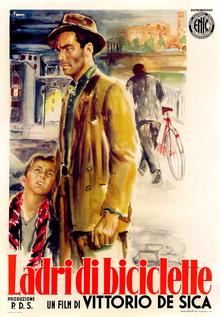
Bicycle Thieves
1948
Directed by Vittorio De Sica
In the war-ravaged streets of post-World War II Rome, Vittorio De Sica crafts a masterpiece that transcends its time and setting. Bicycle Thieves is not just a film; it’s a poignant exploration of human struggle, morality, and the lengths a desperate father is willing to go for his family.
The narrative unfolds with Antonio Ricci (Lamberto Maggiorani), a man grappling with the harsh realities of post-war Italy. His world teeters on the edge of despair, his lifeline being a bicycle – not just a means of transport but a symbol of hope and employment. The film’s emotional core lies in the bond between Antonio and his young son Bruno (Enzo Staiola), beautifully portrayed against the backdrop of societal indifference and moral dilemmas.
The central conflict arises when Antonio’s bicycle, crucial for his new job, is brazenly stolen. The subsequent quest for justice becomes a poignant metaphor for the struggle of the common man against a society that often seems oblivious to his plight. As Antonio and Bruno navigate the streets of Rome, De Sica skillfully captures the city’s pulse, infusing each frame with a raw, documentary-like realism.
The film cleverly weaves a tale of moral ambiguity. As Antonio confronts the thief, the boundaries between right and wrong blur, echoing the complexities of survival in a society struggling to rebuild itself. The portrayal of the working-class struggles transcends its Italian setting, resonating universally. It prompts viewers to reflect on their own moral compass, questioning what they might do in the face of adversity.
Maggiorani’s performance as Antonio is nothing short of brilliant. His portrayal of a father torn between the need to provide and the desire to set a moral example is both moving and relatable. Staiola, as the innocent yet perceptive Bruno, adds a layer of emotional depth to the film.
De Sica’s direction, characterized by long takes and a commitment to capturing the authenticity of the streets, contributes to the film’s enduring impact. The use of non-professional actors enhances the sense of realism, making the audience feel like silent witnesses to the struggles of a family on the brink.
Bicycle Thieves is a timeless classic that invites viewers to reflect on their own values and priorities. As the camera follows Antonio and Bruno into the bustling crowd, the film leaves us with a lingering sense of empathy and contemplation. It’s a cinematic gem that transcends its era.
But what do you think? Have you seen Bicycle Thieves? If so I invite you to share your own thoughts on the eternal themes of family, morality, and the human spirit in the comments below. What did you take away from this emotional journey through the streets of post-war Rome?
 The Confusing Middle
It’s a sad but brilliant and deeply human movie.
LikeLiked by 1 person