Welcome to The Best Movies I’ve Never Seen! This is the part of the blog where I work my way through 100 films I’ve never seen that are generally considered to be great. You’re invited to watch along with me if you can find a copy or find it streaming. So grab some popcorn and let’s get started!
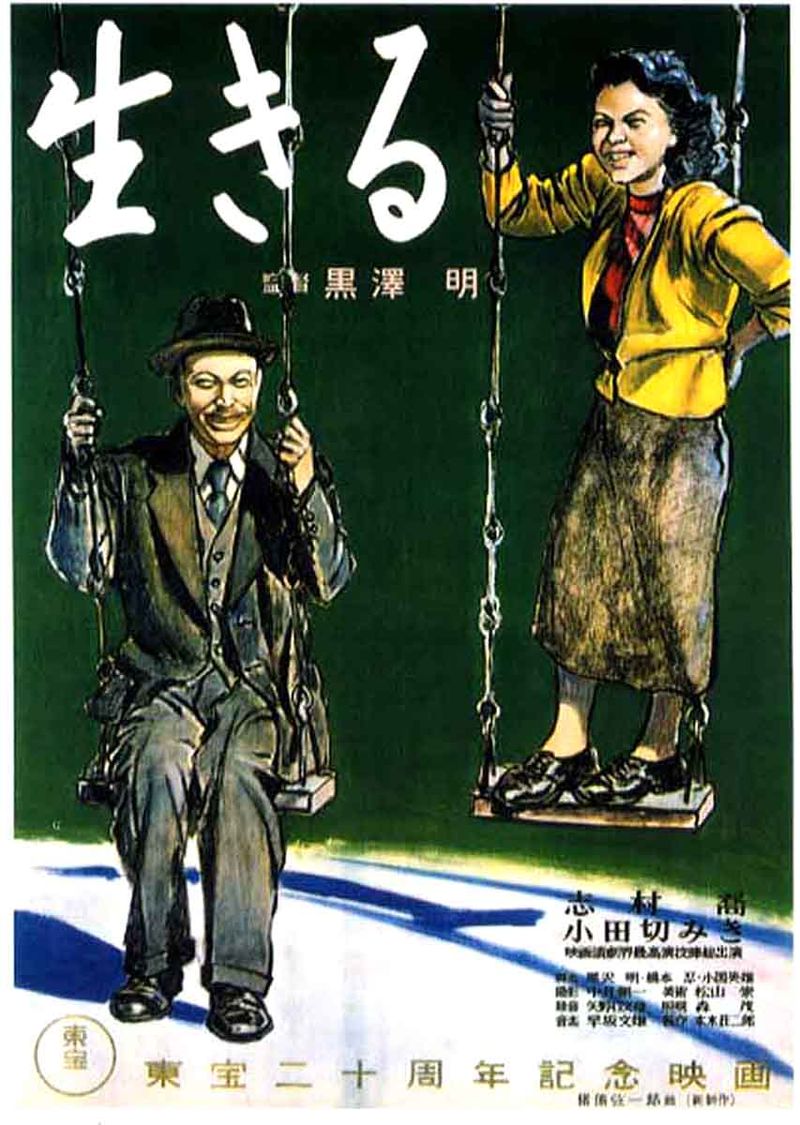
Ikiru
1952
Directed by Akira Kurosawa
In the vast world of cinema, there are certain films that resonate on a profound and timeless level. Akira Kurosawa’s 1952 masterpiece, Ikiru, is one such gem that defies the constraints of time and culture to capture the essence of the human spirit.
The story revolves around Kanji Watanabe, a lifelong bureaucrat who has spent three decades pushing paper in a monotonous government office. His existence is a portrait of apathy and resignation. His family, comprised of a distant son and a money-hungry daughter-in-law, sees him as a mere source of pension funds. At work, the very definition of bureaucracy is personified as he witnesses the endless referral of a simple request for a playground, a haunting metaphor for the inaction and inefficiency of the system.
Watanabe’s world takes a seismic shift when he learns that he has terminal stomach cancer, leaving him with less than a year to live. The news of his impending demise forces him to grapple with the cruel irony of his existence. His initial attempts at escapism, involving a foray into Tokyo’s nightlife, bring no solace, as the emptiness of his life is laid bare.
But hope emerges in the form of Toyo, a young co-worker who, in the face of her own hardships, radiates a profound love for life. As Watanabe takes solace in her presence, he begins to understand the beauty of living life to the fullest. Her resilience and enthusiasm awaken a dormant spark within him.
As Watanabe faces his mortality, he embarks on a mission to build a playground in his city, a place where children can find joy, mirroring the dreams he had long shelved. His transformation, from a passive bureaucrat to a fervent advocate, confounds his colleagues, who can’t comprehend the source of his newfound passion.
Upon his death, his co-workers gather to commemorate his life, and as the story unfolds, we are left with a profound lesson in the impermanence of life and the potential for redemption even in the twilight of our existence.
Ikiru is a cinematic revelation that explores the human condition in all its complexity. Kurosawa’s direction is masterful, capturing the mundane and the extraordinary with equal grace. Takashi Shimura, in the role of Watanabe, delivers a tour-de-force performance that touches the soul. The film’s deep exploration of the human spirit, bureaucracy, and the pursuit of meaning in life resonates as powerfully today as it did in 1952.
As you watch Ikiru, you’ll be confronted with your own mortality, your own dreams deferred, and the question of what it truly means to live. It’s a film that lingers in your thoughts long after the credits roll. Share your own thoughts and reflections on this timeless classic, for Ikiru is not merely a film but a mirror reflecting our own lives and choices.
 The Confusing Middle
I love watching movies so this great! Will you be updating us about the movies you watch whether you like them or not?
LikeLiked by 1 person
So with this list I’m actually seeing these movies for the first time before I write the post about them. So far, most of the movies I’ve really enjoyed. There may have been a handful earlier on that I didn’t much care for.
LikeLiked by 1 person
Such a brilliant movie!
LikeLiked by 1 person